Hurt in an Uber or Lyft Ride in San Antonio?
After an Uber or Lyft crash, one detail decides how much insurance is available for your injuries, and it has nothing to do with how badly you were hurt. It is whether the driver’s app was off, on and waiting, or carrying a passenger at the moment of impact.
That single fact can swing the coverage between a modest 50,000 dollars per person and a full $1 million policy.
A knowledgeable San Antonio rideshare accident lawyer pins down that app status first, because it maps directly to which policy applies. Rideshare crashes cluster around San Antonio International Airport, downtown near the River Walk, and the St. Mary’s Strip, where pickups and late-night rides run heaviest.
Sorting out the coverage is the whole case, and neither company makes that easy for an injured rider. Call (512) 254-4424 for a free consultation, available 24/7. You pay nothing unless we win.
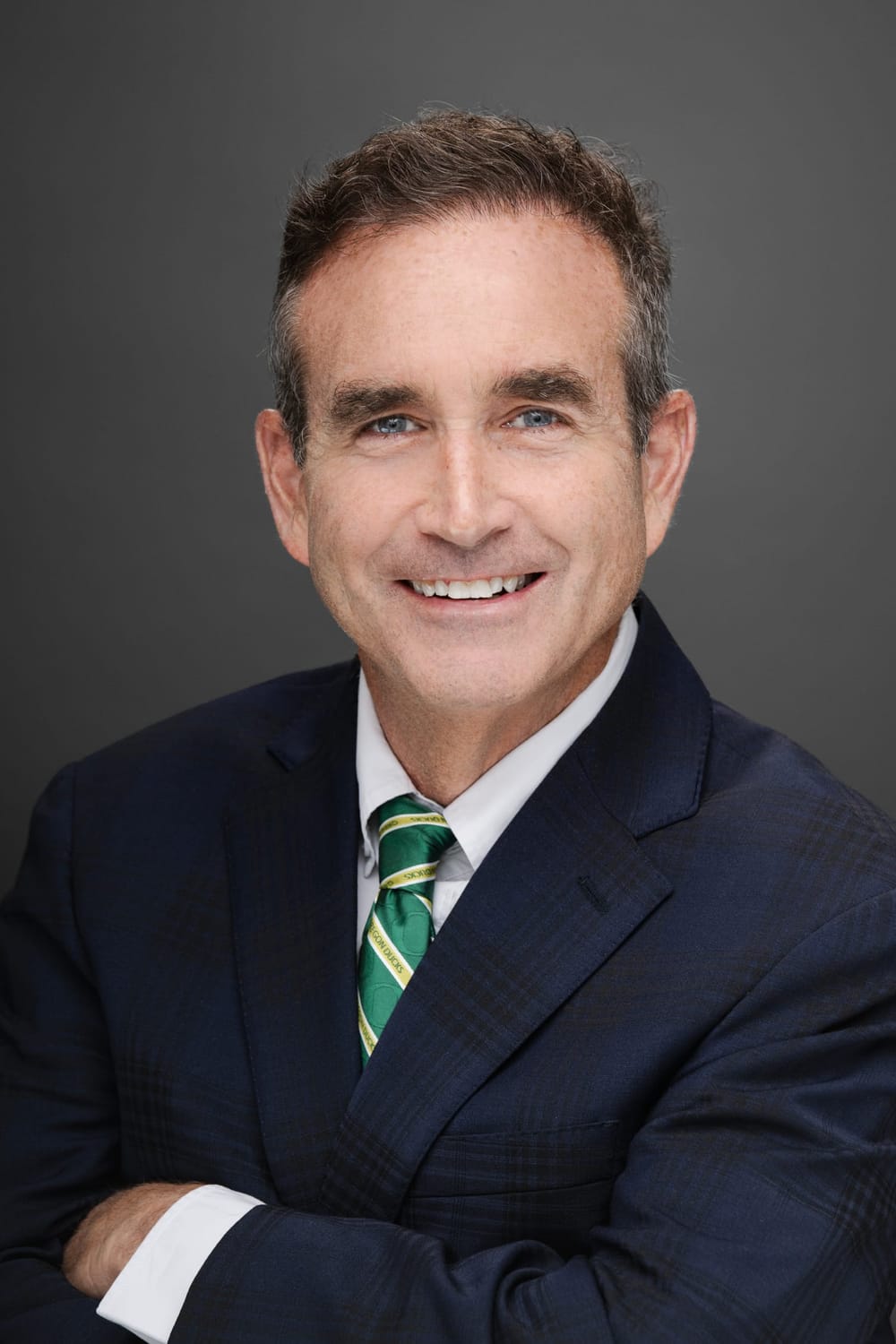
Our San Antonio Rideshare Accident Lawyer

He is a Lifetime Member of Best Attorneys of America, was named to the Top 100 Civil Plaintiff Attorneys by The National Trial Lawyers, and is admitted to the State Bar of Texas.
Read Matthew Kotzen’s full profile →“I spent years building cases for insurance companies. Now I use that same playbook to make sure they pay what they actually owe.”
Goldberg & Loren Fights for Maximum Compensation


Pay Nothing, Unless We Win
Texas Injury Law at a Glance
| Deadline to file a lawsuit | Two years from the date of the injury. Tex. Civ. Prac. & Rem. Code § 16.003 |
| Fault rule | Modified comparative responsibility ("51% bar"): you recover only if you are 50% or less at fault, and your award is reduced by your share. §§ 33.001, 33.012 |
| Rideshare insurance | Coverage is tiered by app status; roughly $1 million applies during a prearranged ride. Tex. Occ. Code § 2402.101; Ins. Code ch. 1954 |
| Reporting the crash | Notify police immediately when there is injury, death, or a vehicle that cannot be driven away safely. Tex. Transp. Code § 550.026 |
The Three Uber and Lyft Insurance Periods That Decide Your Claim
Texas law divides rideshare driving into three periods, each carrying a different level of insurance. The period in effect at the second of the crash controls the coverage, which is why the app data matters as much as the police report.
The framework comes from Chapter 2402 of the Texas Occupations Code, which sets the coverage a rideshare company must carry in each phase. Goldberg & Loren reads that timeline against the driver’s trip log to find every dollar of coverage in play, and part of the job is making sure the company does not quietly pick the cheaper one.
This is not abstract. A rider hurt during a downtown pickup near the River Walk and a driver clipped on Loop 410 can face very different coverage for the same injury, purely because of what the app was doing at impact.
Period One: When the App Is On, and No Ride Is Accepted
When a driver has the app on but has not accepted a ride, a lower tier of contingent coverage applies.
Texas requires at least 50,000 dollars per person and 100,000 dollars per accident for bodily injury, plus 25,000 dollars for property damage, limits that can run out before the first hospital bills are paid on a spinal injury or a fracture that needs surgery.
This is the period the companies most want to claim, because it caps their exposure at the lowest level. Picture a driver idling near the St. Mary’s Strip at closing time, app on and waiting for a request; Uber or Lyft would rather call it Period One than open the larger policy.
Proving the driver had accepted a ride can multiply the available insurance many times over, which is why the trip log, not the driver’s memory, settles which period was live.
Periods Two and Three From Match to Drop-Off
The moment a driver accepts a ride and heads to the passenger, and throughout the trip until drop-off, a $1 million liability policy applies.
This is the coverage that can pay for a catastrophic injury from a wreck on US-281 or a hard impact in an airport pickup lane, and it may be available whether you were the passenger, another driver, or a pedestrian.
Period Two runs from acceptance until the passenger is in the car, and Period Three covers the trip itself, with the same coverage across both, so a defense that tries to shave the claim down to Period One is often really an argument about a few seconds on the app timeline.
The Coverage Gap When the App Is Off
If the driver’s app was completely off, they were just a regular motorist, and the rideshare policies do not apply. The driver’s personal auto insurance becomes the target, often a bare state-minimum policy.
The Texas Department of Insurance sets those minimums at 30,000 dollars per person and $60,000 per accident, far below the 1 million dollars a passenger trip carries, so proving the app was on can be the difference between a small claim against a $30,000 policy and a real recovery against the rideshare coverage.
Stacking Your Own Underinsured Motorist Coverage
When the available rideshare or personal coverage cannot cover your injuries, your own underinsured motorist policy may stack on top to fill the gap. It matters most when a Period One crash leaves only $50,000 against injuries that cost far more, and in Texas the insurer cannot simply ignore a valid demand for it.
This is money you already paid premiums for, and it belongs in the calculation from the start.
How Delivery App Drivers Like Uber Eats Fit the Coverage Rules
Not every app on the road is carrying a passenger. Uber Eats and other delivery drivers move food and packages across San Antonio, and their coverage does not always track the three passenger periods written into Chapter 2402.
The statute was built around companies carrying riders, so a delivery-only trip can fall into a grayer zone where the right policy is far less obvious.
That uncertainty makes the platform records even more important. A driver logged into Uber Eats near downtown carries a different coverage arrangement than the same person logged into Uber to carry passengers. Identifying the exact app, the mode it was in, and whether a delivery was active at impact is the only way to find the policy that responds.
How Your Lawyer Proves Which Insurance Period Was Active
Everything in a rideshare claim runs back to one timeline, and the driver’s own account is the weakest evidence on it. The proof lives in the app: the trip log, the GPS location history, and the timestamps that show the second a ride was accepted or a passenger was dropped.
Uber and Lyft hold that data and release it when a claim is built to demand it, so pinning the record down usually means a preservation demand early, then pulling the trip history, the driver’s status log, and any dashcam or phone data that fixes the moment of impact.
The police report from a Loop 410 collision rarely states which app period was active, because the responding officer has no reason to ask. Matching the crash time against the driver’s acceptance and drop-off times is what turns a vague report into proof that the 1 million dollar policy applies.
Your Rights as a Passenger, Driver, or Third Party
Your role in the crash shapes your claim as much as the app status does. A passenger in the Uber is almost never at fault and usually has the cleanest path to the 1 million dollar policy. A driver in another car or a pedestrian struck near a downtown crosswalk has a strong claim too, but has to prove the rideshare driver caused the wreck.
Each role raises its own tactical questions, so sorting out where you stand early keeps the claim pointed at the right policy.
When You Were Riding in the Uber or Lyft
A passenger holds the strongest position of anyone in a rideshare crash. If your driver accepted the trip, the $1 million policy was already in force the moment you got in, whether the wreck happened on US-281 or two blocks from the River Walk. You did not choose the route, the speed, or the other car, so fault almost never lands on you.
The practical steps are worth doing before you leave the scene. Screenshot the trip in your own app, report the crash through Uber or Lyft so a record exists, and see a doctor the same day even if adrenaline is masking the pain.
When You Were Another Driver or a Pedestrian
If a rideshare driver hit your car on Loop 410 or clipped you in a downtown crosswalk, your claim depends on two facts together. The first is that the rideshare driver was at fault, and the second is which app period was active. A driver with the app off leaves you facing only a $30,000 personal policy, while an accepted trip opens the full $1 million.
That is why an outside victim has to treat the app status as part of the investigation from day one. Get the driver’s name and the fact that they were driving for Uber or Lyft into the record, note whether a passenger was aboard, and preserve anything that fixes the time. The company will not volunteer that a higher-coverage trip was underway.
Common Injuries in a Bexar County Rideshare Crash
The injuries in a rideshare crash track the speed and angle of the impact more than the type of car. A low-speed pickup near the River Walk can still cause whiplash and lasting soft tissue damage, while at highway speed on US-281 or Loop 410 the same collision produces spinal injuries, broken bones, and head trauma that change a person’s life.
Passengers face a particular risk because they often do not see the impact coming, so a rider looking at a phone in the back seat has no chance to brace.
Serious harm pushes medical costs well past the 50,000 dollars a Period One policy provides, which is why the coverage period and the injury severity have to be worked together, developing the medical record and the app timeline at once.
What to Do After an Uber or Lyft Crash in San Antonio
Beyond the immediate app screenshot, the scene holds evidence that vanishes within minutes. Photograph the position of both vehicles before they are moved, the damage from several angles, and any skid marks or debris, and collect names and numbers from any witnesses.
Avoid giving a recorded statement to any adjuster before you understand which period and which policy are in play, and stay off social media, because a casual post can be twisted into an argument about fault.
Keep every medical bill, every receipt, and a simple record of the days you could not work. A claim against the $1 million policy is only as strong as the documentation behind it, and the paperwork you save in the first month often determines how far the recovery can reach.
Where San Antonio Rideshare Crashes Happen Most
Rideshare traffic concentrates in a few predictable parts of San Antonio, and so do the crashes. The mix of unfamiliar drivers, sudden stops for pickups, and heavy late-night trips creates risk that ordinary commuting does not. The crashes we see most often happen in these areas:
- The San Antonio International Airport pickup and drop-off queues
- Downtown and the River Walk, thick with tourists and turning cars
- The St. Mary’s Strip and other nightlife districts after closing time
- Loop 410 and US-281 interchanges drivers take to reach fares quickly
A driver distracted by the app, hunting for an address, or rushing to the next fare is primed to cause a wreck. Those distractions are what a rideshare claim has to expose, because the crash usually looks routine until someone examines what the driver was doing.
Holding Uber or Lyft Accountable After a Texas Crash
Uber and Lyft carry large policies, but they do not hand out payouts easily. The companies structure their drivers and their insurance to limit direct corporate liability, and their claims teams handle San Antonio crashes every week. The obstacle is rarely the money; it is the company’s effort to keep you from proving which policy applies.
A lawyer who has handled these claims knows how to document the app phase and force the correct policy into the conversation before the deadline runs.
Why the Companies Call Drivers Independent Contractors
Both companies classify their drivers as independent contractors rather than employees, a deliberate move to limit their own liability for a driver’s negligence. It does not erase the mandatory insurance Chapter 2402 requires, and it does not stop a valid claim against that coverage.
Understanding the classification keeps the company from using it as a wall between you and the policy that should pay your bills.
The contractor label mostly affects who you sue and how, not whether the $1 million policy exists. A driver waiting near the River Walk is still covered under the rideshare framework even though Uber calls them a contractor. The classification loses much of its force once the app period is proven and the correct policy is on the table.
Get Answers From a San Antonio Rideshare Accident Lawyer
The coverage after an Uber or Lyft crash can be substantial, but only if someone proves which period was in effect and reaches the right policy. A San Antonio rideshare accident lawyer untangles the app data, the insurance tiers, and the company defenses so your injuries actually get paid for.
Our team brings decades of experience to injury claims across Texas, at no cost to you unless we win.
Call (512) 254-4424 today, or reach us through our contact page to start your free case review and find out exactly which coverage applies to your crash.
Frequently Asked Questions
Usually you pursue their insurance rather than the company itself. Texas law treats a rideshare driver as an independent contractor, not an employee (Tex. Occ. Code § 2402.114). That applies when the company does not set their hours or territory and both sides agree in writing.
The label does not touch the mandatory coverage, which is where the recovery comes from.
Nearly every rideshare claim settles. Texas courts disposed of 57,842 motor vehicle injury cases in 2024, and only 428 ended in a jury verdict (Texas Office of Court Administration). Another 28,847 were non-suited, the docket term for a case that settled. A company handling Bexar County crashes every week settles once the app records leave it no room.
The company already has the answer on file. Texas requires a rideshare company to keep individual ride records for at least five years, and driver records just as long (Tex. Occ. Code § 2402.151). A preservation demand locks that trip log down. The timestamps, not the driver’s memory, decide which policy pays.
Yes, and the standard is written into statute. A company may not let someone drive with more than three moving violations in three years, or a DWI or act of violence in seven (Tex. Occ. Code § 2402.107). That check has to be repeated every year. A driver who slipped through anyway is worth pulling into the claim.
Legal Sources & References
The Texas laws described on this page are cited to the official statutes published by the Texas Legislature and were last reviewed on August 21, 2026.
- Statute of limitations (2 years), Tex. Civ. Prac. & Rem. Code § 16.003
- Comparative responsibility & reduction, Tex. Civ. Prac. & Rem. Code §§ 33.001, 33.012
- Premises-defect duty on government property, Tex. Civ. Prac. & Rem. Code § 101.022
- Dram Shop Act, Tex. Alco. Bev. Code § 2.02
- Texas crash data, Texas Department of Transportation (TxDOT)