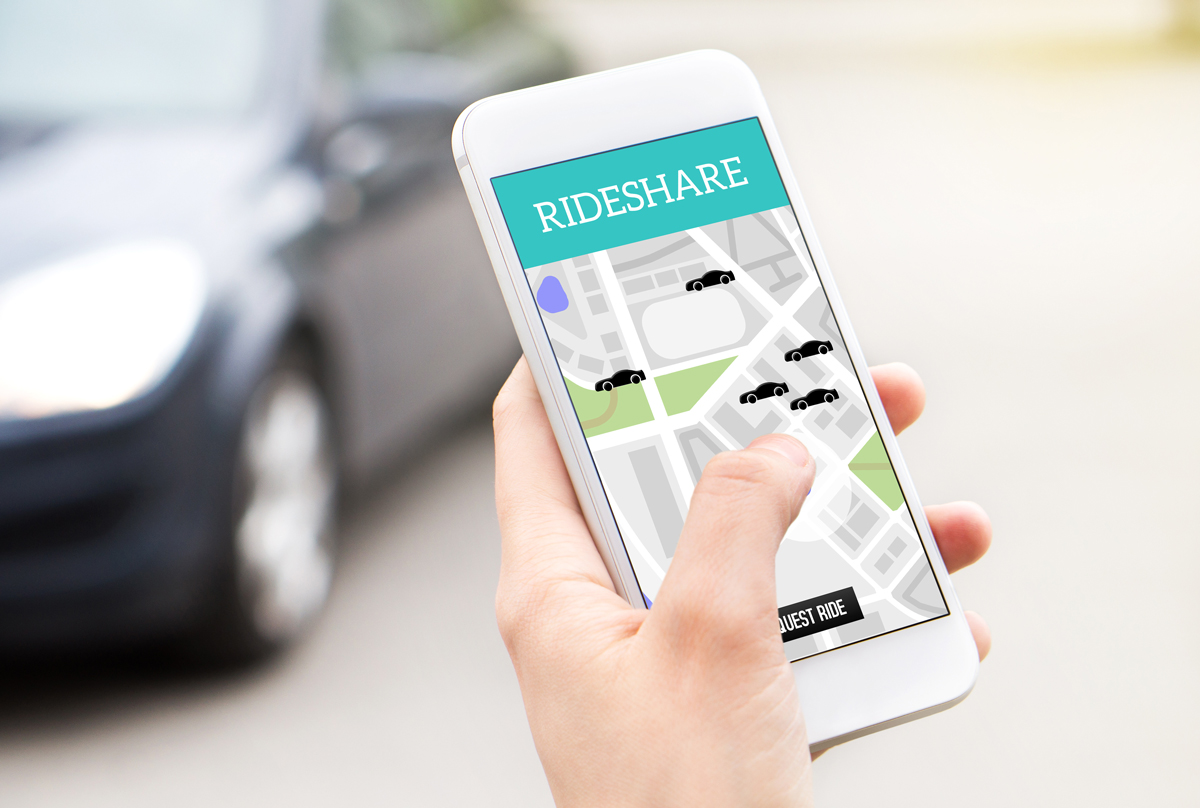
Hurt in an Uber or Lyft in Fort Worth?
You climb out of a wrecked Uber on West 7th with a swelling wrist, and the first real question is not who ran the red light. It is whose insurance pays for the ambulance.
Our rideshare accident lawyer starts there, because the answer shifts depending on what the driver’s app was doing at the moment of the crash.
A normal fender bender points to one or two auto policies. An Uber or Lyft crash can pull in three separate layers of coverage, and only one fits your case.
Texas ties each layer to the driver’s app status, so a claim that looks simple hides a coverage question that decides how much money is even available.
Fort Worth runs heavy rideshare traffic around DFW Airport, the West 7th corridor, Sundance Square, and the Stockyards, and every one of those trips rides on the same three-tier system. As the Tarrant County seat, Fort Worth is also where your case would be filed if it reaches a courtroom.
If an Uber or Lyft crash left you hurt and no one will tell you which policy applies, call (512) 254-4424 for a straight answer.
Our Fort Worth Rideshare Accident Lawyer

Goldberg & Loren Fights for Maximum Compensation


Pay Nothing, Unless We Win
Texas Injury Law at a Glance
| Deadline to file a lawsuit | Two years from the date of the injury. Tex. Civ. Prac. & Rem. Code § 16.003 |
| Fault rule | Modified comparative responsibility ("51% bar"): you recover only if you are 50% or less at fault, and your award is reduced by your share. §§ 33.001, 33.012 |
| Rideshare insurance | Coverage is tiered by app status; roughly $1 million applies during a prearranged ride. Tex. Occ. Code § 2402.101; Ins. Code ch. 1954 |
| Reporting the crash | Notify police immediately when there is injury, death, or a vehicle that cannot be driven away safely. Tex. Transp. Code § 550.026 |
Which Insurance Policy Even Applies to Your Uber or Lyft Crash
Every Uber and Lyft driver in Texas carries insurance that switches on and off with the app. When you file a claim, the adjuster checks what the driver was doing when the crash happened, because that one fact sets the ceiling on the money available to you.
A driver sitting idle with the app closed falls under a completely different policy than a driver halfway through your ride, and the gap can run into the hundreds of thousands of dollars. An insurer has every reason to log your crash under the cheapest coverage period it can defend, and most injured riders cannot challenge that call on their own.
Our rideshare accident attorney will tie the app status to a specific minute and match your claim to the coverage tier Texas requires for that moment.
The Three App Statuses That Set the Coverage Ceiling
Texas wrote its rideshare rules into Chapter 2402 of the Texas Occupations Code, which sets minimum coverage for the companies the law calls transportation network companies. The statute splits every trip into three windows, each carrying its own dollar figure, and the driver’s phone holds the proof of which window was actually open.
App Off Means the Driver’s Personal Auto Policy
When the app is closed, the driver is just another motorist, and Uber or Lyft owes you nothing. Any claim falls on the driver’s personal auto policy, which often sits at the state minimum, low enough that it rarely covers a serious hospital stay.
If a driver hit you while off the clock, your own coverage may end up paying more of the loss than theirs does.
Waiting for a Ride Means 50/100/25 Under Texas Law
The second a driver opens the app and waits for a ride request, a contingent policy switches on. Texas sets that coverage at $50,000 per injured person, $100,000 per crash for bodily injury, and $25,000 for property damage, a tier known as 50/100/25.
It beats a bare personal policy, but a single trip to a Fort Worth emergency room can burn through $50,000 fast, so this middle tier still leaves plenty of injured people short of what their care costs.
On the Way or Passenger Aboard Means the One Million Dollar Policy
Once the driver accepts a ride and heads toward the pickup, or once you are physically in the car, the coverage jumps to a $1,000,000 liability policy. This is the tier most injured passengers want their claim to land in, because it leaves real room for surgery, long recoveries, and months of lost income.
The higher limit does not mean the insurer pays without a fight; it means your actual damages, rather than a low artificial cap, drive what you can recover.
Why Your Trip Receipt and Timestamps Become Exhibit One
The distance between the $50,000 window and the $1,000,000 window can come down to a single minute on a timestamp. Your trip receipt, the in-app ride history, and any screenshots all show when the driver accepted the ride and when the trip began.
Save that record the day of the crash, because a clear timestamp proving you were a passenger at the moment of the crash is often the single strongest piece of evidence in the claim.
Who You Were in the Crash Decides How the Claim Is Filed
Your seat in the crash changes the whole shape of your claim. A passenger, the rideshare driver, a driver in another car, and a pedestrian in a crosswalk all take different routes to the same pool of insurance money, and a smart claim often targets several insurers at once. The parties who might pay include the following.
- The rideshare driver’s personal auto insurer, when the app was off or the driver was still waiting for a request
- The Uber or Lyft 1,000,000 dollar policy, when the driver was on the way to a pickup or carrying a passenger
- The other driver’s insurer, when a third motorist caused or shared in the crash
- Your own uninsured or underinsured motorist coverage, when the at fault limits fall short of your bills
A single wreck can trigger claims against two or three of these at once. A driver who blew a red light on West 7th might carry only the state minimum, the rideshare policy might sit above that, and your own underinsured motorist coverage might close the last gap. Sorting the order these policies pay in is a large part of the work.
Passengers Who Rarely Share Any Fault
As a passenger, you almost never caused the crash, which puts you in the strongest position of anyone involved. You were in the back seat while two drivers made the decisions that led to the wreck, so fault usually splits between them, not you.
That matters under Texas law, which uses a modified comparative fault rule barring recovery once your share passes 51%. Passengers rarely come near it.
Rideshare Drivers Squeezed Between Two Insurers
If you drive for Uber or Lyft and another car hit you, you sit in a tighter spot than your passengers ever will. Your personal auto insurer may argue you were working and push the claim toward the rideshare policy, while the rideshare insurer may dispute your exact app status to hold down what it owes.
You can end up caught between two companies that each insist the other should pay. A clean record of your app status stops either insurer from leaving you with nothing.
The Trip Data We Race to Preserve
The evidence that decides a rideshare claim does not sit on the pavement. It sits inside the app. Every ride generates a receipt, a string of timestamps, the driver’s name, a vehicle description, and a record of when the trip started and ended, all of it pointing straight at which coverage period was live.
This digital evidence can change or vanish once a trip closes, so report the crash inside the app and capture the record fast. A Fort Worth Uber accident attorney moves quickly to preserve the ride history, then uses it to lock the claim to the correct policy tier before any adjuster tries to move it.
Screenshots and Records to Capture Before the App Overwrites Them
Take screenshots the day of the crash, while the trip still shows in your ride history. Capture the trip receipt, the driver’s name and photo, the vehicle make and plate, the pickup and drop off points, and the times it was requested, accepted, and started.
Save the emailed receipt Uber or Lyft sends after every trip, since it stays in your inbox even if the in-app history later changes. Photograph the scene, the vehicles, and your injuries, then back it all up off your phone.
Where Rideshare Crashes Happen Most in Tarrant County
Rideshare crashes cluster where rideshare trips cluster: the airport, the entertainment districts, and the late night bar corridors, where hundreds of pickups and drop offs happen in tight, crowded spaces.
Drivers watching the app instead of the road, sudden stops for a flagged rider, and cars double parked at the curb all raise the odds of a wreck, and late nights and weekends push demand up while filling pickup areas with people stepping off curbs without looking.
DFW Airport, West 7th, Sundance Square, and the Stockyards
DFW Airport runs a designated staging lot where drivers wait for requests, then routes them to a busy terminal curb that mixes shuttles, taxis, private cars, and rideshares in a few feet of space.
The staging period usually falls under the waiting phase and its lower 50/100/25 coverage, while the drive to the terminal can shift the same driver into a higher tier.
The West 7th corridor, Sundance Square, and the Fort Worth Stockyards pull heavy nightlife crowds home by rideshare, with pickups bunched up at closing time and people crossing mid-block between parked cars.
Because those trips almost always happen with the app on and a rider assigned, they tend to fall under the higher tiers, one more reason to save the trip data fast.
When Another Driver Hits Your Rideshare, and Their Limits Are Thin
Plenty of Fort Worth rideshare crashes are not the Uber or Lyft driver’s fault at all. Another motorist runs a light or rear-ends your ride, and turns out to carry the bare Texas minimum or no insurance whatsoever. When that policy runs dry long before your medical bills do, the claim does not simply stop and leave you to cover the rest.
If you were a passenger during the trip, the Uber or Lyft policy may include uninsured and underinsured motorist protection that stacks on top of the at-fault driver’s thin limits, and your own UM and UIM coverage can also step in.
Stacking the Rideshare Policy on Top of a Weak At-Fault Driver
Stacking means drawing on more than one source of coverage for a single injury. Picture a driver with $30,000 in coverage who rear-ends your Uber while your medical bills climb to $90,000. The at-fault policy pays its $30,000, then the rideshare underinsured motorist coverage and your own UIM policy can be pursued for the remainder.
Working out which policy pays first and how much each still owes is often where the largest share of a real recovery comes from.
What a Rideshare Accident Claim Pays For
A rideshare injury claim covers far more than the hospital bill from the night of the crash. What you can actually recover turns on your injuries, the strength of your evidence, and which coverage tier applies to your trip, because even a strong claim cannot collect more than the applicable policy allows.
Medical Bills, Lost Income, and a Disrupted Life
Medical costs usually make up the largest part of a rideshare injury claim, from the first ambulance ride through months of follow-up care. Lost income counts too, including the paychecks you missed during recovery and any long-term hit to your earning power.
A disrupted life covers the quieter losses, like missing your kid’s season, giving up a sport, or living with daily pain that did not exist before the crash. Texas lets you seek all of these, along with physical pain and mental strain, but only a well-documented claim built on records and proof turns them into an actual recovery.
No honest lawyer can promise a specific figure, and anyone who does should make you nervous.
Have a Fort Worth Rideshare Accident Lawyer Trace the Policy That Pays
The hardest part of a rideshare crash is often not the pain. It is the stack of insurance questions that lands while you are still hurt. A Fort Worth rideshare accident lawyer answers them by pinning down the exact app status, matching it to the right coverage tier, and dealing with the adjusters so you can focus on recovery.
Decades of experience stand behind every rideshare claim our firm handles, and you owe nothing unless we win.
Time works against you. Texas gives most injury victims only two years from the date of the crash to file a lawsuit, and rideshare trip data can disappear long before that deadline arrives. Do not let an insurer settle your case for you by quietly filing it under the cheapest policy it can find.
Call (512) 254-4424 or reach out through our contact page for a free consultation, and put a team beside you that knows how Texas rideshare coverage really works.
Frequently Asked Questions
An independent contractor, and in Texas that is written into the statute rather than left to argument. A driver is treated as a contractor so long as the company does not set shifts, require exclusivity, or dictate hours (Tex. Occ. Code § 2402.114).
That status shapes who you pursue, which is why the trip status at the moment of impact decides the claim.
Five years, by law. A rideshare company must keep individual trip records for at least five years from the date of each ride. Driver records are held for at least five years after that driver stops working (Tex. Occ. Code § 2402.151). The records exist. Getting them takes a preservation demand sent before anyone has a reason to lose track of them.
More than most riders assume, and gaps in it can matter. A company must run a local, state, and national criminal background check plus a driving record check before a driver is approved, then repeat it annually (Tex. Occ. Code § 2402.107). Drivers are disqualified for certain offenses within the past three years, and permanently for others.
A company that approved someone it should not have has a problem beyond the crash itself.
Legal Sources & References
The Texas laws described on this page are cited to the official statutes published by the Texas Legislature and were last reviewed on August 16, 2026.
- Statute of limitations (2 years), Tex. Civ. Prac. & Rem. Code § 16.003
- Comparative responsibility & reduction, Tex. Civ. Prac. & Rem. Code §§ 33.001, 33.012
- Rideshare (TNC) insurance, Tex. Occ. Code § 2402.101 → Tex. Ins. Code ch. 1954
- Duty to report a crash, Tex. Transp. Code §§ 550.021–550.026, 550.062
- Texas crash data, Texas Department of Transportation (TxDOT)