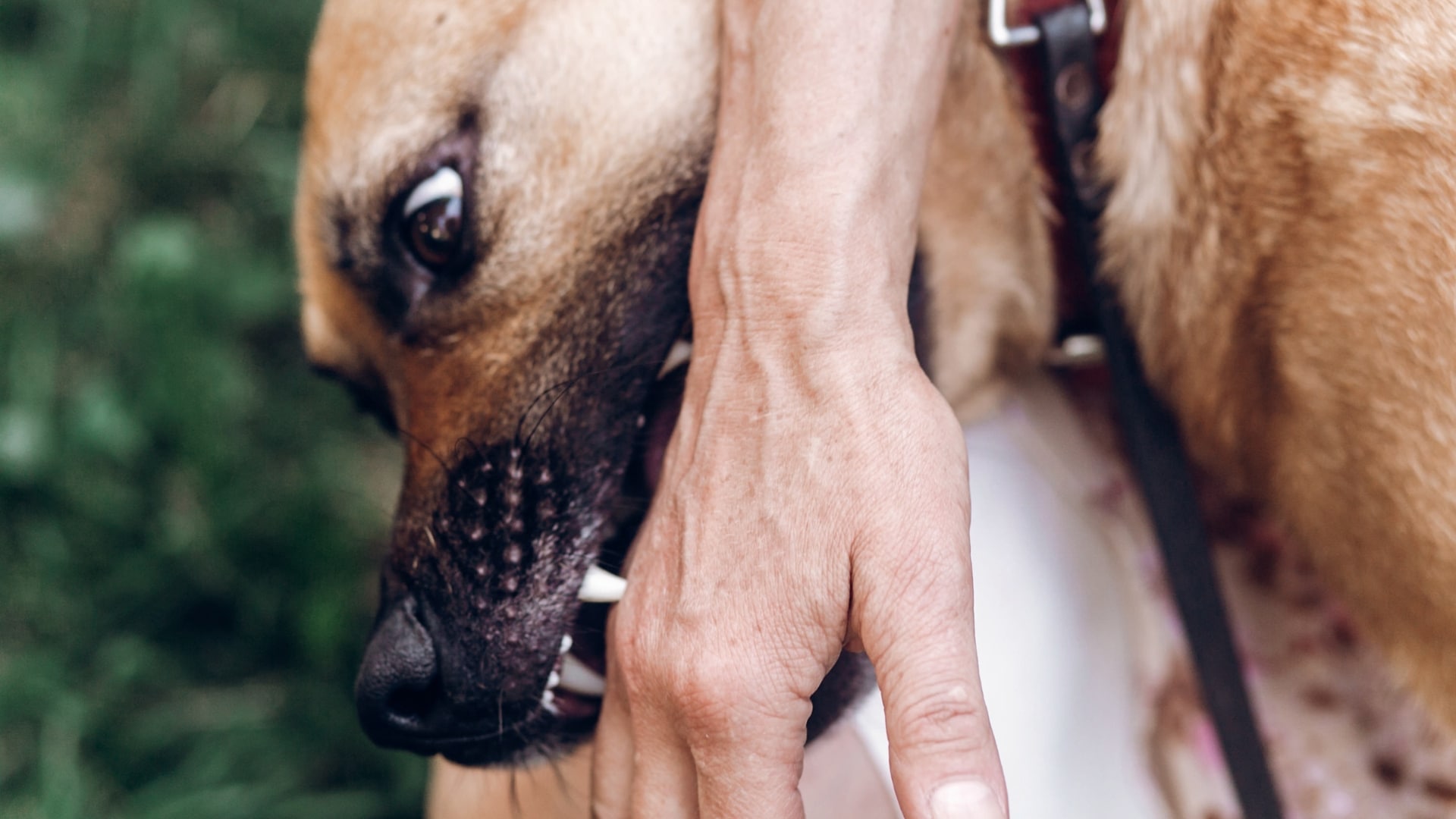
Bitten by a Dog in Fort Worth?
A dog attack is not just a physical wound. It can mean emergency surgery, permanent scarring, a child afraid to leave the house, and a stack of bills that arrives while you are still healing.
The good news is that most solid claims are paid by insurance rather than out of a neighbor’s savings, which changes how you should think about coming forward. You are usually pursuing a policy, not a person. This page explains the rules, the coverage, and the steps that protect your claim.
The consultation is free, and you owe nothing unless we win.
Call (512) 254-4424 any time to find out where you stand.
Our Fort Worth Dog Bite Lawyer

Goldberg & Loren Fights for Maximum Compensation


Pay Nothing, Unless We Win
Texas Injury Law at a Glance
| Deadline to file a lawsuit | Two years from the date of the injury. Tex. Civ. Prac. & Rem. Code § 16.003 |
| Fault rule | Modified comparative responsibility ("51% bar"): you recover only if you are 50% or less at fault, and your award is reduced by your share. §§ 33.001, 33.012 |
| Dog owner liability | Strict liability if the owner knew the dog was dangerous; otherwise negligence, including violation of a local leash ordinance. Marshall v. Ranne, 511 S.W.2d 255 (Tex. 1974) |
The Texas One Bite Rule, Explained First
The so-called one-bite rule is really a knowledge rule. Texas follows the common law standard from a case named Marshall v. Ranne, which holds an owner strictly liable when they knew or should have known their dog was dangerous. A prior bite is one way to show that knowledge, but it is far from the only way.
The attorneys at our dog bite law firm look for every sign the owner had reason to know their animal was a risk.
Growling at neighbors, lunging on the leash, straining against a fence, prior complaints to animal control, and warning signs on the gate all count.
An owner who posts a beware of dog sign has, in a sense, admitted the very knowledge the law asks about. Knowledge is built from behavior, not just from a bite record.
The phrase should have known does a lot of work in these cases. An owner cannot ignore obvious warning signs and then claim surprise when the dog finally attacks.
When a dog has snapped at children, been surrendered and reclaimed, or terrorized a mail carrier for months, the law treats the owner as if they knew exactly what they had.
Strict Liability When the Owner Knew the Dog Was Dangerous
When the owner knew about the danger, strict liability makes the case far more direct. You do not have to prove the owner was careless in the moment, only that they kept a dog they knew could hurt someone and that it did. That shifts the fight away from excuses about a gate left open or a guest who spooked the animal.
Proving prior knowledge takes legwork. We gather neighbor accounts, past animal control calls, veterinary notes, and social media posts that show the dog’s history. Owners often post about their dog’s aggression online long before an attack, and those posts can become some of the strongest evidence in the file.
Once that knowledge is on the record, the owner’s insurer has a much harder time arguing the attack was a freak event that no one could have predicted.
What Lillian’s Law Adds When an Attack Turns Serious
Texas took dangerous dogs more seriously after a severe mauling, and the result was Lillian’s Law, found in Chapter 822 of the Health and Safety Code. It can make an owner criminally responsible when a dangerous dog causes serious injury or death. That criminal exposure sits alongside your civil claim rather than replacing it.
The criminal side does not pay your bills. A prosecutor can pursue charges while your own attorney pursues the compensation that actually covers your surgery, your lost income, and your recovery. The two run on separate tracks toward separate goals.
A criminal case can still help the civil claim, though. Charges, a dangerous dog finding by animal control, or a conviction all document that the dog was a known threat. We keep the two tracks straight so the criminal case does not slow your civil claim.
Winning a Claim With No Prior Bite on Record
Plenty of strong claims involve a dog that never bit anyone before. When strict liability is hard to prove, negligence opens a second door, and it is a wide one. The question becomes whether the owner failed to control the animal in a way a reasonable person would have.
This route often turns on local law. Fort Worth, like most Texas cities, requires owners to keep dogs restrained, and a violation of that rule can carry real legal weight even for a dog with a clean history.
Negligence and the Fort Worth Leash Ordinance as Proof
Fort Worth’s leash and restraint rules exist to prevent exactly the kind of attack you suffered. An owner who let a dog roam loose, left a gate unlatched, or ignored a tether has likely failed the standard the city sets. That failure becomes the heart of a negligence claim even with no bite history.
Most loose dog attacks trace back to a simple, avoidable choice: a gate that never got fixed, a chain that was too long, a door left open while kids played outside. None of those require a history of aggression to be negligent.
We pull the animal control record, the ordinance language, and witness accounts of how the dog got loose, and together they show the owner did not do what the law and basic care required, which is the core of a negligence case.
Negligence Per Se When the Leash Law Was Broken
Texas recognizes a doctrine called negligence per se, and it is a powerful shortcut. When someone violates a safety law written to protect people like you, that violation can count as negligence on its own. A loose dog in violation of the leash ordinance fits that pattern.
The practical effect is that we may not need to argue at length about what a reasonable owner would have done. The broken ordinance can establish the breach, leaving the focus on your injuries and their cost, which tends to move claims toward resolution faster.
It also reframes the conversation with the insurer: instead of debating whether the owner was careful, the discussion starts from a broken rule and the injury that followed.
Insurance Layers That Actually Pay a Dog Attack Claim
Almost nobody wants to sue a neighbor, a friend, or a family member, and the good news is that you usually are not going after their savings. Dog bite claims are typically paid by insurance, and more than one policy may apply. Knowing which layers exist changes how comfortable people feel about coming forward.
Here are the policies that commonly stand behind a Fort Worth dog attack claim.
- The dog owner’s homeowner insurance, which is the source of most recoveries.
- A renter insurance policy when the owner rents rather than owns.
- The landlord’s policy when the landlord knew about a dangerous dog on the property.
- An umbrella policy that adds coverage above the primary limits.
- A business policy when the attack happened on commercial property or involved a working dog.
Finding every applicable layer is part of the job, because a serious injury can outrun a single policy limit in a hurry. A child’s facial reconstruction alone can exceed a basic homeowner limit, so the search for additional coverage is not a formality.
Homeowner and Renter Policies Behind Most Recoveries
Standard homeowner and renter policies usually include liability coverage that reaches dog bite injuries, which is why a claim rarely means taking money directly from the owner. The insurer investigates, and if liability is clear, it pays within the policy limits.
Some policies exclude certain breeds or a dog with a documented bite history, which is one more reason the dog’s background matters. An insurer that wants to deny coverage will reach for one of these exclusions early, sometimes before it has the facts.
We read the policy closely to find coverage and to counter an insurer that stretches an exclusion it cannot actually support. A denial letter is a starting position, not the final word, and many are reversed once the policy language is held up against the facts.
When a Landlord Shares Blame for a Tenant’s Dangerous Dog
A landlord is not automatically responsible for a tenant’s dog, but the door opens when the landlord knew the animal was dangerous and had the power to do something about it. A property owner who received written complaints about an aggressive dog and renewed the lease anyway may share liability. That adds a second insurance policy to the claim.
Proving landlord knowledge takes records. We look for written complaints, prior incidents on the property, and communications between the tenant and the landlord. Property managers often keep files that show exactly when they learned of the problem.
When that knowledge exists, the recovery no longer depends on the tenant’s coverage alone, and a landlord’s policy is frequently larger than a renter’s, which can matter a great deal in a serious injury case.
Who Gets Bitten Most Often in Tarrant County?
Dog attacks do not fall evenly across the population. The people who end up seriously hurt tend to be the smallest and the ones who cannot avoid the dog because of their job, and their injuries carry consequences that stretch well beyond the day of the bite.
Two groups show up again and again, and each faces its own kind of harm and its own path to recovery.
Children and the Injuries Measured in Years Not Stitches
Children are bitten at face and head height because of their size, and the wounds can be devastating. A single attack can mean reconstructive surgery, years of scar revision, and lasting fear that follows a child long after the skin heals. The injury is measured in years, not stitches.
The psychological toll is real and compensable. A child who was mauled may develop a lasting fear of animals, nightmares, and anxiety that affects school and friendships, and those harms belong in the claim right alongside the medical bills.
A child’s claim also needs a longer view of the future. Growth changes how scars appear, and additional procedures are often needed as the child ages into adulthood. We build claims that account for that future care rather than settling for the cost of the first repair, because the first repair is rarely the last.
Delivery Drivers and Postal Workers Bitten on the Route
People who work the neighborhoods are exposed every single day. Postal carriers, package couriers, meter readers, and food delivery drivers walk up to doors without knowing what waits behind the fence. A dog that charges as the gate opens can end a shift in the emergency room.
These workers often have overlapping claims, including a possible workers’ compensation claim through their employer and a separate case against the dog owner. The two interact in ways that affect what you keep, and handling only one can leave money on the table.
Sorting out which claim covers what is part of protecting the full recovery. We coordinate both so the medical bills get paid, the lost wages are covered, and the owner is still held responsible for the harm their dog caused.
Animal Care and Control Reports and the Ten-Day Quarantine
The paperwork after a bite is not just red tape. Reporting the attack to Fort Worth Animal Care and Control creates an official record, and that record can become some of the strongest evidence in your claim. It also triggers the rabies quarantine that Texas law requires.
Skipping the report is a common mistake that weakens an otherwise strong case. The official file documents what happened while memories are fresh and the wound is still visible, and it starts a paper trail that is hard for an owner to dispute later.
Why the Bite Report and Rabies Hold Matter to Your Claim
A bite report captures the date, the location, the dog, and the owner while everything is still clear. It also starts the standard ten-day observation period used to rule out rabies, which protects your health and pins down the dog’s identity. Both outcomes help your claim in concrete ways.
The report can also surface a history you did not know about. If the same dog or owner appears in earlier complaints, that pattern supports the knowledge element at the center of a strict liability claim. One report can connect your attack to a documented series of warnings the owner ignored.
We request the full animal control file and put the two-year deadline to file most injury claims on the calendar so nothing slips. That deadline comes from Section 16.003 of the Civil Practice and Remedies Code, and it arrives faster than most people expect while they focus on healing.
Start a Fort Worth Dog Bite Claim While the Report Is Still Open
If a dog attacked you or your child in Fort Worth, the strongest time to act is now, while the animal control file is open and the witnesses remember. Early documentation locks in the dog’s history and the owner’s knowledge, which are the pieces that decide these cases. Waiting only lets the trail go cold and gives the insurer room to argue.
Backed by decades of experience, our firm pursues dog attack claims with no fee unless we win. We will find every insurance policy that applies, prove what the owner knew, and account for the surgeries and scars that follow a serious bite. You do not need to know the one bite rule or which policy pays before you call; that is our job.
The free consultation is confidential, and a real person answers 24 hours a day. Reach a Fort Worth dog bite lawyer at (512) 254-4424, or share the details through our contact page to get started.
Frequently Asked Questions
Yes, in the more serious cases. An owner commits a felony when criminal negligence in securing the dog leads to an unprovoked attack off the property causing serious bodily injury. The same applies when the owner already knew the dog was dangerous and it attacked outside a secure enclosure (Tex. Health & Safety Code § 822.005).
The offense is a third degree felony, and a second degree felony if someone dies. A criminal case runs separately from your civil claim.
Two years from the date of the attack (Tex. Civ. Prac. & Rem. Code § 16.003). That sounds generous until you count what has to happen inside it. Scars need time to mature before a surgeon can value revision work, and a child’s case can need years of follow-up. Waiting to call is different from waiting to settle, and only the second one helps you.
It can be argued, but it rarely ends a case. Texas reduces your recovery by your share of the fault and bars it only above 50 percent (Tex. Civ. Prac. & Rem. Code §§ 33.001, 33.012). Expect the insurer to say you provoked the animal. What usually answers that is the setting: a dog loose on a sidewalk, a gate left open, or a warning the owner ignored.
Legal Sources & References
The Texas laws described on this page are cited to the official statutes published by the Texas Legislature and were last reviewed on August 14, 2026.
- Statute of limitations (2 years), Tex. Civ. Prac. & Rem. Code § 16.003
- Comparative responsibility & reduction, Tex. Civ. Prac. & Rem. Code §§ 33.001, 33.012
- Dog-owner liability, Marshall v. Ranne, 511 S.W.2d 255 (Tex. 1974)
- Texas crash data, Texas Department of Transportation (TxDOT)