Goldberg & Loren Texas Car Accident Lawyer
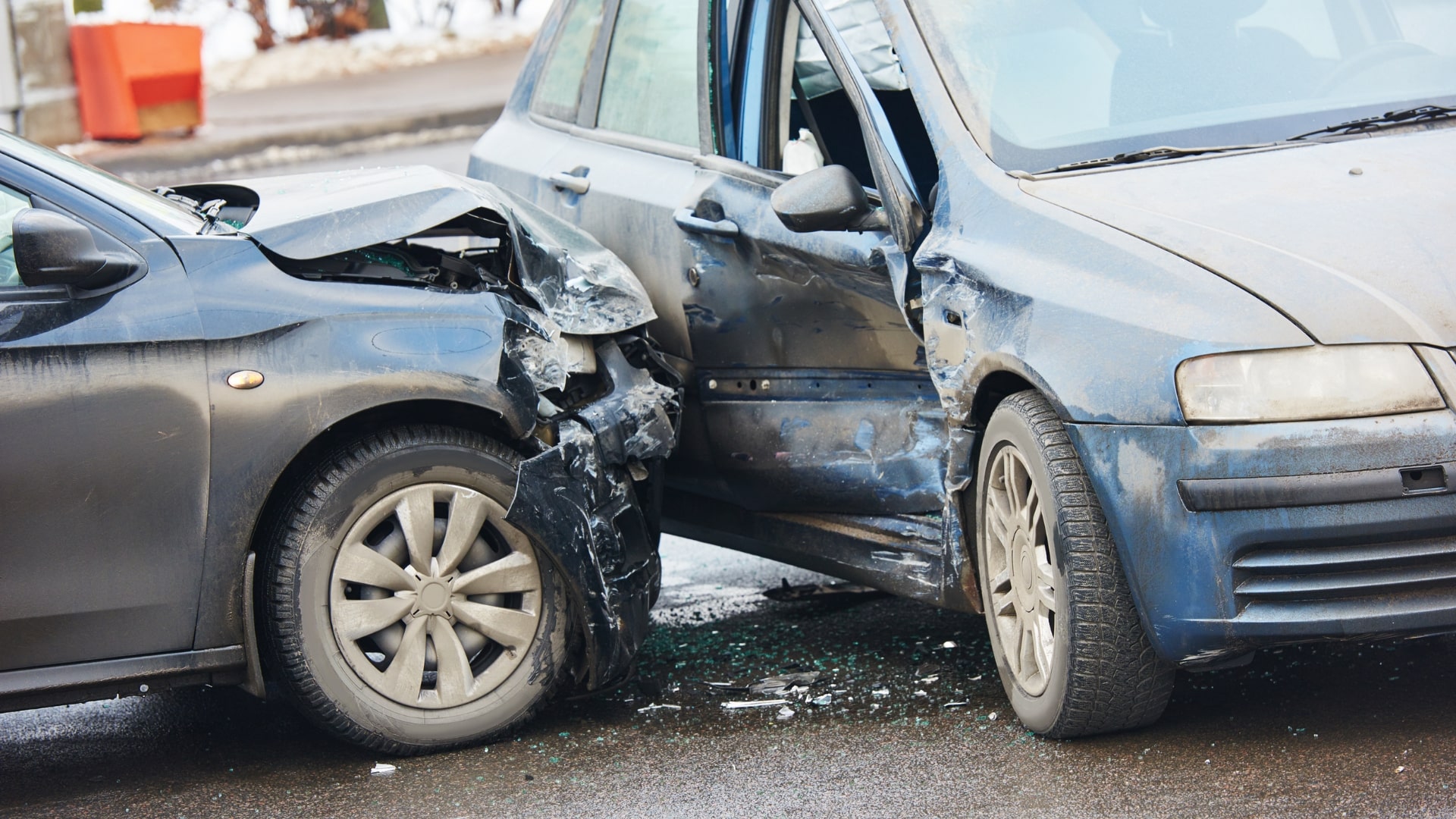
A serious wreck rearranges your life in seconds. One moment you are merging onto I-35 with the radio on; the next you are staring at a crushed hood and a stack of questions no one prepared you for.
Our Texas car accident lawyers exist for that exact moment, when the pain is real, the bills are coming, and the other driver’s insurance company is already deciding how little it can pay you.
Texas roads never rest. The Texas Department of Transportation reports that our state has not seen a single day without a traffic death since November 7, 2000.
Behind that streak are hundreds of thousands of crashes every year, and behind every crash is a person facing emergency care, missed paychecks, and the question of who pays. If you would rather talk it through with a person right now.
Call us anytime at (512) 254-4424. The consultation is free, and you pay nothing unless we win.

Goldberg & Loren Fights for Maximum Compensation


Pay Nothing, Unless We Win
Texas Injury Law at a Glance
| Deadline to file a lawsuit | Two years from the date of the injury. Tex. Civ. Prac. & Rem. Code § 16.003 |
| Fault Rule | Modified comparative responsibility ("51% bar"): you recover only if you are 50% or less at fault, and your award is reduced by your share. §§ 33.001, 33.012 |
| Reporting the crash | Notify police immediately when there is injury, death, or a vehicle that cannot be driven away safely. Tex. Transp. Code § 550.026 |
What a Lawyer Does in the First 48 Hours After a Crash
The first two days after a crash carry more weight than almost any moment that follows.
Skid marks are still on the pavement, witnesses still remember which light was green, and the insurance company has not yet locked in its story. While you deal with the emergency room, our car accident attorney goes to work on the facts that decide your case months later.
Locking Down Evidence Before It Disappears
Evidence disappears fast. A repair shop fixes the other driver’s bumper within a week, a business records over its security footage in days, and city traffic cameras cycle out old video on a set schedule, so a fast preservation letter is the difference between clear proof and your word against theirs.
We move immediately to photograph vehicle positions, debris, skid marks, and the damage and impact angle on both vehicles.
Modern crashes also leave a digital trail: dashcams, business surveillance, and the event data recorder inside many vehicles can capture important aspects of the crash. Speed, braking, and steering in the final seconds. We send letters that legally require the other side to preserve this data instead of quietly deleting it.
Witnesses and the Insurance Adjuster’s First Call
Helpful witnesses scatter within minutes, so we track them down while memory is fresh; one neutral witness who confirms the other driver ran the light can outweigh two adjusters arguing the opposite.
The other driver’s insurer often calls within a day, friendly and eager to help, but the adjuster wants a recorded statement and an early, cheap resolution before you know the full extent of your injuries. Sign an early release, and the money is gone the moment surgery becomes necessary, so we handle those calls for you.
Your Legal Duty to Report Your Crash in Texas
Texas law does not treat a serious crash as optional paperwork. Under the Texas Transportation Code, drivers must stop and report any wreck that injures someone, kills someone, or damages a vehicle enough that it cannot be driven safely (§§ 550.021–550.026).
A responding officer files a Texas Peace Officer Crash Report, the CR-3, which is one of the first documents an insurer reads and often shapes the early fault decision.
We request it quickly and check it for errors, and if it names the wrong driver or misstates a key fact, we gather the evidence to challenge it before that mistake becomes the insurer’s official version of events.
How Texas Fault Rules Affect What You Can Recover
How much money you get after your accident is often dependent on how much fault it is determined that you have. The Texas fault rules are strict, and fault is absolute and argued based on the evidence.
Proportionate Responsibility and the 51 Percent Bar Rule
Texas follows a modified comparative fault system called proportionate responsibility. Under Chapter 33 of the Civil Practice and Remedies Code, you can recover damages only if your share of the blame is 50% or less (§ 33.001), and your recovery is reduced by your own percentage of responsibility (§ 33.012).
Say your damages total 100,000 dollars and the insurer pushes 20% of the fault onto you; your recovery drops to 80,000 dollars, and if they convince a jury you were 51 percent responsible, you recover nothing. That math is why we fight every fault argument the insurer floats.
Proving Fault and Beating Insurer Tactics
Proving fault is about stacking evidence the insurer cannot wave away. When a driver breaks a traffic law, such as running a stop sign or speeding, Texas treats that violation as strong proof of negligence on its own.
We combine the crash report, physical damage, and independent witnesses to show how the other driver caused the wreck, and in serious cases we bring in accident reconstruction specialists who use skid marks, vehicle data, and impact angles to rebuild the crash second by second.
Because fault controls the money, insurers ask leading questions in recorded statements and argue you could have braked sooner, and we answer those moves with evidence, not opinions.
Common Car Accident Injuries We See
Not every injury appears on the first X-ray, and the type and severity of what you suffer drives the entire value of your claim. After serious Texas wrecks, the same injuries surface again and again:
- Whiplash and soft tissue damage to the neck, shoulders, and back
- Broken bones in the wrists, ribs, hips, and legs
- Traumatic brain injuries, including concussions that look minor at first
- Spinal cord damage that threatens permanent mobility
- Internal bleeding and organ damage that demand emergency surgery
- Burns from engine fires, hot fluids, or chemical exposure
- Emotional trauma, including anxiety, depression, and post-traumatic stress
Brain and Spinal Injuries and Their Long-Term Costs
A brain injury can change how you think, work, and speak long after the visible bruises fade, and a concussion that seems mild at the scene can grow into memory loss, headaches, and trouble working. Damage to the spine can end a career in an instant.
We work with treating doctors and vocational experts to document the future care and lost income these injuries force on a family, putting a real number on a career cut short rather than the insurer’s quick guess.
Delayed and Pre-Existing Injuries
Adrenaline masks pain and can hide serious harm for a day or two, so see a doctor even when you feel okay, because a gap in treatment gives the insurer an easy excuse to claim you were never really hurt.
Insurers also love to blame an old injury for new pain, but under the long-standing eggshell plaintiff rule, a driver who injures you takes you exactly as you are, so when a wreck makes an old condition worse, that worsening is compensable. Honest documentation of your baseline is often the key to beating this defense.
What Your Texas Car Accident Claim Is Worth
Every injured driver wants the same answer: what is my case worth? Value depends on your injuries, your losses, and how fault shakes out, and no ethical lawyer promises a number on day one. Compensation in Texas falls into clear categories, and we prove each with real evidence.
Economic Damages You Can Document
Economic damages are losses with a receipt. Your claim covers far more than the first hospital visit. It includes future surgeries, physical therapy, medication, and long-term care when injuries are permanent.
For severe cases, we bring in specialists to build a life-care plan projecting those costs across your lifetime.
If your injuries keep you from returning to the same work, Texas law also lets you recover for reduced earning capacity.
A Texas collision claim further covers:
- repair or replacement of your car, a rental while yours sits in the shop,
- towing and storage,
- diminished value,
- the money your vehicle loses simply because it now carries a wreck on its history
Non-Economic Damages and How Texas Juries Weigh Them
Some losses have no invoice. Pain, physical impairment, disfigurement, and the daily struggle of a body that no longer works right are all real.
Texas law allows compensation for them, weighed by how deeply the injury has reached into your sleep, your relationships, and the hobbies you gave up.
Punitive Damages in a Car Accident Case
Most crashes involve ordinary negligence, but some involve conduct so reckless the law punishes it. When a driver was drunk or acted with gross negligence, Texas allows exemplary (punitive) damages on top of your other compensation, but only on clear and convincing evidence of fraud, malice, or gross negligence (Tex. Civ. Prac. & Rem. Code § 41.003). A drunk driver who ran a red light at 80 miles per hour is the kind of defendant who can face that penalty.
Damage Caps in Texas
Texas does not cap the everyday compensation in a standard car accident case. Your medical bills, lost income, and pain and suffering carry no statutory ceiling, so a catastrophic injury can support a large recovery.
Exemplary damages work differently: when a jury awards punitive damages for gross negligence, Texas law caps that amount at the greater of $200,000 or two times your economic damages plus up to $750,000 in non-economic damages (Tex. Civ. Prac. & Rem. Code § 41.008).
A separate set of rules applies when a government vehicle causes the crash, because claims against public agencies face strict damage caps and a short six-month notice deadline under the Texas Tort Claims Act (§§ 101.023, 101.101).
Types of Texas Car Accident Cases We Handle
Car accident is a broad label that covers different types of crashes.
- Motorcycle accidents
- Truck accidents
- Lyft accidents
- Uber accidents
- Pedestrian accidents
- etc.
Each crash comes with its own evidence, injuries, and insurance fight. Our personal injury law firm handles the full range across Texas.
Rear-End Collision Claims
Rear-end crashes are common and often dismissed as minor, yet they cause some of the worst neck and spine injuries. The driver behind is usually at fault, but insurers still fight over how hurt you really are, so proving the force of the impact is where these cases are won.
Head-On Collision Claims
Head-on wrecks carry the highest risk of fatal and life-altering injuries because the force of both vehicles combines. These cases often turn on which driver crossed the center line, and the answer can hide inside vehicle data, so we move fast to secure both vehicles before they are scrapped and their final positions are lost.
Hit-and-Run and Unidentified Driver Claims
When the other driver flees, your case does not end. You may recover through your own uninsured motorist coverage, and sharp investigation can sometimes track down the driver who ran. We move quickly to pull camera footage and witness accounts and file the claim on time, since uninsured motorist benefits carry their own notice rules that trip up drivers who go it alone.
Distracted Driving Crash Claims
Texting, eating, and scrolling behind the wheel cause a growing share of Texas crashes, and phone records, app data, and witness statements can prove a driver was distracted at the moment of impact. Texas bans texting behind the wheel statewide (Tex. Transp. Code § 545.4251), and a message sent at the moment of impact can shift a case decisively in your favor.
Uninsured, Underinsured, and Multi-Vehicle Pileup Claims
Too many Texas drivers carry no insurance or far too little, and when the at-fault driver cannot cover your losses, your own uninsured and underinsured motorist coverage can step in. These claims pit you against your own insurer, where an attorney puts real pressure on a company that would rather pay you nothing.
Texas highways also see massive chain-reaction pileups when fog settles over I-35 or ice hits an overpass, and these are a puzzle of overlapping fault with a dozen drivers each blaming the next. We work through police findings, vehicle damage, and witness accounts to place fault accurately and shield you from blame for a crash you could not avoid.
How We Handle Aggressive Insurance Companies
Insurance companies are not in the business of paying full value. Their profit depends on paying you as little as possible, and they have trained adjusters and lawyers working toward that goal every day.
Building a Demand Package the Insurer Cannot Ignore
A demand package is the story of your claim told with proof. It gathers your medical records, bills, wage losses, and the evidence of fault into one organized presentation, and a detailed, documented demand tells the insurer you are prepared to take the case all the way to trial.
Texas Insurance Minimums and Your Recovery
Texas requires drivers to carry only modest liability coverage, currently $30,000 per injured person, $60,000 per crash, and $25,000 for property damage, known as 30/60/25 coverage (Tex. Transp. Code § 601.072).
Serious injuries blow past those limits in a single hospital stay, so when the at-fault driver carries only the minimum, your own underinsured motorist coverage becomes vital, filling the gap between their limits and the true cost of your injuries. We read every policy in play to find every available dollar.
Filing a Lawsuit to Force a Fair Offer
Most claims settle, but some need the pressure of a lawsuit to move. When an insurer refuses to offer fair value, filing suit opens the door to sworn testimony and evidence the company cannot dodge, and the filing itself often produces a better offer within weeks. Filing also stops the clock on a case approaching the two-year deadline.
What Sets Goldberg & Loren Apart
Choosing an accident lawyer after a crash is a decision you make once, often under stress, and it shapes everything that follows.
We carry decades of experience across personal injury and motor vehicle claims, so we already know the tactics insurers use and how to beat them.
We work on a contingency fee, which means you owe no attorney fees unless we recover money for you, and we advance the costs of building your case, so an empty bank account never stops a strong claim from moving forward.
Crashes do not wait for business hours, and neither do we: you can reach us any time, day or night, even a call from the emergency room at 11 p.m.
Talk to Goldberg & Loren for a Free Consultation
A crash leaves you with enough to carry: the medical appointments, the missed work, the calls from an insurer who does not have your interests in mind. You do not have to carry the legal fight alone.
We review your case, explain your options in plain language. We take over the investigation, the paperwork, and the insurance company while you focus on healing.
You pay nothing unless we win, and the conversation is free. Every day you wait lets evidence slip away, so the sooner you call, the sooner we can protect your claim.
Call Goldberg & Loren any time at (512) 254-4424 or reach us through our contact page to start your free consultation today. Let us carry the fight while you get back to your life.
Frequently Asked Questions
Texas generally gives you two years from the date of the crash to file a personal injury lawsuit (Tex. Civ. Prac. & Rem. Code § 16.003). A few narrow exceptions exist, but waiting is risky because evidence fades and witnesses move away. The safest move is to talk to a lawyer well before that deadline gets close.
Reputable injury firms work on contingency, so you pay no fee up front and no fee at all unless you win. The attorney fee is a percentage of the recovery, agreed to in writing before any work begins. That structure lets anyone afford strong representation, not just people with savings in the bank.
Almost never without advice. The first offer is usually a fraction of what a claim is worth, sent early in the hope you will sign before you understand your injuries. Once you accept and sign a release, you cannot go back for more, even if you need surgery next month. A quick review with a lawyer costs nothing and tells you whether the number is fair or an insult.
Small crashes can hide expensive injuries, and quick insurance offers often fall far short of the real cost. Even when a wreck seems minor, a free consultation costs you nothing and can reveal value you would otherwise miss. If your only damage is a dented bumper, a good lawyer will tell you that honestly.
Timelines vary widely based on the severity of injuries and the willingness of the insurer to be fair. A straightforward claim may resolve in a few months, while a serious injury case can take a year or more. Rushing to settle before you know the full extent of your injuries almost always costs you money.
Most Texas car accident claims settle without a trial. Strong preparation, solid evidence, and a credible willingness to go to court usually push the insurer to pay fair value first. When a company refuses to be reasonable, we are ready to file suit and try the case in front of a jury. That readiness is exactly what makes insurers take a claim seriously, so preparing for court often helps you avoid it.
Reporting a crash and filing a lawsuit are two very different deadlines, and the reporting one is far shorter. Under Texas law, if anyone is injured or killed, or a vehicle is too damaged to be driven away safely, the drivers involved must notify police immediately, not days later (Tex. Transp. Code § 550.026). You also have to stop, give your name, address, and insurance information, and help anyone who is hurt (§§ 550.021–550.023). Leaving the scene of an injury crash is a serious crime in Texas, not a paperwork issue.
The well-known “ten day” crash-report deadline belongs to the investigating officer, who must send the official report to TxDOT within ten days when a wreck causes injury, death, or at least $1,000 in property damage (§ 550.062). Your job is to report the crash to police right away, then notify your own insurer promptly. You can request your official crash report from the local police department that worked the scene or order it online through TxDOT.
The I-35 corridor (Austin, San Antonio, and Dallas), I-45 between Houston and Dallas, and I-10 carry the heaviest traffic and the most serious wrecks. TxDOT tracks the statewide toll through its #EndTheStreakTX campaign.
Legal Sources & References
The Texas laws described on this page are cited to the official statutes published by the Texas Legislature and were last reviewed on August 1, 2026.
- Statute of limitations (2 years), Tex. Civ. Prac. & Rem. Code § 16.003
- Comparative responsibility & reduction, Tex. Civ. Prac. & Rem. Code §§ 33.001, 33.012
- Duty to report a crash, Tex. Transp. Code §§ 550.021–550.026, 550.062
- Exemplary (punitive) damages, standard & cap, Tex. Civ. Prac. & Rem. Code §§ 41.003, 41.008
- Government-unit damage caps & notice (Texas Tort Claims Act), Tex. Civ. Prac. & Rem. Code §§ 101.023, 101.101
- Minimum auto liability insurance (30/60/25), Tex. Transp. Code § 601.072
- Texting while driving ban, Tex. Transp. Code § 545.4251
- Texas crash data, Texas Department of Transportation (TxDOT)