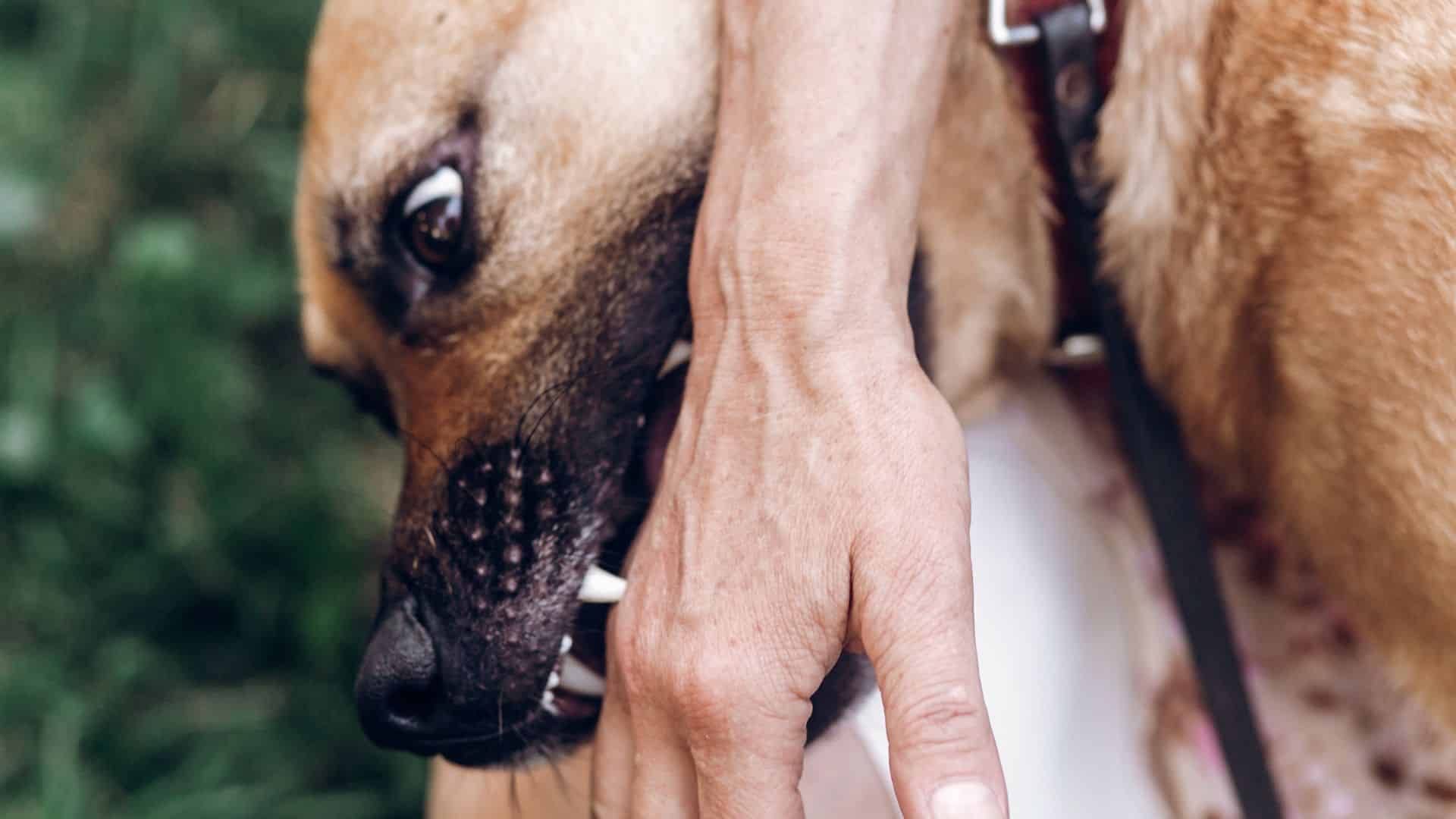
A Texas dog bite lawyer at Goldberg & Loren helps people injured by a dog, on a walk, at a park, in a neighborhood, or at someone’s home, recover for medical bills, scarring, and the lasting fear that follows an attack, especially for children. You pay nothing unless we win, and the consultation is free.

Goldberg & Loren Fights for Maximum Compensation


Pay Nothing, Unless We Win
Texas Injury Law at a Glance
| Deadline to file a lawsuit | Two years from the date of the injury (wrongful death: two years from the date of death). Tex. Civ. Prac. & Rem. Code § 16.003 |
| Fault rule | Modified comparative responsibility ("51% bar"): you recover only if you are 50% or less at fault, and your award drops by your share. §§ 33.001, 33.012 |
| Dog owner liability | Strict liability if the owner knew the dog was dangerous; otherwise negligence, including violating a local leash ordinance. Marshall v. Ranne, 511 S.W.2d 255 (Tex. 1974) |
| Dangerous-dog insurance | An owner of a legally designated dangerous dog must register it and carry at least $100,000 in liability coverage. Tex. Health & Safety Code § 822.042 |
Texas Dog Bites by the Numbers
Dog attacks are more common, and far more expensive, than most people realize. Nationwide, the average dog-bite liability claim reached $69,272 in 2024, up from $58,545 the year before, with total U.S. payouts hitting $1.57 billion (Insurance Information Institute).
Texas cities sit near the top of the national risk maps: Houston ranked #2 in the country for dog attacks on postal workers in 2024 (65 incidents) and stayed among the top cities in 2025, according to the U.S. Postal Service. Behind those figures are real injuries, and a homeowner-insurance system built to pay for them when the claim is documented correctly.
How Texas Dog-Bite Liability Works
Texas has no dog-bite strict-liability statute. Liability comes from common law under Marshall v. Ranne, 511 S.W.2d 255 (Tex. 1974). Under that case an owner is strictly liable only once they knew, or had reason to know, the dog had a dangerous propensity, a prior bite, snapping, lunging, or similar aggressive history.
Absent that knowledge, the owner can still be liable for negligent handling, including letting a dog run loose in violation of a local leash ordinance, which can establish negligence per se. Strict liability is one path to winning, not the only one, so a bite history helps your case but is not required.
The distinction is worth understanding because it decides what you must prove. On a strict-liability theory, you do not have to show the owner was careless; you show the owner knew the dog was dangerous and the dog injured you.
On a negligence theory, you show the owner failed to use reasonable care, for example by leaving a gate unlatched or walking a large dog on a frayed leash, and that failure caused the attack. We usually plead both so the defense has to defeat both, which raises the settlement pressure on the owner’s insurer.
A leash-law violation is one of the cleanest ways to prove negligence. Many Texas cities and counties require dogs to be restrained or confined, so an owner who let a dog run loose in violation of that ordinance can be found negligent per se, meaning the violation itself supplies the breach of duty. From there you connect the loose dog to the attack and the attack to your injuries.
Because the standard turns on what a reasonable owner would have done, the facts that seem small at the scene, a gate that did not latch, a warning the owner brushed off, a dog that had lunged at others before, often become the facts that decide the case.
Criminal Liability Under "Lillian's Law"
Beyond a civil claim for money, Texas also imposes criminal consequences on some owners. Under Texas Health & Safety Code § 822.005, often called “Lillian’s Law,” an owner whose dog causes serious bodily injury or death can face felony charges when the owner was criminally negligent in failing to secure the animal.
A criminal case is separate from your injury claim and is handled by prosecutors, not by us, but a related criminal record or animal-control finding can reinforce the civil case that the owner knew the risk and failed to act on it.
You Do Not Need a Prior Bite: The "One-Bite" Myth
People assume a dog gets “one free bite.” Not true in Texas. A prior bite makes strict liability easier to prove, but a first-time attack still supports a negligence claim when the owner failed to control the animal, an unleashed dog, an unlatched gate, ignoring posted rules. We plead both theories so the defense has to beat both.
Two Ways to Win a Texas Dog-Bite Case
| Strict liability | Applies when the owner knew the dog was dangerous — a prior bite or aggressive history. You do not have to prove carelessness; knowledge of the danger is enough. |
| Negligence | Applies when the owner failed to control the dog — off-leash against a city ordinance, an unlatched gate, ignoring posted warnings. No bite history required. |
Dangerous Dogs Must Carry $100,000 in Insurance
Once a dog is legally designated dangerous in Texas, the owner must register it with local animal control, restrain it, and carry at least $100,000 in liability insurance or financial responsibility for injuries it causes (Tex. Health & Safety Code § 822.042). That designation and the paper trail behind it often strengthen a victim’s claim.
Common Dog-Bite Injuries We See
Dog attacks rarely leave a single clean wound. The injuries that drive a Texas claim tend to fall into a handful of categories, and each one carries its own treatment path and long-term cost:
- Puncture wounds and infection. A dog’s teeth drive bacteria deep into tissue, so a wound that looks small at the surface can seal over an infection developing underneath. This is why prompt medical care and follow-up matter for both your health and your claim.
- Lacerations, tearing, and crush injuries. Larger dogs can shred skin and muscle and fracture bone, often requiring surgery and leaving lasting weakness or limited motion.
- Nerve and tendon damage. Bites to the hands, arms, and legs can sever nerves or tendons, sometimes permanently reducing grip or mobility.
- Facial injuries and scarring. Bites to the face, common in children, frequently require reconstruction and scar-revision surgery timed across years of growth.
- Emotional trauma. Nightmares, anxiety around dogs, and post-traumatic stress are real, compensable injuries, especially for a child bitten in a place that used to feel safe.
What Compensation a Texas Dog-Bite Claim Can Recover
A well-documented claim seeks the full cost of the attack, not just the first ER bill. That typically includes past and future medical care (including scar-revision and reconstructive surgery), lost wages and lost earning capacity, out-of-pocket costs, and non-economic harm such as physical pain, disfigurement, and mental anguish.
Because Texas follows modified comparative responsibility, your recovery is reduced by your share of fault, and you recover nothing if you are found more than 50 percent at fault (Tex. Civ. Prac. & Rem. Code §§ 33.001, 33.012). Insurers often try to shift blame onto the victim to trigger that rule, which is one reason it helps to have the records lined up before you give any statement.
Where the Money Comes From
Most dog-bite claims are paid through the owner’s homeowner or renter insurance, not out of the owner’s pocket, so pursuing a claim usually does not mean bankrupting a neighbor. When a dog has been legally designated dangerous, the mandatory $100,000 policy is another source of coverage.
We document the medical treatment, scar-revision estimates, lost income, and psychological impact (especially for children) so a quick, low offer does not leave your family paying for future care. Some policies exclude specific breeds or cap animal-liability payouts, and we check those terms early so the coverage picture is clear before you settle.
Coverage is not always limited to a single policy. If the attack happened somewhere the dog owner was renting, at a short-term rental, or on a property controlled by someone other than the owner, more than one liability policy may respond, and the property owner could share responsibility for allowing a known-dangerous animal on the premises.
Where a landlord knew a tenant kept a dangerous dog and did nothing, that knowledge can matter. We look for every policy that might apply rather than stopping at the first adjuster who calls, because the difference between one policy and two can be the difference between covering a child’s future surgeries and running out of coverage halfway through treatment.
Who Can Be Held Responsible
The claim is almost always against the dog’s owner, because the owner is the person the law expects to know the animal and control it. But the owner is not always the only responsible party. A person who was keeping or handling the dog at the time, a dog-sitter, a family member walking it, can owe the same duty of reasonable care.
When a landlord or property manager knew a dangerous dog was on the property and allowed it anyway, they may share liability under ordinary premises principles. Sorting out who is responsible early matters, because it determines which insurance policies are on the table and how much coverage is actually available for a serious injury.
What to Do After a Dog Attack in Texas
The first day or two after an attack decides how provable your case will be, and none of these steps require a lawyer:
- Get medical care right away and ask about infection and rabies risk. Follow every wound-care instruction and keep each follow-up appointment.
- Report the bite to local animal control. This opens an official file and starts the observation process that documents the dog’s vaccination status and history.
- Photograph the wounds now and again as they heal, plus the location and any open gate or broken fence.
- Identify the dog and owner and get their homeowner or renter insurance, and collect the names of any witnesses.
- Write down what happened and what the owner said, word for word, while it is fresh.
Then call us before giving any recorded statement to an insurer. An early, off-the-cuff description of the wounds can limit your claim before the injuries finish developing.
How a Texas Dog-Bite Case Proceeds
Most claims never see a courtroom, but the ones that settle well are built as if they might. The work starts with the record: medical charts, imaging, animal-control reports, photographs, and witness names, gathered while they still exist.
From there we identify the dog’s owner and every insurance policy that could respond, then put the insurer on notice so it cannot claim surprise later. Once treatment has progressed far enough to know what the injury will actually cost, including future scar-revision or reconstructive surgery, we present a demand that ties each dollar to a document.
If the insurer offers a fair number, the case resolves. If it lowballs or tries to pin the blame on the injured person to trigger the comparative-fault rule, a lawsuit preserves the claim and opens formal discovery, where the owner and witnesses answer under oath.
The point is not to fight for the sake of fighting; it is to make the low offer more expensive than the fair one. Because there is no fee unless we win, the firm carries the cost of building the case, and you are not paying by the hour while it develops.
The Deadline to File in Texas
Texas gives most injury claims two years from the date of the attack to file a lawsuit (Tex. Civ. Prac. & Rem. Code § 16.003). Miss that window and the claim is usually barred no matter how strong it is. For an injured child, the clock is paused: a minor’s injury claim is tolled until they turn 18, so the two years does not begin to run until then (§ 16.001).
Even with time on the calendar, the practical deadline is sooner, because witnesses move, memories fade, and animal-control records get harder to pull. The strong version of a case is easiest to build while everything is still fresh.
Frequently Asked Questions
No. A prior bite triggers strict liability, but you can also win on negligence, for example, when the owner violated a leash law, without any bite history (Marshall v. Ranne).
Usually the owner’s homeowner or renter insurance. The claim is against the owner, not typically the dog, and often does not come out of the owner’s own pocket.
An owner of a legally designated dangerous dog must carry at least $100,000 in liability coverage and register the dog (§ 822.042). That coverage and record can strengthen your claim.
Two years from the date of the attack (Tex. Civ. Prac. & Rem. Code § 16.003).
Nationally, the average dog-bite insurance claim was about $69,272 in 2024 (Insurance Information Institute), but your claim’s value depends on the severity of the injury, scarring, medical costs, and lost income. A free consultation gives you an honest range for your specific case.
Usually yes, most dog-bite claims are paid under the liability portion of the owner’s homeowner or renter policy. Some policies exclude specific breeds, which we check early.
Often, yes. For an injured child, the two-year clock is paused until they turn 18 under Texas’s legal-disability rule (§ 16.001).
Legal Sources & References
The Texas laws described on this page are cited to official primary sources and were last reviewed on August 1, 2026.
- Dog-owner liability, Marshall v. Ranne, 511 S.W.2d 255 (Tex. 1974)
- Dangerous-dog requirements, Tex. Health & Safety Code § 822.042
- Statute of limitations, Tex. Civ. Prac. & Rem. Code § 16.003
- Comparative responsibility, §§ 33.001, 33.012
- Dog-bite claim costs, Insurance Information Institute
- Dog-attack city rankings, U.S. Postal Service