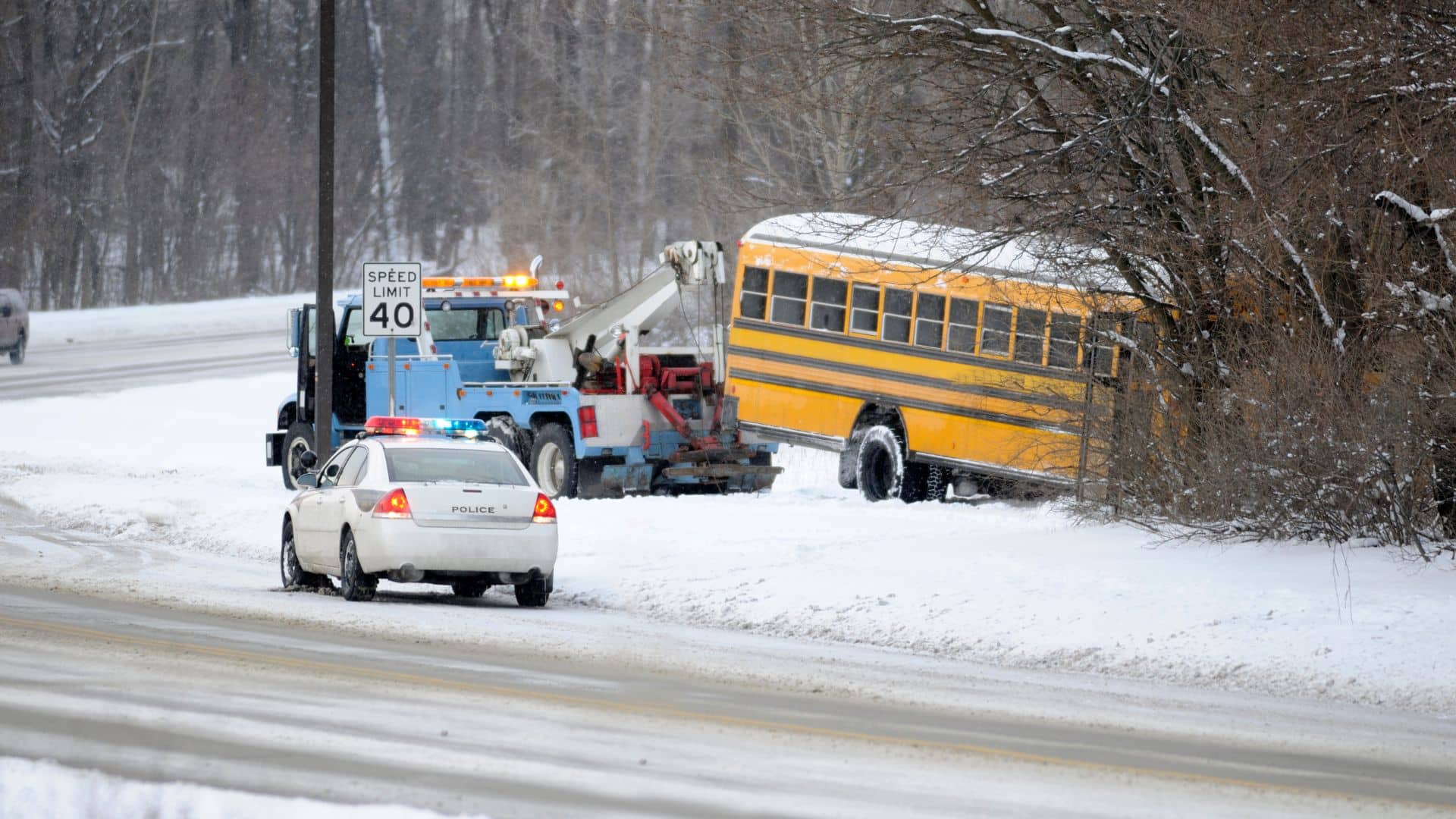
A Texas bus accident lawyer at Goldberg & Loren helps people hurt on city transit buses, school buses, charter and tour buses, party buses, and intercity carriers recover full compensation, and you pay nothing unless we win.
One warning up front: if a government bus was involved (a transit authority like CapMetro, VIA, DART, or Houston METRO, or a school district), you may have as little as six months to give written notice, so do not wait.

Goldberg & Loren Fights for Maximum Compensation


Pay Nothing, Unless We Win
Texas Injury Law at a Glance
| Deadline to file a lawsuit | Two years from the date of the injury (wrongful death: two years from the date of death). Tex. Civ. Prac. & Rem. Code § 16.003 |
| Fault rule | Modified comparative responsibility ("51% bar"): you recover only if you are 50% or less at fault, and your award drops by your share. §§ 33.001, 33.012 |
| Government bus (transit / school district) | Written notice within six months (or less by charter), and damages capped by the type of governmental unit. §§ 101.101, 101.023 |
| Reporting a crash | Notify police immediately when there is injury, death, or a vehicle that cannot be driven away safely. Tex. Transp. Code § 550.026 |
Federal Insurance Minimums for Buses
| Large buses (16+ passengers) | Interstate for-hire carriers must carry at least $5 million in liability coverage (49 C.F.R. § 387.33). |
| Smaller buses (15 or fewer) | At least $1.5 million in liability coverage. |
| Government buses (transit / school district) | No private policy minimum; instead the Texas Tort Claims Act caps damages by unit type and requires written notice within six months (§§ 101.023, 101.101). |
The Buses Involved in Accidents We Handle Across Texas
Every kind of bus carries its own rules and its own insurance. We handle claims involving:
- City and transit buses, CapMetro (Austin), VIA (San Antonio), DART (Dallas), and METRO (Houston). These are government units, so the Texas Tort Claims Act applies.
- School buses, Texas school districts answer for injuries arising from the operation of their buses, which keeps these crashes inside the Tort Claims Act.
- Charter and tour buses, private carriers moving groups to events, casinos, and destinations across Texas.
- Party buses and limo buses, where alcohol and standing passengers add real risk.
- Intercity carriers, Greyhound, FlixBus, and similar lines running I-35, I-45, and I-10.
Government Bus vs. Private Carrier: Two Very Different Deadlines
When a government bus is involved, the claim runs through the Texas Tort Claims Act: written notice within six months (sometimes less by city charter), damages capped by the type of governmental unit, and immunity waived for injuries from the operation of a motor vehicle (Tex. Civ. Prac. & Rem. Code §§ 101.021, 101.023, 101.101). Miss the notice window and an otherwise strong case can be lost before it starts.
A private charter, tour, or intercity carrier follows the ordinary two-year statute of limitations (§ 16.003) and carries no government cap. Interstate for-hire buses must also carry large federal minimum insurance, at least $5 million for vehicles seating 16 or more passengers, and $1.5 million for smaller ones (49 C.F.R. § 387.33).
Identifying which set of rules applies is the first thing we do.
Charter and Tour Bus Crashes
Charter and tour bus operators are commercial carriers held to federal safety standards covering driver hours, inspections, and maintenance.
When a charter bus crashes, the operator, the driver, a maintenance contractor, and sometimes the trip organizer can all share liability. We send preservation letters early for the electronic logs, inspection records, and onboard camera footage, and we pursue the large commercial policies these carriers are required to hold.
Texas treats a company that carries paying passengers as a common carrier, which owes those passengers a high degree of care, a stricter standard than the ordinary care an everyday driver owes.
That heightened duty means choices an ordinary driver could make freely can become the basis of a claim against a carrier: sending a coach onto the highway with worn tires, dispatching a driver near the end of a long shift, or loading more passengers than the vehicle was rated for.
Because those decisions sit with the company rather than the injured rider, and because interstate carriers must hold large federal-minimum insurance ($5 million for buses seating 16 or more, and $1.5 million for smaller ones under 49 C.F.R. § 387.33), a private-carrier claim often has more room to make a seriously injured passenger whole than a capped government claim does.
How the Tort Claims Act Caps Actually Work
When a government bus is involved, the size of the damage cap depends on the kind of governmental unit, not on how badly you were hurt.
Under Tex. Civ. Prac. & Rem. Code § 101.023, a unit of local government such as a transit authority or a school district is capped at $100,000 per person and $300,000 per occurrence, while a municipality is capped at $250,000 per person and $500,000 per occurrence.
Because the occurrence cap is shared, a crowded bus crash can force many injured riders to divide a single limited pool rather than each collecting the full per-person figure.
Identifying the exact defendant is what tells us which cap, and which deadline, controls, and it is why we look hard for any private party whose insurance sits outside the caps entirely.
Fault in a bus case is rarely all or nothing. Texas follows a modified comparative responsibility rule, so an injured person can still recover as long as they are 50% or less at fault, with the award reduced by their share of the blame (§§ 33.001, 33.012).
When a third driver forced the bus into a collision, that driver is a private defendant with ordinary insurance and no government cap, so identifying every at-fault party can turn a token recovery into a full one.
Injuries a Bus Can Cause Without a Collision
A bus does not have to strike another vehicle to seriously hurt someone. Most transit and school buses have few seat belts, and many riders stand or are still moving to a seat when the bus accelerates or brakes hard.
A sudden stop can throw a standing passenger into a pole, a seat frame, or another rider, and a door that closes too soon or a step in poor repair can injure someone boarding or stepping off.
These injuries run from broken wrists and ribs to spinal damage and head trauma, and a hard blow to the head can cause a traumatic brain injury that changes how someone works and lives.
Because there is no crumpled metal to point to, an insurer often argues the rider simply lost their balance, so the proof in these cases usually lives on the bus itself.
Onboard cameras and the vehicle’s own data can show a hard brake or an early pull-away that threw the rider, which is why we move quickly to preserve that footage before it cycles off on a short retention schedule.
Prompt medical care matters just as much, because getting examined the same day ties each injury to the crash in a way an adjuster cannot easily dispute, and a gap in treatment is the first thing the other side uses to argue the harm came from something else.
Who Can Be Held Responsible For a Bus Collision?
More than one party can share fault for the same bus crash, and naming all of them is often the difference between a partial recovery and a full one.
Depending on the facts, responsibility can fall on the bus driver, the company or public agency that employed and trained the driver, a maintenance contractor who serviced the vehicle, or another motorist whose driving forced the collision.
If a school district bus is involved, the district is usually the governmental unit that answers, which pulls the case inside the Tort Claims Act and its six-month notice deadline.
If a private charter caused the wreck, the carrier and its large federal insurance policy come into play instead, with no government cap on your recovery.
What to Do After a Texas Bus Crash
Get medical care, report the crash, and photograph everything, the bus number, the route, and the scene.
Texas law requires drivers to notify police immediately when a crash causes injury, death, or a vehicle that cannot be driven away safely (Tex. Transp. Code § 550.026), and to stop, give their information, and help anyone who is hurt.
If a government bus was involved, contact a lawyer immediately so the six-month notice is prepared correctly.
Gather the names and numbers of other passengers and witnesses before they scatter, because a group of consistent accounts is far harder for an adjuster to dismiss than one injured rider. Then let us handle the insurers while you focus on healing.
Be careful about what you sign and say in the first weeks. A government claims office or a bus company’s insurer may reach out quickly with a request for a recorded statement or an early settlement offer, both designed to limit what they pay, and a modest early check can close off a claim worth far more once the full extent of an injury is known.
You are not required to give a statement before you understand your rights.
How We Build a Texas Bus Accident Case
The first thing we do is identify who owned, operated, and insured the bus, because that single fact sets your deadline and the rules that follow.
A bus painted with one company’s logo can turn out to be owned by a second company and leased to a third, so we pull the crash report, the vehicle registration, and the operating authority to be certain.
When a government operator is involved, we prepare and deliver the written notice the Tort Claims Act requires well inside the six-month window, since a late or incomplete notice can end an otherwise strong claim (§ 101.101).
At the same time, we move to protect the evidence. Transit and charter buses carry onboard cameras and telematics that follow short retention schedules, so we send preservation letters early for the video, the driver logs, the inspection and maintenance records, and any prior complaints tied to that route or operator.
From there, we match the evidence to the applicable deadline and the available insurance, whether that is a capped government claim or a private carrier’s large federal-minimum policy, so nothing is lost to a clock you did not know was running.
Our consultations are free, we work on a contingency fee, and you owe no attorney fee unless we win.
Frequently Asked Questions
You generally still have two years to sue, but you must give the government written notice within six months (or less by city charter) or you can lose the claim (§ 101.101). Do not wait.
Yes. A private charter or tour bus follows the ordinary two-year deadline with no government cap, and interstate carriers must hold large federal-minimum insurance (49 C.F.R. § 387.33). A city or school bus runs through the Tort Claims Act.
Depending on the facts: the driver, the bus company or government operator, a maintenance contractor, and sometimes a trip organizer. Naming every responsible party is often the difference between a partial and a full recovery.
Nothing up front. We work on a contingency fee, so our fee comes out of the money we recover for you. If we do not win, you owe no attorney fee.
CapMetro (Austin), VIA (San Antonio), DART (Dallas), and METRO (Houston), plus school districts, all are governmental units, so the Tort Claims Act and its six-month notice deadline apply.
Private charter, tour, and intercity carriers must carry large federal-minimum insurance, at least $5 million for buses seating 16 or more, and no government cap limits your recovery.
Legal Sources & References
The Texas laws described on this page are cited to official primary sources and were last reviewed on August 1, 2026.
- Statute of limitations, Tex. Civ. Prac. & Rem. Code § 16.003
- Comparative responsibility, §§ 33.001, 33.012
- Texas Tort Claims Act, §§ 101.021–101.023, 101.101
- Duty to report a crash, Tex. Transp. Code § 550.026
- Texas crash data, TxDOT
- Federal bus insurance minimums, FMCSA (49 C.F.R. § 387.33)