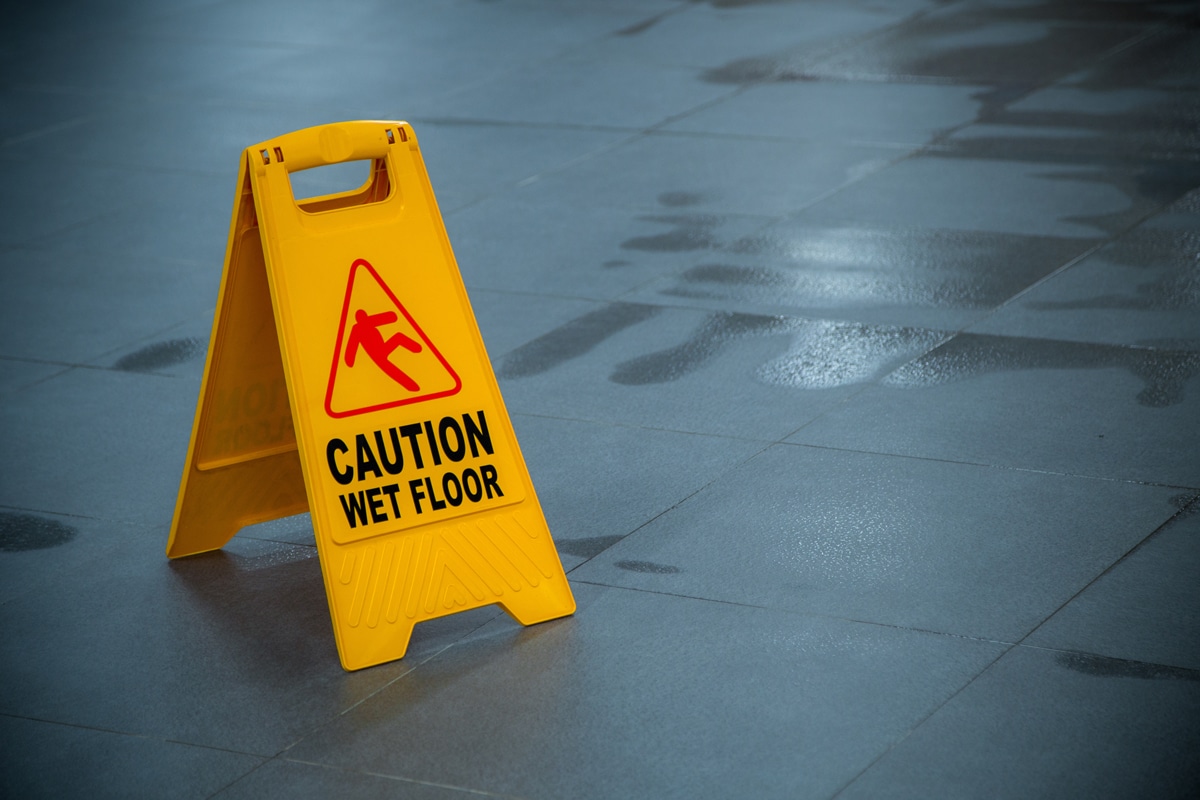
A Texas premises liability lawyer at Goldberg & Loren represents people hurt on someone else’s property, a fall at a store, an injury at an apartment complex, an assault a venue should have prevented, or a hazard on public land. These cases turn on what the owner knew and should have fixed, and you pay nothing unless we win.
Property owners in Texas have a legal duty to keep their premises reasonably safe for the people they invite in. When they ignore a known danger, fail to inspect for one, or cut corners on security, and someone gets hurt, they can be held responsible. But these claims are not automatic.
The law weighs why you were on the property, what the owner knew, and how long the hazard existed, and insurers fight hard on every one of those points. Below we explain how Texas premises liability law actually works, from your visitor status to the deadlines that can quietly end a claim, so you know what you are up against and how we approach it.

Goldberg & Loren Fights for Maximum Compensation


Pay Nothing, Unless We Win
Texas Injury Law at a Glance
| Deadline to file a lawsuit | Two years from the date of the injury (wrongful death: two years from the date of death). Tex. Civ. Prac. & Rem. Code § 16.003 |
| Fault rule | Modified comparative responsibility ("51% bar"): you recover only if you are 50% or less at fault, and your award drops by your share. §§ 33.001, 33.012 |
| What the property owner owed you | Depends on your visitor status (invitee, licensee, or trespasser); on government property the duty is usually the one owed a licensee. Tex. Civ. Prac. & Rem. Code § 101.022 |
| Bar/alcohol-provider liability | A provider can share liability for serving someone who was obviously intoxicated. Tex. Alco. Bev. Code § 2.02 |
Prior results do not guarantee a similar outcome; each case is different. Figures reflect firm-wide recoveries by Goldberg & Loren.
What the Property Owner Owed You, by Visitor Type
| Invitee (customer, business guest) | The highest duty: the owner must inspect for hazards and fix or warn about them, the category most store and business injuries fall under. |
| Licensee (social guest) | The owner must fix or warn about hazards it actually knows of, but has no duty to inspect for unknown ones. |
| Trespasser | The lowest duty: generally only to avoid willful or wanton harm, with a special exception protecting children under attractive-nuisance rules. |
Your Visitor Status Controls the Case
Texas sorts injured visitors into categories, invitee, licensee, or trespasser, and the category sets what the owner owed you. A customer or business guest is an invitee, owed the highest duty: the owner must reasonably inspect for hazards and then fix them or warn about them. A social guest is a licensee, owed a duty only as to dangers the owner already knows about, with no obligation to hunt for unknown ones.
A trespasser is owed the least, generally only a duty to avoid injuring them by willful, wanton, or grossly negligent conduct, though children hurt by an attractive nuisance receive more protection.
On government property, the duty owed is usually the lower one owed a licensee (Tex. Civ. Prac. & Rem. Code § 101.022). Getting the category right is where these cases are won or lost, and it is one of the first things an insurer will try to reclassify to lower what it owes.
Slip-and-Fall and the Notice Rule
Store fall cases turn on notice: what the owner actually knew, or should have known, about the hazard before you were hurt. A spill an employee created or personally saw is actual notice.
A spill that sat on the floor long enough that reasonable staff should have found and cleaned it is constructive notice, and that is where most grocery, big-box, and restaurant cases are decided.
Texas draws this line strictly. An employee merely standing near a hazard is not enough to prove the store should have known about it (Wal-Mart Stores, Inc. v. Reece, 81 S.W.3d 812 (Tex. 2002)); you generally need evidence of how long the danger was present.
That is why we move fast for the incident report, cleaning and inspection logs, and camera footage that can timestamp the hazard before they cycle out or are recorded over.
Negligent Security
Not every premises case is a fall. When a property owner in a high-crime area fails to provide reasonable lighting, working cameras, functioning locks, or security staff, and a foreseeable assault or robbery happens as a result, the property can share liability for the harm.
The central question is foreseeability: could the owner have anticipated the danger? The answer is often sitting in the property’s own records, prior police call history, incident reports, and area crime data, which we subpoena early.
Apartment complexes, parking garages, bars, and hotels are common settings for these claims. The owner is never automatically liable simply because a crime occurred; you have to show the risk was foreseeable and that reasonable precautions were skipped.
Injuries on Government Property
Claims against a city, county, or the State run through the Texas Tort Claims Act rather than ordinary negligence law, and the rules are less forgiving. The government generally owes only the duty owed a licensee (§ 101.022), meaning it is liable mainly for dangers it actually knew about and did not warn you of.
Damage caps limit what you can recover, and you must give the government entity written notice within six months of the incident (§ 101.101), and some cities set even shorter deadlines by charter.
That notice window catches victims constantly, because it runs long before the two-year lawsuit deadline. If your injury happened on public property, tell a lawyer quickly so the notice can be sent in time.
Dog Bites and Liability in Texas
Texas has no civil dog-bite statute, so there is no automatic (“strict”)
liability the moment a dog bites. A claim runs on common law instead, and the
lead theory is the “one bite rule.” Under the Texas Supreme Court’s decision in
Marshall v. Ranne, an owner is liable when they knew or had reason to
know the dog had dangerous propensities, often shown by a prior bite, lunging,
or growling aggression.
You do not always need proof the dog bit before. Two other paths reach an
owner who had no such warning. Ordinary negligence covers an owner or handler
who failed to use reasonable care, such as leaving a gate open. Negligence per
se applies when the owner broke a safety rule, like a city leash ordinance or
the dangerous-dog registration and restraint requirements in Chapter 822 of the
Texas Health and Safety Code.
This is where premises liability enters. When the attack happens on property
someone else controls, a landlord or property owner can share fault, but the
Texas standard is strict. Under Batra v. Clark, they are liable only if
they had actual knowledge of the specific dangerous dog and had the ability to
control the area where it was kept. Constructive or “should have known”
knowledge is not enough against a landlord.
Serious attacks can also trigger criminal charges. Under Lillian’s Law
(Texas Health and Safety Code Section 822.005), an owner whose unsecured dog
makes an unprovoked, off-property attack causing serious injury can face a
felony, separate from your civil claim. Texas gives you two years from the date
of the bite to file that civil claim under Section 16.003. If a dog injured you
on someone else’s property, our Texas dog bite lawyers can identify every party who owed you a duty of care.
How We Build Your Case
Premises evidence is fragile. Surveillance footage is often overwritten within days or weeks, cleaning logs get discarded, and witnesses move on. The first job is preservation: we send spoliation letters demanding the owner keep the footage and records, and we document the scene, your injuries, and the conditions that caused them.
From there we identify every party that may share responsibility, the store, a cleaning contractor, a property manager, a security company, and we deal with the insurers so you are not negotiating from a hospital bed.
Because Texas uses modified comparative responsibility, the defense will try to pin part of the blame on you; you can still recover as long as you are 50% or less at fault, with your award reduced by your share (§§ 33.001, 33.012). You pay us nothing up front, and no fee at all unless we recover for you.
What a Premises Claim Can Cover
A successful premises liability claim can compensate you for more than the emergency room bill. Recoverable losses typically include past and future medical treatment, lost wages and reduced earning capacity if the injury keeps you from working, and the physical pain, disfigurement, and mental anguish the injury caused. In cases involving especially reckless conduct, additional damages may be available.
What a case is worth depends on the severity of the injury, the strength of the evidence, and how clearly the owner’s negligence can be shown, which is another reason preserving footage and records early matters so much. We do not put a price on a case before we understand it, and no honest lawyer should.
Frequently Asked Questions
That the owner knew or should have known about the hazard and failed to fix or warn about it. Your visitor status — invitee, licensee, or trespasser — sets the exact duty (§ 101.022).
Sometimes, under negligent-security law, when the crime was foreseeable and the property failed to take reasonable precautions like lighting, cameras, or security.
Two years from the date of injury (Tex. Civ. Prac. & Rem. Code § 16.003), and evidence like footage disappears far sooner.
Under Texas’s “time-notice” rule, you show the hazard existed long enough that reasonable staff should have found and removed it. An employee simply being nearby is not enough (Wal-Mart Stores, Inc. v. Reece, 81 S.W.3d 812 (Tex. 2002)). That is why we move fast for cleaning logs and camera footage that timestamp the hazard.
Legal Sources & References
The Texas laws described on this page are cited to official primary sources and were last reviewed on August 1, 2026.
- Premises-defect duty on government property, Tex. Civ. Prac. & Rem. Code § 101.022
- Government notice deadline, § 101.101
- Dram Shop Act, Tex. Alco. Bev. Code § 2.02
- Statute of limitations, Tex. Civ. Prac. & Rem. Code § 16.003
- Comparative responsibility, §§ 33.001, 33.012
- Slip-and-fall “time-notice” rule, Wal-Mart Stores, Inc. v. Reece, 81 S.W.3d 812 (Tex. 2002)