In This Article
What Is Portland’s High Crash Network?
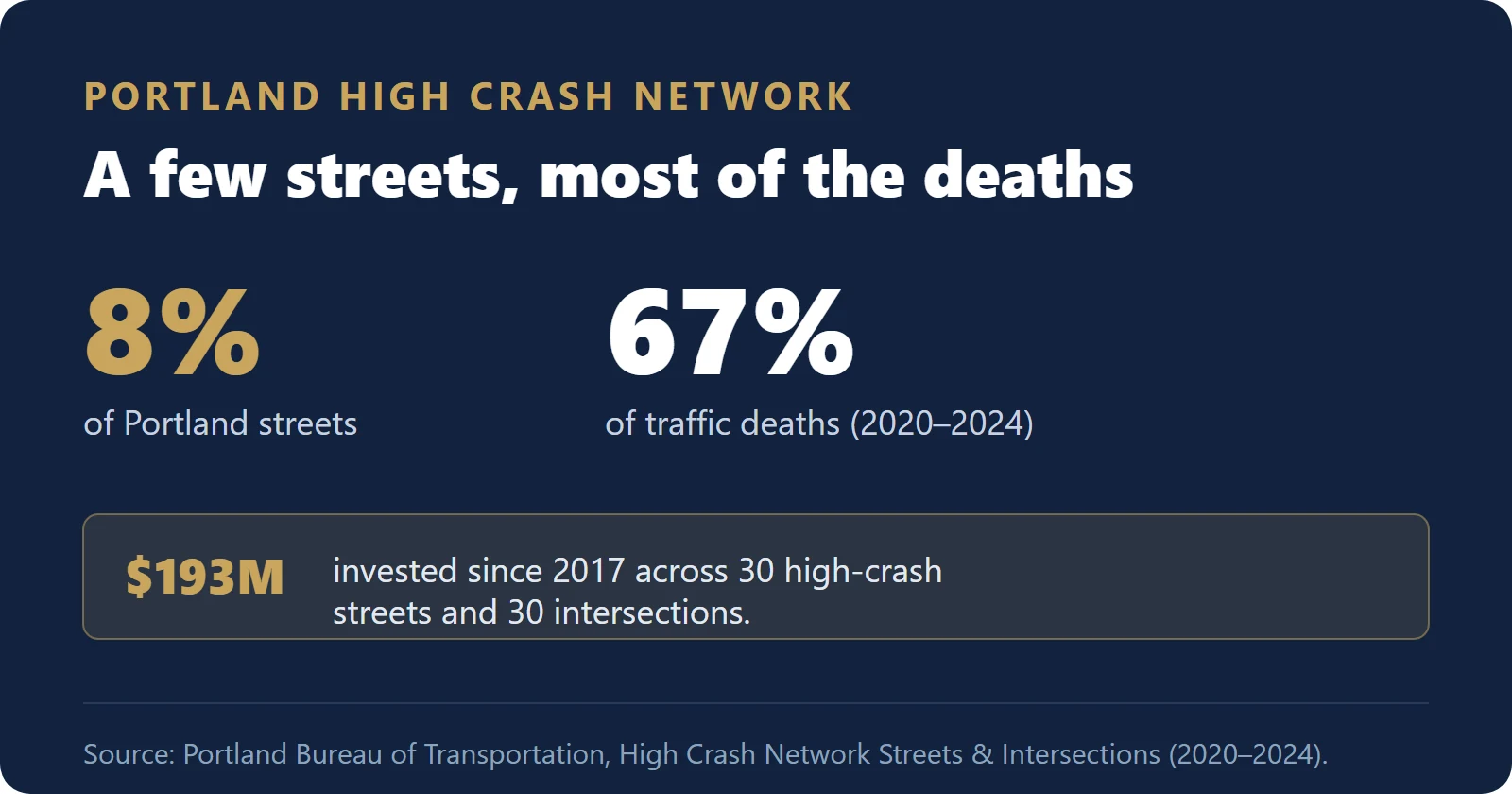
The High Crash Network (HCN) is the Portland Bureau of Transportation’s Vision Zero designation for the streets and intersections with the most serious and fatal crashes. These streets are only about 8% of Portland’s streets, yet they account for roughly 67% of traffic deaths (2020–2024). The network covers 30 streets and 30 intersections.
Which Portland Streets Are on the High Crash Network?
PBOT’s list is dominated by wide East Portland arterials. Streets on the network include:
- SE Powell Blvd
- SE Division St
- SE Stark St
- SE 82nd Ave
- SE/NE 122nd Ave
- SE Foster Rd
- N/NE Marine Dr
- NE Sandy Blvd
- NE Halsey St
- NE Glisan St
- E Burnside St
- N Lombard St
- NE Killingsworth St
- SE Hawthorne Blvd
- SE Holgate Blvd
- NE César E. Chávez Blvd
For the specific worst intersections, see our companion guide to the 15 most dangerous intersections in Portland.
Why Are These Streets So Dangerous?
Most High Crash Network streets share the same features: multiple lanes, higher speeds, heavy traffic, and long distances between safe crossings. Many run through East Portland, where nearly half of the city’s traffic deaths occur.
Who Is Responsible for These Streets?
The city (PBOT) owns about 82% of High Crash Network streets and Oregon DOT owns about 18% (two bridges are Multnomah County’s). Ownership matters if road design or maintenance contributed to a crash, because it determines who a claim runs against. Since 2017, Portland has invested more than $193 million in safety improvements on these streets.
Frequently Asked Questions
It is PBOT Vision Zero list of the streets and intersections with the most serious and fatal crashes: about 8 percent of Portland streets that account for roughly 67 percent of traffic deaths from 2020 to 2024.
Major arterials including SE Powell, SE Division, SE Stark, SE 82nd, 122nd, SE Foster, Marine Drive, NE Sandy, Halsey, and Glisan, among others.
They are wide, higher-speed arterials with heavy traffic and long gaps between safe crossings, many of them in East Portland.
PBOT owns about 82 percent and ODOT about 18 percent, with two bridges owned by Multnomah County.
Portland has invested more than 193 million dollars since 2017 through Vision Zero, including speed-limit reductions and safety cameras.
Get medical care, document the scene, and talk to a car-accident attorney, especially if road design or a public agency may share responsibility.
Injured on one of these streets? Our Portland car accident attorneys can help. Call (971) 339-8080 or request a free consultation.
Sources
[1] Portland Bureau of Transportation — High Crash Network Streets & Intersections (2020–2024). portland.gov
General information, not legal advice. Last updated September 2026.
Our Car Accident Service Areas
Where We Handle Car Accident Cases in Oregon
Goldberg & Loren's car accident lawyers help people injured in crashes throughout Oregon. If you were hurt in a wreck in one of these communities, connect with a local car accident lawyer: