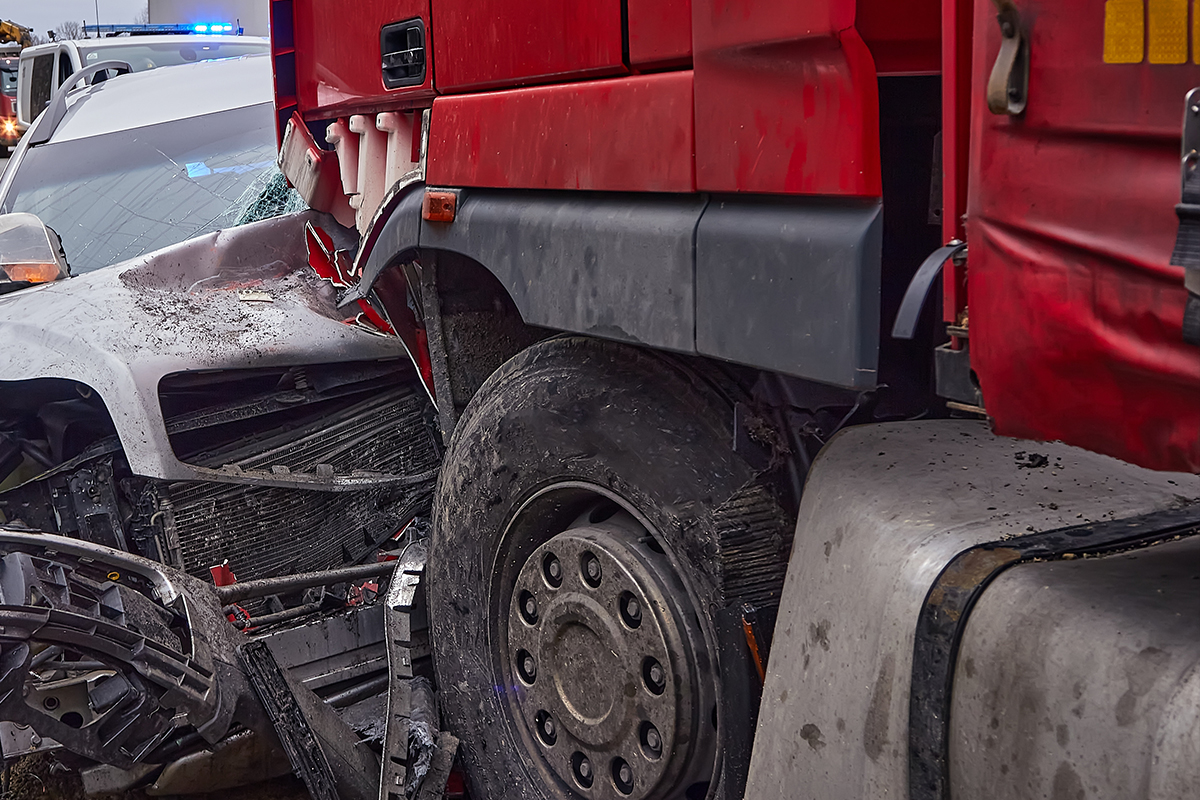
The truck that hit you was the last link in a chain that started across the border. Hours earlier, that trailer sat at a factory in Juarez, cleared customs at a bridge, passed to a short-haul carrier, and rolled onto I-10. Every company that touched it owed a duty, and any one of them could share the blame for your crash. An El Paso truck accident lawyer works that chain backward, because the driver is almost never the only one who owes you.
This page follows one load from the factory floor to the wreck on the freeway. At each handoff, you will see who might be responsible and what proof decides it.
The consultation is free, and you pay nothing unless we win.
Call (512) 254-4424 any time, day or night or fill out the form for more information.

Goldberg & Loren Fights for Maximum Compensation


Pay Nothing, Unless We Win
Texas Injury Law at a Glance
| Deadline to file a lawsuit | Two years from the date of the injury. Tex. Civ. Prac. & Rem. Code § 16.003 |
| Fault rule | Modified comparative responsibility ("51% bar"): you recover only if you are 50% or less at fault, and your award is reduced by your share. §§ 33.001, 33.012 |
| Reporting the crash | Notify police immediately when there is injury, death, or a vehicle that cannot be driven away safely. Tex. Transp. Code § 550.026 |
| Punitive (exemplary) damages | Available only on clear and convincing evidence of gross negligence, malice, or fraud. Tex. Civ. Prac. & Rem. Code § 41.003 |
This page follows one load from the factory floor to the wreck on the freeway. At each handoff, you will see who might be responsible and what proof decides it.
The consultation is free, and you pay nothing unless we win. Call (512) 254-4424 any time, day or night.
Why You Need a Skilled El Paso Semi Truck Crash Lawyer
El Paso is one of the busiest freight crossings on the southern border, and the Ysleta-Zaragoza bridge alone moves millions of commercial trucks a year. That volume feeds the regional economy, and it crowds the roads that ordinary drivers use every day. When a fully loaded rig hits a passenger car, the injuries are severe, and the list of possible defendants runs long. Our legal team starts every truck case by tracing that list all the way to the end.
Most people picture a truck crash as a fight with one driver and one insurance company. Cross-border freight is rarely that simple. A single trailer can pass through five or six sets of hands before it reaches El Paso traffic, and a failure at any point can put a dangerous truck in your lane. Finding that failure means following the freight, not just blaming the person behind the wheel.
The Maquiladora Shipper Who Loaded the Trailer in Juarez
It begins at the factory. Workers at a Juarez plant load and secure the cargo, and how they do it matters long after the trailer crosses the river. A load stacked too heavy, balanced wrong, or strapped poorly can make a truck roll on a curve or fold under hard braking. When that happens, the company that loaded the trailer can share responsibility even though it never touched El Paso soil.
We look hard at the bill of lading and the weight tickets, because those documents show what went into the trailer and how much it weighed. An overloaded or unbalanced trailer is not the driver’s mistake alone, and a shipper does not get to hide behind the border when its loading crew created the danger.
The Customs Broker and Drayage Carrier at the Zaragoza Bridge
Cargo rarely rides with one truck the whole way. Short-haul drayage carriers shuttle trailers across the bridge and through the customs process, then hand off to the long-haul carrier that takes the freight up I-10 and beyond. Each transfer is a chance for a tired driver, a rushed inspection, or a skipped repair to slip through unnoticed.
Sorting out which carrier controlled the truck at the moment of your crash takes work, and it is work the trucking companies will never do for you. We pull the transportation contracts and dispatch records that show who was actually in charge of that trailer when it hit you. That answer decides whose insurance pays.
Why a Mexican Carrier Does Not Put Your Case Out of Reach
People often assume that a truck tied to a Mexican company means there is no one to hold accountable. That is usually wrong. Cross-border freight involves United States brokers, freight forwarders, and shippers who arranged the haul and can be sued right here in Texas. Carriers that operate on this side of the border also must carry federal insurance and register with United States regulators. An El Paso truck accident lawyer knows where to find the American parties standing behind a cross-border load.
The Freight Broker Who Arranged the Haul
Behind many loads sits a freight broker, the company that matched the shipper with a carrier. A broker that hires a carrier it knew or should have known was unsafe can share responsibility for the crash that follows. Brokers are United States companies, easy to reach in court, and they carry their own insurance.
We look at how the load was brokered and whether the broker ignored a carrier’s poor safety record to save money. When a broker put profit ahead of a known risk, its choice becomes part of your claim, adding one more responsible party and one more policy. Identifying the broker early matters, because these relationships live in contracts a company will never volunteer.
The El Paso Trucking Company Behind the Wheel
Once the load reaches a long-haul carrier, the company itself becomes a central figure in your claim. Federal law holds motor carriers responsible for how they hire, train, and supervise their drivers, and for the condition of the trucks they send out. A company that cuts those corners owns the crash that follows.
This matters for a practical reason. The carrier usually holds far more insurance than the driver and has far more to answer for. Proving that the company’s own choices caused the wreck opens the door to the coverage that can actually pay for a catastrophic injury, rather than a thin personal policy that runs dry in a week.
Hours of Service and the Fatigued Driver on I-10
Federal hours of service rules limit how long a trucker can drive before resting, because a fatigued driver reacts like an impaired one. A carrier that pressures drivers to run past those limits to hit a delivery window is inviting the exact crash that follows. The long, monotonous run along I-10 is where drowsy driving quietly turns deadly.
Electronic logging devices now record driving hours automatically, which makes it much harder for a company to hide a driver who was over hours. Those records tell the truth about how long the driver had been at the wheel, and we go get them before they cycle out.
The Delivery Window That Pushes a Driver Past the Limit
Behind many fatigued-driver crashes is a schedule no honest driver could keep. A dispatcher promises a delivery time that only works if the driver skips rest, and the pressure rolls downhill to the person holding the wheel. We look at the dispatch logs and delivery contracts to show when a company built a schedule that all but required breaking the rules.
Negligent Hiring and the Driver Who Never Should Have Been Behind the Wheel
A carrier is supposed to check a driver’s record, test for drugs and alcohol, and confirm real training before handing over the keys to an 80,000-pound vehicle. When a company skips those steps and hires someone with a history of crashes or violations, the company’s carelessness becomes part of your case. The driver qualification file often reveals a hiring decision that never should have been made, and it is one of the first records we demand.
The Evidence a Trucking Company Can Erase Within Days
Trucking companies investigate serious crashes immediately, often sending a team to the scene before the vehicles are even cleared. They are building their defense while you are still in the hospital. Much of the proof that would help you sits inside the company’s own systems, and some of it can be gone within days if no one demands that it be kept.
A preservation letter, sent fast, freezes those records before a routine retention policy erases them. These are the pieces we move to lock down after an El Paso truck crash.
- Electronic logging device data showing the driver’s hours in the days before the crash.
- The engine control module download with speed, braking, and throttle in the final seconds.
- The driver qualification file, including background checks and prior violations.
- Drug and alcohol testing results connected to the crash.
- The bill of lading and weight tickets that show how the trailer was loaded.
- Any dashcam or fleet camera footage recorded from the truck itself.
Each record answers a question the company would rather leave unanswered. Together they can turn a he-said dispute into a documented account of exactly what went wrong and who allowed it.
The Engine Control Module That Times the Final Seconds
Every heavy truck carries a control module that quietly logs how the truck was driven. It captures road speed, brake use, and throttle in the moments before impact, and that data can flatly contradict a driver who swears he was under the limit and braking hard. Pulled early, before the truck is repaired or scrapped, the module becomes some of the strongest evidence in the whole case.
Why El Paso Truck Crash Injuries Cost So Much More
A loaded tractor-trailer can weigh 20 to 30 times what your car weighs, and that mismatch is why these crashes cause such serious harm. The injuries are rarely minor. Spinal cord damage, traumatic brain injury, amputations, and permanent disability show up again and again, and the medical bills climb into the hundreds of thousands fast.
Because the stakes are so high, the value of a truck claim looks nothing like a fender bender. The one piece of good news is that commercial trucking carries far larger insurance than an ordinary car, and finding every layer of it is often what makes a full recovery possible.
The Commercial Policies That Stack Behind a Big Rig
Federal rules require interstate carriers to carry substantial liability coverage, often $750,000 or more, and many haulers stack additional excess policies on top of that. When the shipper, broker, and carrier are separate companies, each may bring its own insurance to the table. Identifying and combining those policies is how a claim reaches the numbers that a lifetime of care actually costs.
How Your Own Coverage Helps When the Policies Run Short
Even large commercial policies can fall short of a truly catastrophic injury. When they do, your own underinsured motorist coverage may add another layer, and we check for it in every case. Reading each policy closely, rather than trusting the first number an insurer offers, is often the difference between a settlement that covers your future and one that leaves your family short.
The Deadline and the Head Start an El Paso Truck Accident Lawyer Needs
Texas law generally gives you two years to file suit after a truck crash, but the real race is far shorter. The logs, the module data, and the driver files all sit on retention schedules that can wipe them long before that deadline arrives. Waiting turns a provable case into a guessing game.
Starting early lets a lawyer send preservation demands, track down every company in the chain, and secure the truck before it is repaired or sold for parts. The sooner the work begins, the more of the story survives to be told.
The Federal Safety Rules a Careful El Paso Carrier Must Follow
Hours of service are only one piece of the federal rulebook that governs trucking. Motor carriers must inspect and maintain their equipment, secure their loads, and put qualified drivers behind the wheel. When a company treats those rules as optional, the risk lands on everyone sharing I-10 with its trucks.
These regulations matter to your case because a violation is powerful evidence of negligence. A rule written to prevent the exact crash you survived, ignored by the company that hit you, tells a jury a great deal. We measure the carrier’s conduct against every rule that applies.
Brake and Tire Maintenance the Rules Require
A loaded rig needs brakes and tires in top condition, because the stopping distance of an 80,000-pound vehicle leaves no room for worn equipment. Federal rules require regular inspection and repair, and a blown tire or a failed brake often traces back to maintenance a company skipped to save money. The maintenance records tell that story, and we demand them early.
Cargo Securement Standards for a Legal Load
Federal standards spell out how cargo must be secured so it cannot shift, spill, or fall onto the road. A load that was not tied down to standard can cause a rollover, a jackknife, or debris that triggers a chain-reaction crash. When a securement failure is involved, the company that loaded and inspected the trailer joins the list of those responsible.
The Inspection Reports That Reveal a Skipped Repair
Drivers are required to inspect their trucks and log defects, and carriers must keep those reports on file. A defect noted and never fixed is a paper trail leading straight to the company’s negligence. We compare the inspection logs against the repair records, because the gap between the two often explains the crash.
The Safety Record Hiding in the Carrier's History
Federal regulators track carriers through inspections, violations, and crash reports, and that history can reveal a company with a pattern of problems. A carrier cited again and again for maintenance or hours violations is one that chose profit over safety more than once. We pull that record because a history of violations makes the crash look less like bad luck and more like a matter of time.
El Paso Truck Accident Lawyers
A truck crash is not one claim against one driver. It is a chain of companies, and each of them has lawyers working to limit what it pays. You deserve someone tracing that chain on your behalf, from the loading dock in Juarez to the wreck on the freeway.
Our firm investigates El Paso truck accidents from day one, preserving the evidence and finding every party that shares the blame. The consultation is free, and you pay nothing unless we win your case.
Call (512) 254-4424 any hour, or reach us through our contact page. Talk to an El Paso truck accident lawyer before the logs cycle out and the trail across the border goes cold.
How Long Do You Have to Report a Crash in Texas?
Reporting a crash and filing a lawsuit are two very different deadlines, and the reporting one is far shorter. Under Texas law, if anyone is injured or killed, or a vehicle is too damaged to be driven away safely, the drivers involved must notify police immediately, by the quickest means available, not days later (Tex. Transp. Code § 550.026). You also have to stop at the scene, give your name, address, and insurance information, and help anyone who is hurt (§§ 550.021–550.023). Leaving the scene of an injury crash is a serious crime in Texas, not a paperwork issue.
You may have heard that you have “ten days to file a crash report.” That ten-day deadline actually belongs to the investigating police officer, who must send the official crash report to the Texas Department of Transportation within ten days when a wreck causes injury, death, or at least $1,000 in property damage (§ 550.062). The separate report drivers once mailed in themselves was eliminated years ago. Your job is to report the crash to police right away, then notify your own insurance company promptly, as your policy requires.
If your crash happened in El Paso, the El Paso Police Department handles it, and you can get a copy of your official crash report from the EPPD Records Division at the Gregory K. Allen Police Headquarters, 911 N. Raynor St., El Paso, TX 79903 ((915) 212-4267), or order it online through the Texas Department of Transportation. That report is one of the first things your attorney pulls, so it helps to know exactly where to find it. If you are not sure how to get your report or what it says about fault, call us at (512) 254-4424 and we will walk you through it.
Legal Sources & References
The Texas laws described on this page are cited to the official statutes published by the Texas Legislature and were last reviewed on August 16, 2026.
- Statute of limitations (2 years), Tex. Civ. Prac. & Rem. Code § 16.003
- Comparative responsibility & reduction, Tex. Civ. Prac. & Rem. Code §§ 33.001, 33.012
- Duty to report a crash, Tex. Transp. Code §§ 550.021–550.026, 550.062
- Exemplary (punitive) damages, Tex. Civ. Prac. & Rem. Code § 41.003
- Texas crash data, Texas Department of Transportation (TxDOT)