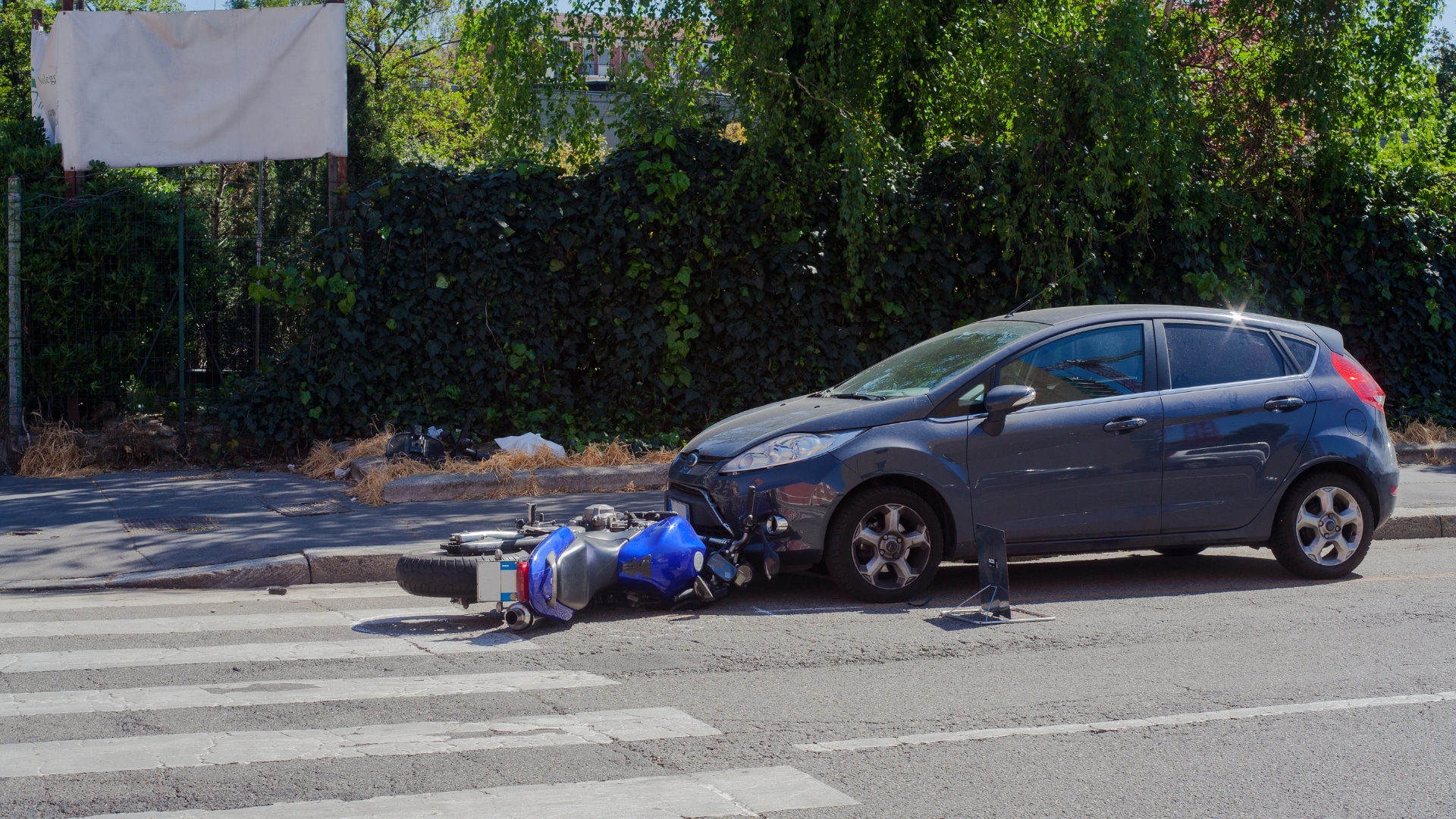
You will hear a lot of confident opinions after an El Paso motorcycle crash, and most of them are wrong. People will tell you the helmet decides everything, that riders always share the blame, that a driver who never saw you cannot be at fault. Believe those myths and you can talk yourself out of a claim you deserve to win. An El Paso motorcycle accident lawyer spends a real part of every case pulling those myths apart.
This page takes the five biggest myths one at a time. For each, you get the real rule and the reason it works in your favor.
The consultation is free, and you pay nothing unless we win. Call (512) 254-4424 any hour, day or night.

Goldberg & Loren Fights for Maximum Compensation


Pay Nothing, Unless We Win
Texas Injury Law at a Glance
| Deadline to file a lawsuit | Two years from the date of the injury. Tex. Civ. Prac. & Rem. Code § 16.003 |
| Fault rule | Modified comparative responsibility ("51% bar"): you recover only if you are 50% or less at fault, and your award is reduced by your share. §§ 33.001, 33.012 |
| Reporting the crash | Notify police immediately when there is injury, death, or a vehicle that cannot be driven away safely. Tex. Transp. Code § 550.026 |
The Myths That Cost El Paso Riders Their Claims
Motorcycle claims differ from car claims in one uncomfortable way. Before anyone looks at the facts, a lot of people already assume the rider was reckless. Insurers know this and lean on it, because an adjuster who pictures a speeding daredevil is halfway to blaming you before the evidence is even in. The attorneys at Goldberg & Loren confront that bias head-on, and they do it with proof rather than argument.
The myths below are not harmless. Each one is built, on purpose or by habit, to shrink what an injured rider recovers. A driver repeats one to dodge responsibility, an adjuster repeats another to justify a low offer, and a well-meaning friend repeats a third and talks you into waiting too long. Knowing the truth behind each of them is how you keep the full value of your claim on the table.
Myth One: That Skipping a Helmet Ends Your El Paso Claim
This is the myth insurers love most, because it sounds like plain common sense. It is also mostly false. Whether you wore a helmet does not automatically decide your case, and in a great many crashes it has nothing at all to do with the injuries you actually suffered.
The helmet question only reaches head injuries. It says nothing about a shattered ankle, a broken wrist, or the road rash that covers half your body. Letting an insurer pretend that one piece of gear erases every injury is exactly the mistake this myth is designed to cause.
What Texas Helmet Law Actually Requires
Section 661.003 of the Texas Transportation Code requires helmets for riders under 21. Riders 21 and older may ride without one if they completed an approved safety course or carry health insurance coverage. A legal adult riding bare-headed in El Paso may have broken no law at all, which removes the foundation of the insurer’s favorite argument before the conversation even starts.
Why a Head Injury Is Not the Only Injury That Matters
Even when a head injury is part of the picture, it is rarely the whole claim. Riders in El Paso crashes suffer broken legs, crushed feet, spinal damage, and severe burns that no helmet could have prevented. We separate the injuries a helmet might affect from the many it could not, so an insurer cannot use one contested point to discount everything else you are owed.
The Police Report Note About Your Helmet and How We Handle It
Sometimes an officer notes helmet use in the crash report, and an insurer treats that note like the end of the discussion. It is not. We put the note in context, connect each injury to its real cause, and show which harms a helmet had no bearing on whatsoever. Handled correctly, that single line changes very little about what your claim is worth.
Myth Two: That Choosing to Ride Means You Accepted the Risk
The second myth is quieter and more insulting. It suggests that by throwing a leg over a motorcycle, you signed up for whatever happened, so you have no real standing to complain when a careless driver hurts you. Texas law does not work that way at all.
Riding a motorcycle is legal, and a driver who hits you owes you the same duty of care they owe every other person on the road. Your decision to ride does not hand other drivers a free pass to turn across your path, drift into your lane, or roll through a stop sign without looking.
Comparative Fault and the Rights a Rider Keeps
Texas does reduce a recovery by a rider’s share of fault, and it bars recovery entirely if that share climbs past half. Insurers use that rule to pile blame on riders who did nothing wrong. Keeping your share of fault low is a big part of the work, and it starts with refusing to accept blame you never earned.
How the Blame-the-Rider Bias Shows Up in El Paso Claims
The bias rarely announces itself. It hides in an adjuster’s assumption that you must have been speeding, in the quick suggestion that you were weaving between cars, in a police narrative that leans toward the driver’s version. We answer it with hard proof, the kind that replaces assumption with fact, because a rider judged on evidence instead of stereotype usually wins.
Myth Three: That a Driver Who Never Saw You Cannot Be at Fault
Drivers say it constantly. I never saw the motorcycle. They say it as if not seeing you were an excuse, when in truth it is often an admission. A driver has a duty to look, and failing to see a motorcycle that was plainly there is not innocence; it is negligence.
Most El Paso motorcycle crashes are not the result of wild riding. They happen when a driver turns left across a rider’s path, merges into a motorcycle already in the lane, or pulls out from a stop sign without checking. In each of those, the driver’s failure to see is the entire problem.
The Left Turn Crash That Is the Driver's Fault, Not Yours
The classic motorcycle wreck is a car turning left at an intersection while a rider comes straight through. The driver misjudges the bike’s speed or simply never looks, and the rider has nowhere to go. Texas law required that driver to yield, and the geometry of the crash usually shows plainly who had the right of way.
Proving the Driver Had a Clear Line of Sight
To show the driver could have seen you, we gather the evidence that put you plainly in view before the turn.
- The daytime running headlight most modern motorcycles keep lit at all times.
- Bright or reflective riding gear that made you visible from a distance.
- A clear line of sight with no parked cars, signs, or brush blocking the driver.
- Event data from the car showing its speed and whether it slowed before turning.
- Witnesses who saw the motorcycle well before the driver claims it appeared.
Put those facts side by side and the never saw you defense comes undone. The driver did not face an obstruction, they simply were not paying attention, and the two are worlds apart under Texas law.
Why the He Was Speeding Claim Usually Fails
When the line-of-sight argument collapses, insurers often fall back on speed. They claim the rider was going so fast that no driver could have judged the gap. Event data, skid measurements, and crash reconstruction usually tell a different story, one of a rider at a reasonable speed and a driver who turned without looking. We bring in the numbers that put that myth to rest.
Myth Four: That Desert Roads and Mountain Curves Make Every Wreck Your Fault
El Paso rewards riders with roads few cities can match. The climb over Transmountain Road and the sweeping curves along the edge of the Franklin Mountains draw riders for good reason. That scenery also feeds a myth, the idea that any crash on a challenging road must be the rider losing control.
Plenty of these wrecks have nothing to do with the rider’s skill. A patch of gravel a crew left behind, a pothole no one repaired, a driver crossing the center line on a blind curve, any of these can put a careful rider on the pavement. A road being fun to ride does not make every crash on it your fault.
When a Road Hazard or Another Driver Caused the El Paso Crash
We look past the easy assumption and ask what actually put the bike down. Loose gravel, missing signs, and unmarked drop-offs can point to the government body responsible for maintaining the road. A car that drifted across the line points to another driver. Establishing the true cause is what moves the blame off the rider and onto the party that earned it.
Holding a Texas Government Body Accountable for a Bad Road
When a dangerous road condition caused the crash, the claim may run against a city, county, or state entity. Those claims fall under the Texas Tort Claims Act, which allows certain suits against the government but demands formal written notice on a short timeline. Missing that notice can end an otherwise strong case, which is one more reason a road-defect crash needs a lawyer quickly.
Myth Five: That You Can Wait to Call an El Paso Motorcycle Accident Lawyer
The last myth is the most expensive, because it feels so harmless. There is no rush, people think; the crash was obviously the driver’s fault. Then the evidence quietly disappears and the case grows harder by the week.
Texas law generally gives you two years to file, but the proof that wins a motorcycle case does not wait that long. Skid marks fade, the car gets repaired, camera footage overwrites, and witnesses forget what they saw. Calling early lets a lawyer lock down the scene evidence while it still exists, long before any filing deadline is close.
Why El Paso Motorcycle Injuries Cost More Than the Insurer Admits
There is one more myth worth naming, quieter than the rest. It is the assumption that a motorcycle claim is automatically a small claim. Riders have none of the steel cage and airbags that protect people in cars, so the same impact that dents a bumper can shatter a rider’s body. The costs that follow are anything but small.
Insurers still try to treat these claims as minor, and that is a mistake you cannot afford to accept. Understanding the true scale of a motorcycle injury is how you keep the claim from being undervalued from the very first call.
The Injuries Riders Carry Home
Motorcycle crashes produce injuries that change lives. Road rash deep enough to need skin grafts, broken bones that require hardware and surgery, and traumatic brain injuries show up even at moderate speeds. Many riders face months of rehabilitation and permanent limits on what their bodies can do. These are not fender-bender injuries, and they should never be valued like them.
Counting the Losses Beyond the Hospital Bill
The medical bill is only the beginning. A serious crash can cost a rider months of income, the ability to do their job at all, and the freedom to move through daily life without pain. Texas allows recovery for lost earning capacity, future care, and the physical and emotional toll of the injury. Adding those pieces up honestly is often the difference between a settlement that covers the crash and one that leaves the rider paying for years.
Why Rehabilitation and Future Care Belong in the Claim
Recovery from a motorcycle crash rarely ends when the hospital discharges you. Physical therapy, follow-up surgeries, and long-term care can stretch on for years, and each carries a cost that belongs in the claim. We work with treating doctors to project that future care, so the demand reflects the full arc of the injury rather than a single moment in time.
The Lasting Scars an Insurer Tries to Overlook
Severe road rash and surgical wounds often leave permanent scarring, and that harm is real even after the bones heal. Texas recognizes disfigurement as its own compensable loss, separate from medical bills. We make sure visible, lasting scars are documented and valued rather than brushed aside as merely cosmetic.
Why Insurers Undervalue Motorcycle Claims From the Start
The same bias that blames riders also shrinks their claims. An adjuster who assumes a rider was reckless starts the valuation low and dares you to argue up from there. That opening number is a tactic, not an honest estimate, and accepting it rewards the bias.
We counter by documenting the full injury and the full loss before any number is discussed. When the medical records, the future care, and the lost income are laid out clearly, the reckless-rider story loses its force, and the claim is valued on facts instead of assumptions. The stakes are highest in the most serious cases, where a low opening can leave a permanently injured rider far short of what recovery will cost.
The Documentation That Forces a Fair Number
A demand backed by imaging, specialist opinions, and a clear record of lost income is far harder to dismiss than an injured person’s word. We build that record so the insurer has to answer the evidence rather than repeat its assumptions.
How Long Do You Have to Report a Crash in Texas?
Reporting a crash and filing a lawsuit are two very different deadlines, and the reporting one is far shorter. Under Texas law, if anyone is injured or killed, or a vehicle is too damaged to be driven away safely, the drivers involved must notify police immediately, by the quickest means available, not days later (Tex. Transp. Code § 550.026). You also have to stop at the scene, give your name, address, and insurance information, and help anyone who is hurt (§§ 550.021–550.023). Leaving the scene of an injury crash is a serious crime in Texas, not a paperwork issue.
You may have heard that you have “ten days to file a crash report.” That ten-day deadline actually belongs to the investigating police officer, who must send the official crash report to the Texas Department of Transportation within ten days when a wreck causes injury, death, or at least $1,000 in property damage (§ 550.062). The separate report drivers once mailed in themselves was eliminated years ago. Your job is to report the crash to police right away, then notify your own insurance company promptly, as your policy requires.
If your crash happened in El Paso, the El Paso Police Department handles it, and you can get a copy of your official crash report from the EPPD Records Division at the Gregory K. Allen Police Headquarters, 911 N. Raynor St., El Paso, TX 79903 ((915) 212-4267), or order it online through the Texas Department of Transportation.
That report is one of the first things your attorney pulls, so it helps to know exactly where to find it. If you are not sure how to get your report or what it says about fault, call us at (512) 254-4424 and we will walk you through it.
El Paso Motorcycle Accident Lawyers
Every myth on this page points the same direction, away from the careless driver and toward the rider. You do not have to accept that framing, and you should not face an insurer that is counting on you to believe it.
Our firm takes El Paso motorcycle cases seriously and treats riders like the crash victims they are, not the stereotypes an insurer wants to sell. The consultation is free, and you pay nothing unless we win your case.
Talk to an El Paso motorcycle accident lawyer who knows these myths cold and knows exactly how to take them apart.
Call (512) 254-4424 any hour, or reach us through our contact page.
Legal Sources & References
The Texas laws described on this page are cited to the official statutes published by the Texas Legislature and were last reviewed on August 13, 2026.
- Statute of limitations (2 years), Tex. Civ. Prac. & Rem. Code § 16.003
- Comparative responsibility & reduction, Tex. Civ. Prac. & Rem. Code §§ 33.001, 33.012
- Duty to report a crash, Tex. Transp. Code §§ 550.021–550.026, 550.062
- Texas crash data, Texas Department of Transportation (TxDOT)
Frequently Asked Questions
Section 661.003 of the Texas Transportation Code requires helmets for riders under 21. Riders 21 and older may ride without one if they completed an approved safety course or carry health insurance coverage.
Even when a head injury is part of the picture, it is rarely the whole claim. Riders in El Paso crashes suffer broken legs, crushed feet, spinal damage, and severe burns that no helmet could have prevented.
The bias rarely announces itself. It hides in an adjuster's assumption that you must have been speeding, in the quick suggestion that you were weaving between cars, in a police narrative that leans toward the driver's version.
We look past the easy assumption and ask what actually put the bike down. Loose gravel, missing signs, and unmarked drop-offs can point to the government body responsible for maintaining the road. A car that drifted across the line points to another driver.
The same bias that blames riders also shrinks their claims. An adjuster who assumes a rider was reckless starts the valuation low and dares you to argue up from there. That opening number is a tactic, not an honest estimate, and accepting it rewards the bias.