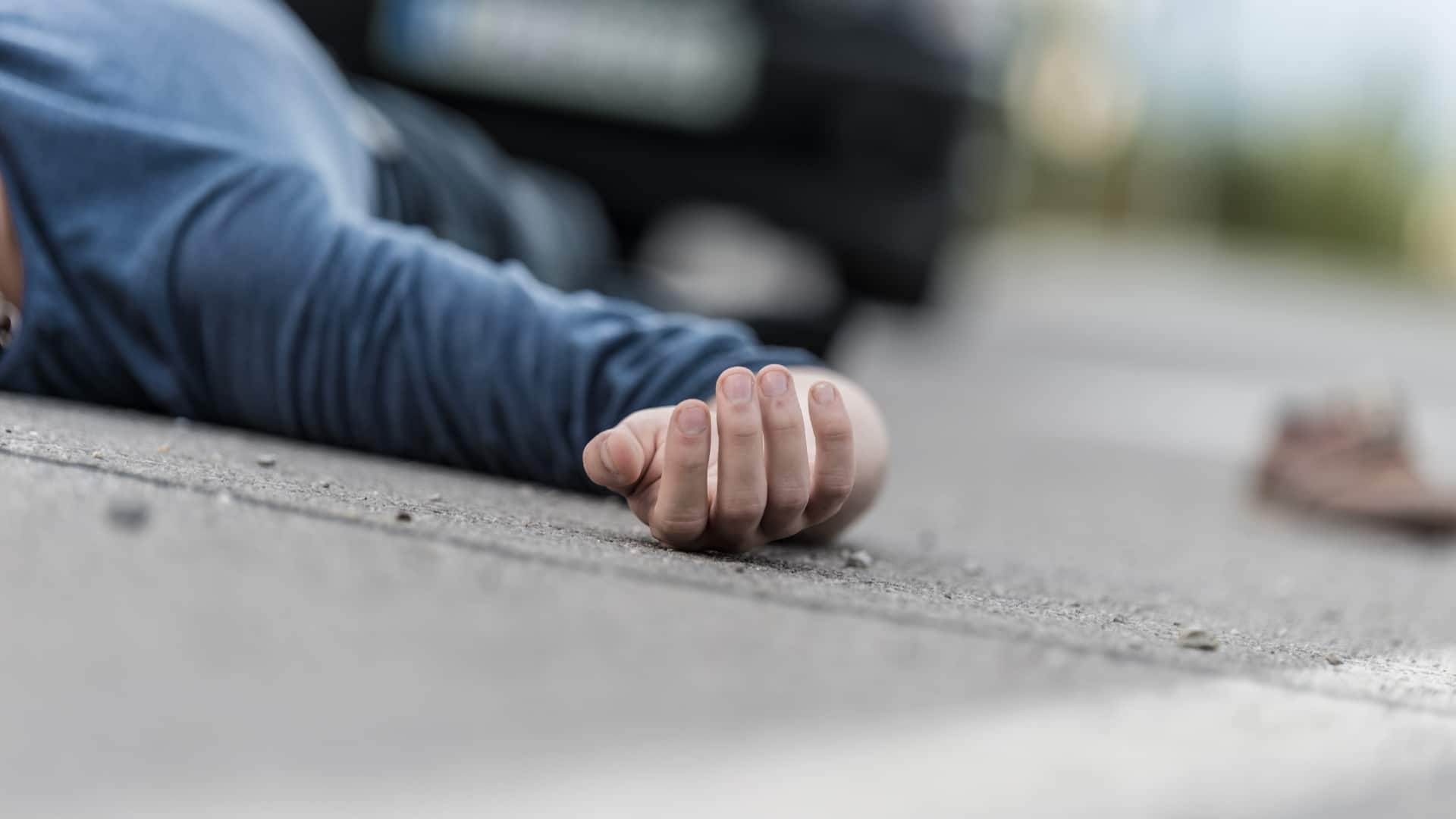
Have you been hit by a car or suffered a hit and run in El Paso, Texas? We can help.
Before an insurance company reads a single one of your medical records, it has already written the story of your crash: you stepped off the curb without looking, you were staring at your phone, and you appeared out of nowhere. Three lies, each aimed at paying you less, and an El Paso pedestrian accident lawyer takes them apart one at a time.
When you can see the script the insurer is reading from, it loses most of its power. The consultation is free and you pay nothing unless we win. Call (512) 254-4424 any hour, day or night.

Goldberg & Loren Fights for Maximum Compensation


Pay Nothing, Unless We Win
Texas Injury Law at a Glance
| Deadline to file a lawsuit | Two years from the date of the injury. Tex. Civ. Prac. & Rem. Code § 16.003 |
| Fault rule | Modified comparative responsibility ("51% bar"): you recover only if you are 50% or less at fault, and your award is reduced by your share. §§ 33.001, 33.012 |
| Reporting the crash | Notify police immediately when there is injury, death, or a vehicle that cannot be driven away safely. Tex. Transp. Code § 550.026 |
The Three Lies an El Paso Insurer Tells About Pedestrian Accident Claims
A car against a person on foot is never a fair contest. You would think a badly hurt pedestrian would draw sympathy from the driver’s insurer. Instead, you get a strategy, because sympathy does not lower a payout and shifting blame does. The team at Goldberg & Loren has heard the script enough times to recite it word for word. Every lie serves the same purpose, moving fault off the driver and onto you, and once you see the goal behind the friendly early calls, the pointed questions stop working.
Lie One: That You Were Jaywalking Outside a Crosswalk
The first lie is that you crossed where you should not have, so whatever happened is your own fault. It sounds airtight, and it is usually wrong. Texas protects pedestrians in far more places than most drivers realize, and the absence of painted lines does not mean the absence of rights. Once you learn that a crosswalk does not have to be painted to be real, the entire jaywalking accusation starts to come apart.
The Unmarked Crosswalk That Exists Without Any Paint
Section 552 of the Texas Transportation Code sets the rules for people on foot, and it recognizes crosswalks that no one ever painted. At most ordinary intersections, an unmarked crosswalk legally extends across the street even with no lines on the pavement, a pedestrian crossing there has the right of way, and a driver who fails to yield has broken the law, paint or no paint.
The Driver's Due Care Duty Even at a Mid Block Crossing
Even away from an intersection, a driver is not free to hit whoever is in the road. Section 552 requires every driver to exercise due care to avoid striking a pedestrian and to take extra caution around anyone who seems confused or in distress, so crossing mid-block does not erase the driver’s duty to look, slow down, and avoid the collision. The statute does place some duties on people on foot, like yielding to traffic when crossing outside a crosswalk, but a shared duty rarely means the pedestrian loses when strong evidence keeps your share of fault low.
Lie Two: That You Were Distracted on Your Phone
The second lie flips a modern worry back onto the victim. The insurer suggests you were buried in your phone and never saw the car, easy to imply and hard to disprove. But the better question is almost always about the driver’s attention, not yours, and the evidence usually shows where the real distraction was.
Turning the Distraction Question Back on the Driver
We do not simply deny that you were distracted, we look hard at what the driver was doing. Their phone activity, speed, and failure to react often tell a very different story, pointing straight at a driver who was not paying attention.
- A phone in the driver’s hand, or texts and calls logged at the moment of impact.
- A speed too high for the area, captured by nearby cameras or the vehicle’s data.
- No braking at all before impact, shown by the absence of skid marks.
- A walk signal in your favor at the moment you stepped off the curb.
- Witnesses who watched the driver roll through the crossing without ever looking up.
Any one of these can flip the distraction accusation on its head. A driver rarely admits to texting, but the phone company keeps the truth, and with the right legal demand, records can show a call or message active in the seconds before impact. We move to obtain those records early, before a routine retention period puts them out of reach.
Lie Three: That You Appeared Out of Nowhere
The third lie is the driver’s favorite, because it sounds like helpless bad luck. They will swear you came out of nowhere, but people do not appear from nowhere; they walk into view over several seconds, in plain sight of anyone actually watching the road ahead. If the street was straight and clear, the only way the driver did not see you is that they were not looking or were driving too fast to react.
Why the Darted Out Story Rarely Survives the Evidence
A person crossing several lanes is in the road for a number of seconds, not an instant. Camera footage, the point of impact, and the distance your belongings traveled all help reconstruct how long you were visible and how fast the car was moving. Time after time, the reconstruction shows a driver who had room to stop and simply did not use it.
El Paso Crossings Where Drivers Say It Most
The darted-out story shows up again and again on the wide, fast arterials where drivers treat the posted limit as a suggestion. Alameda Avenue, Dyer Street, Montana Avenue, and Mesa Street all carry heavy foot traffic against quick-moving cars, especially near the international bridges and the transit stops that serve them. A driver who does not expect anyone on foot is exactly the driver who later claims a pedestrian appeared from nowhere.
What the Three Lies Are Really About, the 51% Rule
All three lies chase a single number. Texas uses modified comparative fault, which means your recovery drops by your share of the blame and disappears entirely if that share passes 50%. The insurer does not need to prove you caused the crash; it only needs to push your fault across the halfway line to pay nothing. On a $90,000 claim, a 30% share still leaves you $63,000, but at 51% the same claim pays nothing at all. Each lie is just an attempt to move you a few points closer to that line.
How a Small Share of Fault Still Leaves Real Money
Even a pedestrian assigned some blame can recover a meaningful amount, so long as the share stays at half or below. The difference between a small percentage and a large one is usually the quality of the evidence, which is why the investigation matters as much as the law. Keeping your number low is what the case comes down to, and it is winnable with the right proof.
Why Waiting Helps Every One of These Lies
Time works in the insurer’s favor. Texas law generally gives you two years to file, but the proof that defeats these three lies fades far faster. Camera footage overwrites, phone records grow harder to obtain, and witnesses forget what they saw. Acting early is how you keep the evidence that keeps your fault low.
Why El Paso Pedestrian Crashes Cause Such Serious Injuries
Behind every one of the insurer’s three lies is an injured person whose body took the full force of a vehicle. A pedestrian has no bumper, no seatbelt, and no airbag, which is why these crashes send people to the hospital with injuries far more severe than the drivers ever face, and why an insurer that downplays them is setting up a discount you do not have to accept.
How an Unprotected Body Absorbs the Impact
When a car strikes a person, the body absorbs energy it was never built to take. Broken legs and pelvises, spinal injuries, internal damage, and traumatic brain injury are common even at city speeds. A second impact often follows, when the person is thrown to the pavement, adding head and shoulder injuries to the first blow.
The vehicle matters too. A pedestrian struck by a taller pickup or SUV often takes the blow to the torso and head rather than the legs, which raises the risk of fatal or life-changing injury, and El Paso streets carry plenty of these larger vehicles.
The Long-Term Costs the First Offer Ignores
A serious pedestrian injury rarely ends with the first hospital stay. Rehabilitation, follow-up surgeries, lost income, and permanent limits on movement can follow a person for years. Texas allows recovery for all of it, including future medical care and lost earning capacity, but only if those costs are documented before you settle. An early offer is built to close the file before the full price of the injury is known.
The Emotional Toll of Being Hit While Walking
The harm from a pedestrian crash is not only physical. Many people carry real anxiety about crossing the street afterward, and Texas recognizes mental anguish as a compensable loss, so we make sure that toll is part of the claim. Strong medical documentation turns a serious injury into a provable one, so we gather the imaging, specialist records, and physician notes that connect each injury to the crash.
Why Severe Injuries Make the Comparative Fault Fight Matter More
The worse the injury, the more the insurer has riding on shifting blame to you. A minor claim is cheap to pay, but a claim for a shattered pelvis and a year of rehabilitation gives the insurer every reason to push your fault toward the halfway line. That is why serious injuries and hard blame-shifting so often arrive together.
Fatal Pedestrian Crashes and the Family's Claim
The worst pedestrian crashes end in a death, and El Paso sees them on its fastest roads. When a pedestrian is killed, the family may bring a wrongful death claim for the losses they carry, alongside a survival claim for what their loved one endured. The blame-shifting does not stop just because the case is now about a life; if anything, the insurer fights harder, and we handle these cases with the care a grieving family deserves.
El Paso Pedestrian Accident Lawyers
You were the one on foot, the one who got hurt, and the one now forced to fight a story written to blame you, and that is not a fair fight to face alone. Our firm handles El Paso pedestrian claims, answers each of the three lies with evidence, and works to keep your share of fault at zero. The consultation is free, and you pay nothing unless we win.
Call (512) 254-4424 any hour, or reach us through our contact page.
Frequently Asked Questions
A person crossing several lanes is in the road for a number of seconds, not an instant. Camera footage, the point of impact, and the distance your belongings traveled all help reconstruct how long you were visible and how fast the car was moving.
Even a pedestrian assigned some blame can recover a meaningful amount, so long as the share stays at half or below. The difference between a small percentage and a large one is usually the quality of the evidence, which is why the investigation matters as much as the law.
Time works in the insurer's favor. Texas law generally gives you two years to file, but the proof that defeats these three lies fades far faster. Camera footage overwrites, phone records grow harder to obtain, and witnesses forget what they saw. Acting early is how you keep the evidence that keeps your fault low.
When a car strikes a person, the body absorbs energy it was never built to take. Broken legs and pelvises, spinal injuries, internal damage, and traumatic brain injury are common even at city speeds. A second impact often follows, when the person is thrown to the pavement, adding head and shoulder injuries to the first blow.
Legal Sources & References
The Texas laws described on this page are cited to the official statutes published by the Texas Legislature and were last reviewed on August 13, 2026.
- Statute of limitations (2 years), Tex. Civ. Prac. & Rem. Code § 16.003
- Comparative responsibility & reduction, Tex. Civ. Prac. & Rem. Code §§ 33.001, 33.012
- Duty to report a crash, Tex. Transp. Code §§ 550.021–550.026, 550.062
- Texas crash data, Texas Department of Transportation (TxDOT)