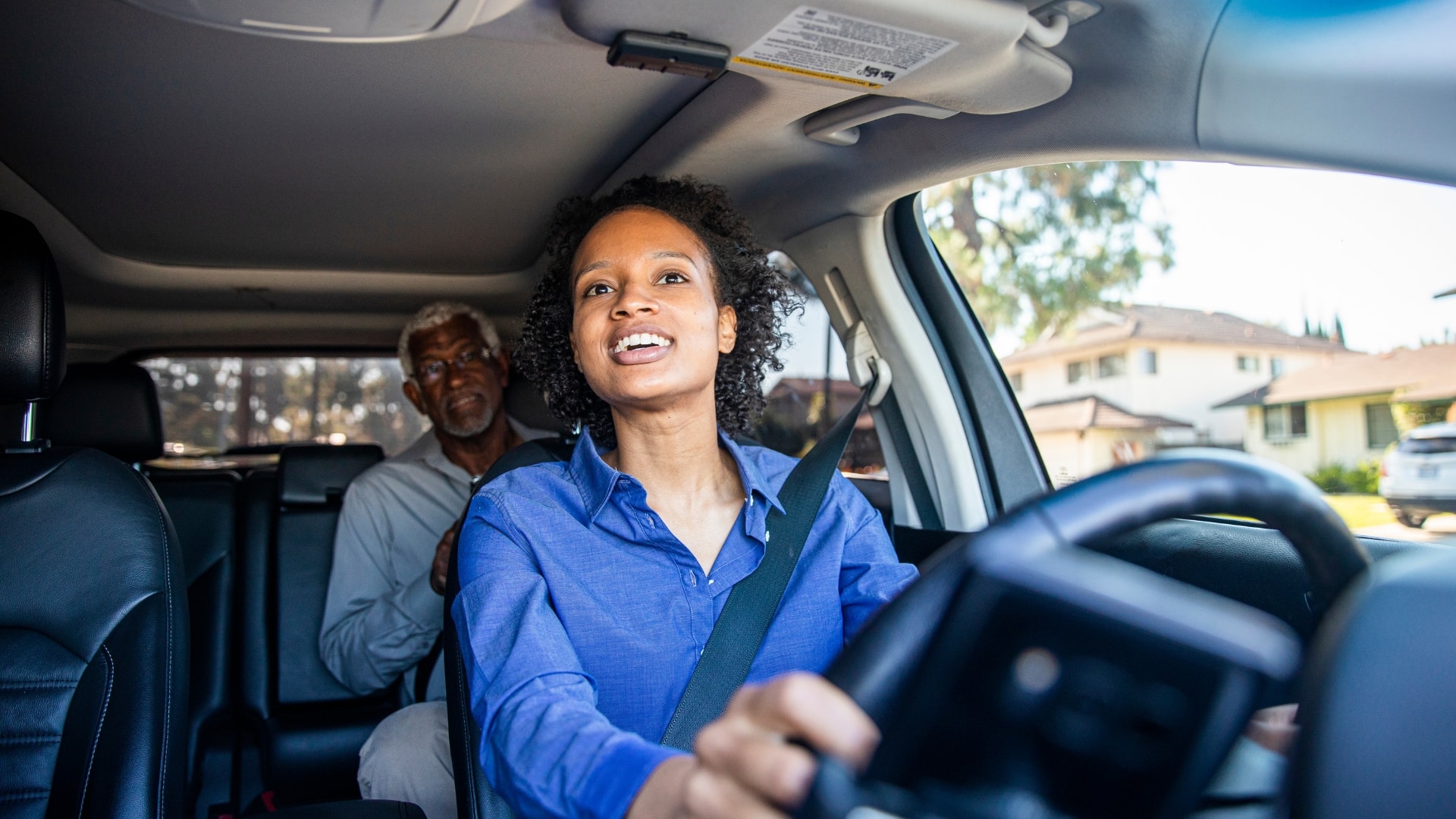
Here is the strange truth about rideshare crashes. The same wreck, at the same corner, can be worth $1,000,000 or almost nothing, and the deciding factor is something you cannot see from the sidewalk. It is what the Uber or Lyft app was doing at the moment of impact. An El Paso rideshare accident lawyer starts every case by pinning down that one hidden detail.
Rather than explain the rules in the abstract, this page walks through four real El Paso situations. Each one changes who pays and how much, and together they show why these claims are trickier than a normal car crash.
Get a free consultation from our legal team. We want to help you.
Call (512) 254-4424 any time.

Goldberg & Loren Fights for Maximum Compensation


Pay Nothing, Unless We Win
Texas Injury Law at a Glance
| Deadline to file a lawsuit | Two years from the date of the injury. Tex. Civ. Prac. & Rem. Code § 16.003 |
| Fault rule | Modified comparative responsibility ("51% bar"): you recover only if you are 50% or less at fault, and your award is reduced by your share. §§ 33.001, 33.012 |
| Rideshare insurance | Coverage is tiered by app status; roughly $1 million applies during a prearranged ride. Tex. Occ. Code § 2402.101; Ins. Code ch. 1954 |
| Reporting the crash | Notify police immediately when there is injury, death, or a vehicle that cannot be driven away safely. Tex. Transp. Code § 550.026 |
One El Paso Rideshare Crash, Four Very Different Outcomes
A rideshare crash looks like an ordinary fender bender from the outside, but the difference is buried in the driver’s phone. Depending on whether the app was off, on and waiting, or carrying a paid passenger, a completely different insurance policy applies, and the dollar figures swing enormously. The team at Goldberg & Loren treats that app status as the first thing to prove, because everything else in the claim follows from it. Two crashes that look identical to a bystander can land in entirely different insurance worlds, and an injured person who does not understand why can be talked into a small fraction of what the claim is worth, which is what the four scenarios below are meant to prevent.
Why So Many El Paso Riders Depend on Uber and Lyft
El Paso runs on rideshare more than outsiders expect. Late-night transit options are limited, soldiers from Fort Bliss lean on apps to get home safely after a night out, and travelers pour out of the airport into waiting cars all day. More rides on the road simply mean more rideshare crashes, and more people who need to understand how this coverage works.
The App Status That Decides Which Insurance Pays
Chapter 2402 of the Texas Occupations Code sets the coverage for transportation network companies. When the driver is offline, only their personal auto policy applies. When the app is on and the driver is waiting for a request, the company must provide contingent coverage of at least $50,000 per person, $100,000 per crash, and $25,000 for property damage. Once a ride is accepted and throughout the trip, a $1,000,000 policy applies. Same driver, same car, three very different numbers.
Scenario One: When You Are the Passenger in an El Paso Uber or Lyft
Picture the pickup lane at El Paso International Airport. You climb into your Uber, and before you even reach the exit, another car slams into it. You did nothing but sit in the back seat, yet you are the one leaving in an ambulance. This is the cleanest kind of rideshare claim there is.
Because the ride was in progress, the $1,000,000 policy applies, and there is coverage whether your own driver or the other driver caused the crash. As a passenger, you carry no share of the blame, which removes the fault fight that slows down most claims.
Why a Passenger Almost Always Has a Claim
Passengers sit in the safest legal position in any crash. You were not driving, not choosing the route, and not controlling the car, so fault does not attach to you. The only real question is which driver caused the wreck, and the trip coverage stands ready no matter how that question is answered.
The Rare Case Where a Passenger Shares Fault
There are narrow exceptions, like a passenger who grabbed the wheel or rode without a seatbelt and worsened their own injuries. Even then, the share of fault is usually small. We make sure a minor issue like that is not inflated into an excuse to slash a claim the trip policy plainly covers.
Scenario Two: When a Driver Between Fares Hits You Downtown
Now move to the Cincinnati entertainment district at closing time. A rideshare driver sits parked with the app on, waiting for a request, then pulls out and strikes you in the crosswalk. The app was on, so there is coverage, but not the coverage most people would expect. Because no ride had been accepted yet, this crash falls into the waiting period, where only the contingent 50/100/25 coverage applies. That is a small fraction of the trip policy, and a serious injury can blow past those limits in a single hospital stay.
The Thin Coverage Gap While the App Is On but Empty
This waiting period is the weakest link in rideshare coverage, and the companies know it. When the contingent limits fall short, we look for other sources, including the driver’s personal policy and your own uninsured or underinsured motorist coverage. Proving app status here is everything, so at the scene of any El Paso rideshare crash, try to gather the details that lock down what the driver was actually doing.
- A photo of the driver’s phone screen showing the app open or a trip underway.
- The driver’s name, license plate, and which company they drive for.
- Whether a passenger was already in the car when the crash happened.
- Your own trip receipt or app screenshot if you were the passenger.
- Names and numbers of witnesses who saw the crash and the car’s markings.
A single screenshot of an active trip can move a claim from the thin waiting-period limits all the way up to the full trip policy.
Scenario Three: When a Rideshare Driver Hits Your Car on I-10
Suppose you are in your own vehicle on I-10 when a driver merges straight into you. You later learn they were logged into Uber and on their way to pick someone up. You were never in their car and never opened the app, yet their work status still decides your claim. A driver on the way to a pickup is in the matched period, where the $1,000,000 policy applies, but only if you can prove the driver was actually en route to a fare and not simply running personal errands. The company will not offer that proof without pressure.
Proving the Driver Was Working When They Hit You
The proof lives in the company’s records, in the trip logs and app data that show exactly when the driver accepted a ride. We request that data early, before it is buried or purged, and pair it with the driver’s own statements at the scene. Establishing the matched status is what brings the trip policy into play for someone who was just driving their own car home.
The Trip Data El Paso Rideshare Companies Hold
Uber and Lyft keep detailed digital logs of every driver’s status minute by minute. Those logs settle the coverage question, yet the companies release them slowly and only when properly demanded. We know what to ask for and how to force the issue when a company drags its feet.
Why a Scene Screenshot Beats the Company's Word
Company records can take weeks to arrive and sometimes arrive incomplete. A photo you take at the scene of the driver’s lit-up app is immediate and hard to dispute. That is why a few seconds with your phone right after a crash can matter as much as the formal records that come later.
Scenario Four: When the Driver Was Logged Off
Finally, imagine the driver was completely off the clock, app closed, just driving home, when they caused the crash. No rideshare coverage applies, because the driver was not working, so only their personal auto insurance is in play. This is where a costly surprise can appear: many personal policies contain an exclusion that voids coverage when the car is used for ridesharing, and insurers sometimes try to stretch that exclusion even when the app was off.
The Rideshare Exclusion Hiding in a Personal Auto Policy
Personal auto policies were not written with rideshare work in mind, and many now carry language that denies coverage for any rideshare-related use. When the driver was truly logged off, that exclusion should not apply, and we hold the insurer to the words on the page. Letting a company misuse an exclusion to escape a legitimate claim is not something we accept.
When the Driver's Personal Insurer Denies the Claim
If the personal insurer denies coverage, the fight is far from over. Your own underinsured motorist coverage may step in, and the driver remains personally responsible for the harm they caused. We map every path to a recovery rather than treating the first denial as the final word.
Why an El Paso Rideshare Accident Lawyer Moves Fast on App Data
Texas law generally allows two years to file, but rideshare cases run on a faster clock than most. The single most important piece of proof, the app and trip data, sits on company servers under a retention schedule you do not control. Wait too long, and the record of what the app was doing can quietly vanish.
Moving early lets a lawyer demand that data while it still exists and identify every policy that might apply. In a claim where one screenshot can multiply the available coverage twentyfold, moving fast is not optional.
What to Do in the Minutes After an El Paso Rideshare Crash
The scenarios above all turn on facts that are easiest to capture right after the crash. What you do in those first few minutes can decide which coverage you reach and how hard the fight becomes, and most of it fits in the time you spend waiting for help to arrive. The goal is to record what the driver was doing and who was involved before anyone has a chance to blur it.
Report the Crash Inside the App
Both Uber and Lyft let you report a crash through the app, and doing so creates a time-stamped record with the company itself that helps confirm the ride, the driver, and the trip status you were part of. It does not replace a lawyer, but it creates an early record the company cannot easily ignore later.
Why You Still Call the Police
An official crash report gives your claim an independent account that does not depend on the driver’s memory or honesty. Officers record the vehicles, the parties, and often a first read on who was at fault. In a claim where the company controls most of the digital evidence, a neutral police report is one of the few records it does not control.
Getting Medical Care Even When You Feel Okay
Rideshare passengers often feel fine at the scene and regret it later, once the adrenaline fades. A same-day medical visit protects your health and ties any injury to the crash before an insurer can argue otherwise.
The Screenshots That Back Up Your Account
Your phone holds proof the company would rather you did not keep. A screenshot of the ride in progress, the driver’s profile, and the trip receipt all confirm the details that decide coverage, so save those screens immediately, because an account left only in the app can change or disappear.
What Not to Do After an El Paso Rideshare Crash
The mistakes matter as much as the right moves. Do not tell anyone at the scene that you are uninjured, because those words come back when your pain sets in. Do not accept a fast settlement offered through the app before you know the extent of your injuries. Do not assume the rideshare company is on your side, and do not skip the police or the doctor to save time. Above all, do not wait to get advice, because the app data that decides your coverage sits on a company server under a clock you do not control.
Why the Company's Quick Offer Is Rarely Enough
A rideshare company or its insurer may reach out with a fast, modest offer, hoping to close the claim before a lawyer values it. That number is built for the company’s benefit, not yours, so we measure the claim against every policy that applies before anyone signs anything away.
El Paso Rideshare Accident Lawyers
Whether you were a passenger, another driver, or a pedestrian, your rideshare claim turns on facts the company would rather keep quiet, and you should not have to untangle four layers of coverage while you are trying to heal. Our firm handles El Paso Uber and Lyft crashes, proves the app status, and pursues every policy that applies. The consultation is free, and you pay nothing unless we win.
Call (512) 254-4424 any hour, or reach us through our contact page. Talk to an El Paso rideshare accident lawyer who knows where the coverage hides and how to prove your way to it.
Frequently Asked Questions
El Paso runs on rideshare more than outsiders expect. Late-night transit options are limited, soldiers from Fort Bliss lean on apps to get home safely after a night out, and travelers pour out of the airport into waiting cars all day.
Passengers sit in the safest legal position in any crash. You were not driving, not choosing the route, and not controlling the car, so fault does not attach to you. The only real question is which driver caused the wreck, and the trip coverage stands ready no matter how that question is answered.
The scenarios above all turn on facts that are easiest to capture right after the crash. What you do in those first few minutes can decide which coverage you reach and how hard the fight becomes. None of it is complicated, and most of it fits in the time you spend waiting for help to arrive.
Legal Sources & References
The Texas laws described on this page are cited to the official statutes published by the Texas Legislature and were last reviewed on August 13, 2026.
- Statute of limitations (2 years), Tex. Civ. Prac. & Rem. Code § 16.003
- Comparative responsibility & reduction, Tex. Civ. Prac. & Rem. Code §§ 33.001, 33.012
- Rideshare (TNC) insurance, Tex. Occ. Code § 2402.101 → Tex. Ins. Code ch. 1954
- Duty to report a crash, Tex. Transp. Code §§ 550.021–550.026, 550.062
- Texas crash data, Texas Department of Transportation (TxDOT)