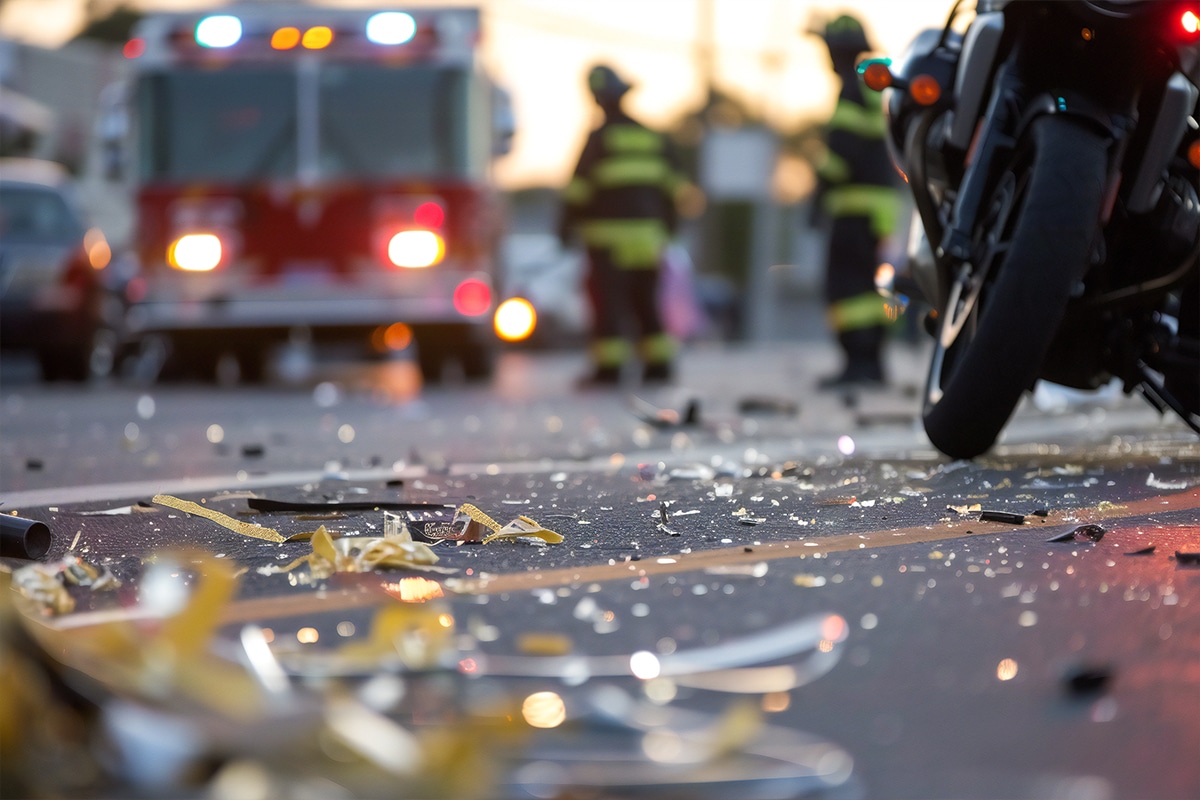
Hit While Riding a Motorcycle in Dallas?
A car turns left across your lane, and in the next second your whole life changes. The driver climbs out and says the same five words riders hear again and again, I never saw the motorcycle. Everything that follows, the insurance fight and the recovery, turns on whether that excuse holds.
A Dallas motorcycle accident lawyer exists to make sure it does not.
Riders start these cases at a disadvantage that has nothing to do with how they rode. Adjusters carry assumptions about motorcyclists, and so can juries. Beating that bias takes evidence and a clear account of what actually happened on the road.
Call (512) 254-4424 for a free consultation, day or night. You pay nothing unless your rider case is actually won and the check is in your hand.
Our Dallas Motorcycle Accident Lawyer

He is a Lifetime Member of Best Attorneys of America, was named to the Top 100 Civil Plaintiff Attorneys by The National Trial Lawyers, and is admitted to the State Bar of Texas.
Read Matthew Kotzen’s full profile →“I spent years building cases for insurance companies. Now I use that same playbook to make sure they pay what they actually owe.”
Goldberg & Loren Fights for Maximum Compensation


Pay Nothing, Unless We Win
Texas Injury Law at a Glance
| Deadline to file a lawsuit | Two years from the date of the injury. Tex. Civ. Prac. & Rem. Code § 16.003 |
| Fault rule | Modified comparative responsibility ("51% bar"): you recover only if you are 50% or less at fault, and your award is reduced by your share. §§ 33.001, 33.012 |
| Reporting the crash | Notify police immediately when there is injury, death, or a vehicle that cannot be driven away safely. Tex. Transp. Code § 550.026 |
The Left Turn Crash That Hurts Riders Most Often
The left-turn collision is the crash that hurts riders more than any other. A driver waiting to turn misjudges the speed of an oncoming motorcycle, or never registers it at all, and turns directly into its path. The rider has almost no time to react and nothing but open air and the gear on their back for protection.
Goldberg & Loren sees this pattern constantly, and the legal work centers on one question. Did the driver have a clear chance to see the bike and yield? Answer that with proof, and the never saw it defense falls apart.
Why Drivers Claim They Never Saw the Motorcycle
The claim is common because it is convenient, not because it is true. A motorcycle is narrower than a car, so a distracted or careless driver scanning for other cars can look right past it. That does not excuse the failure.
A driver has a duty to see what is plainly there to be seen, and a rider with the right of way does not lose it because someone was not paying attention.
Picture a driver waiting to turn left onto Greenville Avenue during the evening rush. Impatient for a gap, they focus on the cars and roll into the turn just as a motorcycle they never registered enters the intersection.
The rider had the right of way and a green light, yet the driver’s failure to look becomes the rider’s broken leg, and the law puts that failure on the driver.
Proving the Driver Had Time and Room To Yield
Showing the driver could have avoided the crash is the heart of the case. Intersection cameras, witness accounts, and the physical evidence at the scene establish where each vehicle was and how fast it moved. When a rider had the right of way and was riding at a lawful speed, that record shifts fault squarely onto the turning driver.
The timing of the signal often becomes the whole argument. If the traffic light data and a nearby camera show the rider entered on green while the driver turned across the lane, the driver’s story collapses.
That evidence has to be gathered quickly, because signal logs and footage do not sit around for long, and locking it down early keeps a clear liability case from turning into a swearing match months later.
Reconstructing Speed From Skid Marks and Bike Damage
When a driver insists the motorcycle was speeding, physical evidence answers back. An accident reconstructionist reads skid marks, the crush damage on both vehicles, and the distance the rider was thrown to estimate real speeds. That analysis can dismantle an inflated speed claim and reset the fault percentages that decide the value of the case.
The bike itself becomes a key piece of evidence. Where it came to rest, how it was damaged, and the marks it left on the pavement all feed the reconstruction, which is one more reason not to let an insurer rush to total the motorcycle and haul it away before an expert examines it. Preserving the wreck can be as important as preserving any paper document in the file.
Why Adjusters Undervalue Riders, and How We Push Back
Even with clear fault, riders face a second fight over the value of the claim. Insurance adjusters lean on a stereotype of the reckless motorcyclist, and they use it to justify a lower offer. The bias is not supported by the facts of most crashes, but it shapes the first number every time.
A Dallas motorcycle injury lawyer counters that stereotype with the specifics of your ride and your record. Replacing a lazy assumption with documented facts is how the value of the claim gets corrected.
The Reckless Rider Stereotype Adjusters Lean On
The assumption runs underneath the whole negotiation. If an adjuster can paint you as a thrill-seeker who accepted the risk, every part of your claim gets discounted. The reality is that most riders are commuters and weekend travelers following the rules of the road.
Pushing back means presenting you as who you actually are, not the caricature the insurer wants to argue against.
Our firm counters the stereotype with specifics rather than argument. A clean driving record, a completed safety course, and testimony from people who know how you ride replace the adjuster’s assumption with a real person.
When the evidence shows a careful commuter rather than a daredevil, the discount the insurer built into its first offer loses its footing.
How Helmet Choices Under Texas Law Affect Your Claim
Texas requires helmets for riders under 21, and under Transportation Code Section 661.003, riders 21 and older may go without one if they completed an approved safety course or carry qualifying health insurance. A police officer may not stop a rider just to check that exemption.
If you were not wearing a helmet, an insurer may argue it worsened your head injuries, but that argument goes to the size of certain damages, not to whether the other driver caused the crash.
It is worth being clear about what that argument can and cannot do. A helmet has nothing to do with a driver turning across your lane, so it does not shift blame for the collision itself. At most, an insurer may claim a head injury would have been less severe with a helmet, and even that requires medical proof they often cannot supply.
Separating the fault question from the injury question keeps the helmet issue from swallowing a valid claim.
The Helmet Numbers Behind Texas Rider Deaths
TxDOT recorded 585 motorcyclist deaths in a single recent year, and 37 percent of the riders killed were not wearing a helmet. Those figures show a real safety pattern. They do not decide your case, because a driver who turns across your lane is still the one who broke the law.
Lane Position and the Myths About Aggressive Riding
Adjusters sometimes twist ordinary riding technique into evidence of aggression. Choosing a lane position for visibility, or moving within a lane to stay out of a blind spot, is defensive riding, not recklessness. Explaining why a rider rode the way they did turns a supposed red flag into proof of a careful, experienced motorcyclist.
Riders learn to position themselves for visibility and escape routes, not for show.
Sitting in the left third of a lane to stay out of a car’s blind spot, or leaving extra following distance, are defensive habits that safety courses actually teach, and explaining the reasoning behind each maneuver turns the insurer’s argument back into evidence of a skilled, cautious rider.
Injuries That Justify Bigger Numbers
Motorcycle injuries are more severe than car injuries for a simple reason. A rider has no steel cage, no airbag, and no seatbelt between their body and the road. What might be a fender bender in a car becomes a life-altering injury on a bike.
That severity is why these claims deserve serious valuation. The medical reality drives the numbers, and documenting it fully is the work of the case.
Road Rash, Broken Bones, and the Surgeries That Follow
The injuries follow a grim but predictable range, and each carries its own long-term cost. Understanding why they cost what they do keeps an insurer from treating a serious injury as a minor one. The most common rider injuries fall into a few categories.
- Road rash severe enough to require skin grafts and leave permanent scarring
- Broken bones in the arms, legs, and wrists from the fall and the slide
- Spinal injuries that can mean surgery, chronic pain, or paralysis
- Internal injuries that are not visible at the scene and grow dangerous fast
Each of these can mean multiple surgeries, months of rehabilitation, and permanent limits on the work and life a rider returns to. A claim has to account for all of it, not just the first hospital bill.
Traumatic Brain Injury Even With a Helmet On
A helmet reduces the risk of a brain injury, but it does not erase it. A hard enough impact can cause a concussion or a lasting traumatic brain injury even when a rider wore proper headgear. These injuries change memory, mood, and the ability to work, and their effects can surface days after the crash.
Because they are invisible on the outside, they demand careful medical documentation from day one to prove.
Families often notice the change before any scan confirms it. A rider who used to manage a busy job starts losing track of conversations, struggles with word recall, or grows short-tempered in ways that are out of character.
Those symptoms are real damages, and neuropsychological testing and consistent medical records turn an injury nobody can see into one an insurer cannot dismiss.
Why 585 Texas Riders Died in a Single Year
The 585 rider deaths in one year point to how exposed motorcyclists are on Texas roads, a pattern national data from the Insurance Institute for Highway Safety confirms across the country. Riders are killed at far higher rates than car occupants for every mile they traveled on the road.
For someone who survived a serious crash, those numbers underline how much was at stake and how real the injuries are.
What Compensation a Rider Can Actually Recover
A full claim reaches well beyond the emergency room bill. Texas law lets an injured rider recover the cost of care, the income the injury took away, and the personal toll the crash carried. The strongest claims document every category rather than settling for the obvious ones a rider might miss on their own.
Our team builds that record so the demand reflects the true cost of the crash, present and future.
Medical Care, Bike Replacement, and the Paycheck You Missed
The measurable losses come first. Emergency treatment, surgery, physical therapy, and projected future care all belong in the claim, along with the wages you lost while unable to work. The damaged motorcycle is recoverable, and so is the earning capacity you lose if the injury keeps you from returning to your job at full strength.
Lost earning capacity is often the largest and most overlooked piece. A rider who does physical work and comes back with a fused wrist or a bad knee may never return to the same pay.
The claim should measure that gap over the years ahead, not just the paychecks missed during recovery, and an economic expert can put a defensible number on a career the crash cut short.
Motorcycle Gear as Documented Damage
Riders forget that their gear is compensable property. A helmet, jacket, gloves, and boots destroyed in a crash have real value, and they should be listed and claimed. Keep the damaged gear and photograph it, because it also serves as evidence of the force of the impact. That documentation supports both the property claim and the injury story.
When a Rider Shares Some Blame and Still Recovers
Even if you carry part of the blame, you can still recover under Chapter 33 of the Civil Practice and Remedies Code. Texas reduces your recovery by your percentage of fault and bars it only if you are more than 50 percent responsible.
A rider found 20 percent at fault still collects 80 percent of the damages, which is why fighting an inflated fault assignment is worth the effort.
The stakes climb as the percentage does. On a $200,000 claim, letting an adjuster push your share of blame from 20 percent to 40 percent costs you 40,000 dollars, and crossing 51 percent means you recover nothing at all. That math is why the insurer fights so hard to pin part of the crash on the rider.
Put a Dallas Motorcycle Accident Lawyer in Your Corner
The bias against riders is real, but it is beatable with the right evidence and someone willing to make the case. A Dallas motorcycle accident lawyer at our firm can prove the driver failed to yield, counter the reckless-rider story, and pursue the full cost of injuries that a car occupant would never have suffered.
The consultation is free, and the sooner it happens, the more evidence survives to support you. Call (512) 254-4424 at any hour to talk through the crash with someone who understands how these cases are won across Dallas County, or reach out through our contact page. You pay nothing unless the case is won.
Frequently Asked Questions
It depends on the injuries and whether fault is disputed. A straightforward claim with clear liability can settle in months, while a serious case with contested fault or major injuries can take a year or more, especially if it heads toward trial. Rushing a settlement before your medical picture is clear usually costs you money.
The right pace is the one that lets your full damages become known first.
There is a real tension here worth understanding. You want the case resolved so you can move on, but settling before you reach maximum medical improvement means guessing at costs you cannot yet see. If a shoulder needs surgery six months later, a check you already cashed will not cover it.
Yes, because an admission at the scene rarely survives contact with the insurance company. Drivers change their story once their insurer gets involved, and even a clear liability case still requires proving the value of your injuries. Our legal team locks down that early admission and documents the damages so the insurer cannot walk it back later.
An apology on the roadside is not a signed check.
Reporting a crash and filing a lawsuit are two very different deadlines, and the reporting one is far shorter. Under Texas law, if anyone is injured or killed, or a vehicle is too damaged to be driven away safely, the drivers involved must notify police immediately, by the quickest means available, not days later (Tex. Transp. Code § 550.026).
You also have to stop at the scene, give your name, address, and insurance information, and help anyone who is hurt (§§ 550.021–550.023). Leaving the scene of an injury crash is a serious crime in Texas, not a paperwork issue.
You may have heard that you have “ten days to file a crash report.” That ten-day deadline actually belongs to the investigating police officer, who must send the official crash report to the Texas Department of Transportation within ten days when a wreck causes injury, death, or at least $1,000 in property damage (§ 550.062).
The separate report drivers once mailed in themselves was eliminated years ago. Your job is to report the crash to police right away, then notify your own insurance company promptly, as your policy requires.
If your crash happened in Dallas, the Dallas Police Department handles it, and you can get a copy of your official crash report from the DPD Records Unit at Jack Evans Police Headquarters, 1400 Botham Jean Blvd., Dallas, TX 75215 ((214) 671-3345), or order it online through the Texas Department of Transportation.
If you are not sure how to get your report or what it says about fault, call us at (512) 254-4424 and we will walk you through it.
Legal Sources & References
The Texas laws described on this page are cited to the official statutes published by the Texas Legislature and were last reviewed on August 12, 2026.
- Statute of limitations (2 years), Tex. Civ. Prac. & Rem. Code § 16.003
- Comparative responsibility & reduction, Tex. Civ. Prac. & Rem. Code §§ 33.001, 33.012
- Duty to report a crash, Tex. Transp. Code §§ 550.021–550.026, 550.062
- Texas crash data, Texas Department of Transportation (TxDOT)
We Represent Those Injured in Car Accidents in the Following Cities and Communities in Texas.
- Austin, TX
- Dallas, TX
- El Paso, TX
- Fort Worth, TX
- Houston, TX
- Lakeway, TX
- Midland-Odessa, TX
- San Antonio, TX
Have Questions About Your Car Accident Case? Call Us Today: