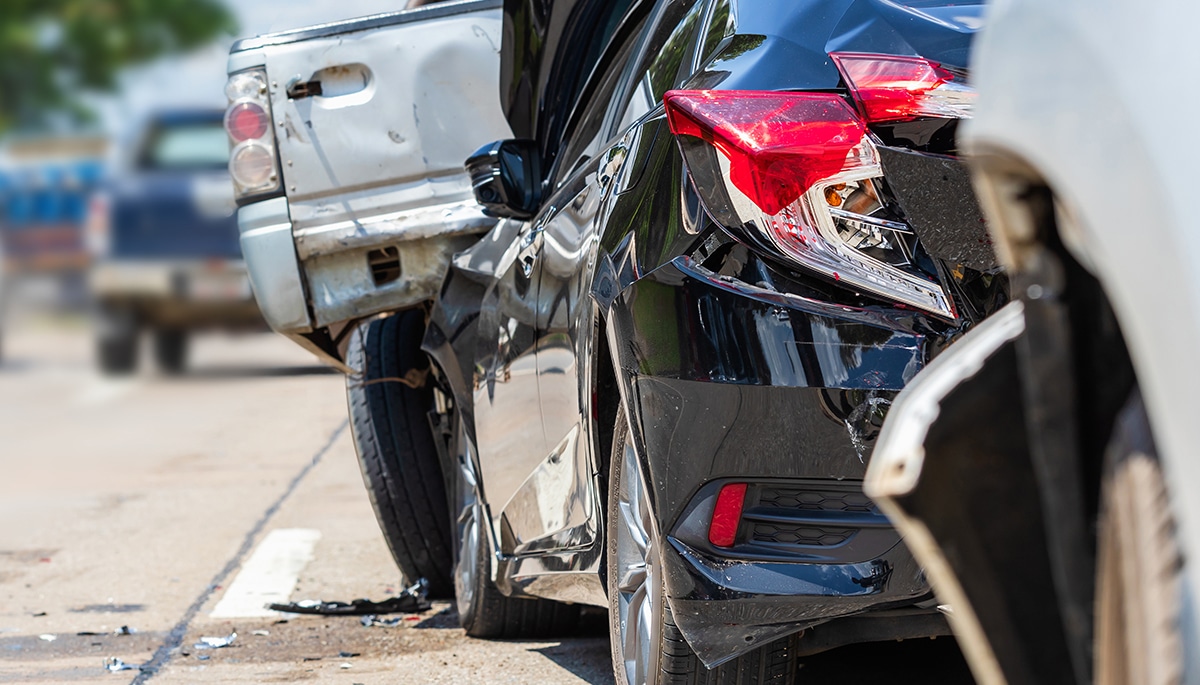
Injured in a Dallas Car Crash?
The first number an insurance company says out loud is almost never the number your claim is worth. That gap, between a quick phone offer and what a documented injury case actually settles for, is the reason a Dallas car accident lawyer earns their fee.
An adjuster who offers you 4,000 dollars three days after a wreck is making a bet that you do not yet know the value of your own medical future.
Texas law shapes that value in ways most drivers never see coming. How fault gets divided, what counts as a recoverable loss, and how long you can wait before the courthouse door closes all move the final figure up or down by tens of thousands of dollars. Call (512) 254-4424 for a free consultation whenever you are ready.
The line stays open 24/7, and you pay nothing unless the case is won.

He is a Lifetime Member of Best Attorneys of America, was named to the Top 100 Civil Plaintiff Attorneys by The National Trial Lawyers, and is admitted to the State Bar of Texas.
Read Matthew Kotzen’s full profile →“I spent years building cases for insurance companies. Now I use that same playbook to make sure they pay what they actually owe.”
Goldberg & Loren Fights for Maximum Compensation


Pay Nothing, Unless We Win
Texas Injury Law at a Glance
| Deadline to file a lawsuit | Two years from the date of the injury. Tex. Civ. Prac. & Rem. Code § 16.003 |
| Fault rule | Modified comparative responsibility ("51% bar"): you recover only if you are 50% or less at fault, and your award is reduced by your share. §§ 33.001, 33.012 |
| Reporting the crash | Notify police immediately when there is injury, death, or a vehicle that cannot be driven away safely. Tex. Transp. Code § 550.026 |
How to Win a Fault Fight Under the Texas 51% Rule
Most car accident claims are not lost on whether the other driver was careless. They are lost on how much of the blame gets quietly shifted onto you. Texas runs on a rule called modified comparative negligence, and it turns your percentage of fault into a direct discount on your recovery.
A claim worth 100,000 dollars shrinks to 80,000 if an adjuster convinces a jury you were 20% responsible. Goldberg & Loren builds the fault record early, before the other side frames the story, because the driver who controls the evidence usually controls the percentage of blame the jury lands on.
What Modified Comparative Negligence Means for Your Wreck
Texas uses a 51% bar, set out in Chapter 33 of the Civil Practice and Remedies Code. Cross that line, and you recover nothing at all. If a jury finds you 50 percent at fault, you still collect half your damages. If it finds you 51% at fault, you walk away with zero. One percentage point decides whether a serious claim pays or dies.
How Insurers Manufacture Shared Blame After a Dallas Crash
Insurance companies know the 51% rule better than most drivers do, so their playbook is built around it. The goal is rarely to deny your claim outright; it is to load enough blame onto you that your payout drops or vanishes. Two tools do most of that work.
The Recorded Statement Trap
An adjuster calls within a day or two and asks for a quick recorded statement, framed as routine paperwork. It is not routine. A casual line like I did not really see them coming becomes evidence that you failed to keep a proper lookout. You are rattled, possibly medicated, and speaking before you have seen the crash report.
Nothing good comes from that recording, and you are not required to give it.
Why the CR-3 Crash Report Is Not the Final Word
The responding officer files a Texas crash report, the CR-3, and it carries weight with an adjuster, but it is still one person’s reconstruction written after the fact. Officers miss things or check a contributing-factor box the physical evidence does not support.
A lawyer who pulls the 911 audio, scene photos, and nearby camera footage can show a different sequence than the box the officer checked.
What Your Settlement Looks Like at 20% Versus 51% Fault
Run the math on a 150,000 dollar claim. At 20 percent fault, you recover 120,000. Push that assignment to 40%, and you drop to 90,000. Let it reach 5%, and the recovery is nothing. The dollars ride entirely on a percentage that gets negotiated in letters, depositions, and the occasional courtroom.
The Crash Corridors We Know by Heart
Certain stretches of Dallas road generate injury claims year after year, and the reasons are baked into how the roads are built and driven. Merge chaos, sudden stops, and drivers treating a tollway like a racetrack turn the same interchanges into the same Dallas crashes year after year.
Knowing where and how these crashes happen tells an attorney what evidence exists and who to ask for it, from TxDOT signal timing to the security camera on the gas station at the corner.
High Speed Pileups on I-635, US-75, and the Dallas North Tollway
The LBJ Freeway, Central Expressway, and the Dallas North Tollway carry huge commuter volumes at speeds that leave no room to react. Traffic packs tight, then stops without warning, and a driver checking a phone plows into the car ahead. These freeway wrecks tend to involve multiple vehicles and the worst injuries.
Interchanges like the High Five, where US-75 meets I-635, force drivers to cross several lanes in a short distance to reach an exit ramp, and those last-second lane changes trigger chain-reaction crashes where each driver blames the one behind.
Sorting real fault out of that pileup takes vehicle damage analysis and often a reconstruction expert, not just the officer’s diagram.
T-Bone and Red Light Crashes From Oak Cliff to Garland
Away from the freeways, the danger shifts to intersections. A driver runs a stale yellow on a surface street in Oak Cliff or Garland and slams into the side of a car that had the right of way through the intersection.
Side-impact crashes hit the passenger compartment directly, so injuries run severe even at moderate speed, and the proof often lives on a nearby business camera that records over itself within days.
What 26,109 Crashes in a Single Year Say About Dallas Roads
The City of Dallas recorded 26,109 total crashes in 2024, with 227 traffic deaths and more than a thousand suspected serious injuries, according to TxDOT crash data. Statewide, a person dies on a Texas road roughly every two hours, and the state has not gone a single day without a traffic death since November 7, 2000.
Steps to Take in the First 72 Hours
The three days after a wreck decide how much proof survives. Evidence degrades on a schedule, and the insurance company on the other side is already moving.
Locking Down Evidence Before Dallas Traffic Cameras Overwrite It
Camera footage is the first thing to vanish. Many intersection systems and private security cameras record over themselves within a few days, so the clip that proves the other driver ran the light may exist for less than a week, and a written preservation request has to reach whoever controls that footage before the loop erases it.
At the scene, photograph everything you safely can: both vehicles from several angles, the traffic signals, skid marks, debris, and the wider intersection. If your car or a nearby car has a dashcam, that footage is gold. Get names and phone numbers from anyone who saw it, because witnesses scatter and memories fade within days.
Why Same Week Medical Care Protects Both Your Health and Your Claim
See a doctor within days even if you feel functional. Adrenaline masks soft tissue and spinal injuries, and symptoms that surface a week later are harder to tie to the crash. An adjuster reads any treatment gap as proof you were not really hurt, so a same-week medical record connects your injury to the wreck and takes that argument off the table.
Recovering Medical Bills, Lost Pay, and Pain
No two claims carry the same value, because no two injuries and no two lives cost the same to disrupt. Texas law sorts recoverable losses into categories, and the strongest claims document every one that applies rather than lumping them into a single demand.
An adjuster counts your emergency room bill; a prepared attorney counts the surgery you will need in three years too.
Economic Damages You Can Count on Paper
Economic damages are the losses with a receipt or a paycheck stub behind them. They form the measurable backbone of your claim. These are the items a well-built Dallas car accident claim documents from day one.
- Emergency care, hospital stays, surgery, and follow-up visits tied to the crash
- Physical therapy, imaging, medication, and future treatment your doctors project
- Lost wages for missed work and the value of used sick or vacation time
- Reduced earning capacity when injuries limit the work you can return to
- Vehicle repair or replacement, towing, and a rental while you are without a car
Each line needs its own proof, from billing records to an employer letter. The offer that lands quickly almost always ignores tomorrow: a herniated disc may need injections for years or a fusion surgery down the line, and that projected cost belongs in your claim now, not after you settle.
Once you sign a release, the money is fixed even if your spine is not.
Pain and Suffering Without a Price Tag Attached
Not every loss comes with an invoice. Pain, sleeplessness, anxiety behind the wheel, and the hobbies you can no longer manage are real and compensable under Texas law, and Texas puts no general cap on these damages in an ordinary car-crash case.
Because no receipt exists, they get argued through medical records, testimony from people who know you, and a clear account of how the injury reshaped ordinary days.
Punitive Damages When a Drunk Driver Caused Your Wreck
When a crash involves conduct beyond ordinary carelessness, such as a drunk driver or someone racing through a red light, Texas allows exemplary damages meant to punish rather than merely repay. These are not available in a routine fender bender.
They require clear and convincing proof of gross negligence, and they can add a significant sum when the facts support them.
Get a Dallas Car Accident Lawyer on Your Side Today
You do not have to untangle fault percentages, recorded-statement tactics, and Texas deadlines while you are still healing. Our Texas injury team has spent years across the table from Dallas insurers, and the sooner the work starts, the more proof survives and the harder it becomes for an insurer to shift blame onto you.
The conversation is free and carries no obligation. Call (512) 254-4424 any time, day or night, or reach out through our contact page. You pay nothing unless the case is won.
Frequently Asked Questions
You generally have two years from the date of the crash, set by Section 16.003 of the Civil Practice and Remedies Code. Miss that deadline and a court will almost always throw the case out, no matter how clear the other driver's fault was. Waiting also lets evidence disappear, so the practical deadline to start is far sooner than two years.
Is It Worth Hiring an Attorney for a Minor Car Accident in Texas
Often, yes, because injuries that feel minor on day one can grow, and a signed release cannot be reopened. If you have any medical treatment, missed work, or a dispute over fault, a free consultation costs you nothing and tells you whether the claim is worth pursuing. If it truly is a scratch with no injury, an honest lawyer will tell you that too.
What if the Other Driver Fled or Has No Insurance
A hit-and-run or an uninsured driver does not automatically end your claim. Texas requires only 30/60/25 minimum liability coverage, and roughly 14.5 percent of Texas drivers carry no insurance at all, according to industry data. When the at-fault driver cannot pay, the claim often shifts to your own policy.
How Uninsured Motorist Coverage Fills the Gap
Uninsured and underinsured motorist coverage on your own policy is built for exactly this situation. It steps in when the other driver has no insurance, too little, or cannot be found after fleeing. Many drivers do not realize they carry it, and insurers do not volunteer the reminder.
A lawyer reviews your Texas auto policy to find every layer of coverage available to you.
What Dallas Hospital Should I Go To After a Car Accident?
For a serious injury, Parkland Memorial Hospital is a Level I trauma center, the highest designation for handling life-threatening crash injuries, and Baylor University Medical Center also treats major trauma in Dallas.
For less urgent symptoms, still see a doctor within a few days, because a prompt medical record ties your injury to the crash and protects both your health and your claim.
What if Road Construction on I-635 or I-35E Caused My Crash?
The long-running I-635 LBJ and I-30 construction projects have reshaped lanes and narrowed shoulders across Dallas for years, and a poorly marked or unsafe work zone can contribute to a crash. Depending on the facts, responsibility may extend beyond the other driver to a road agency such as TxDOT or a construction contractor.
Those claims are fact-specific and can involve shorter deadlines, so it is worth having an attorney review the work-zone signage, lane setup, and traffic-control plan quickly.
Can I Sue the City of Dallas for a Road Defect?
Sometimes, but claims against a government entity in Texas follow special rules under the Texas Tort Claims Act (Tex. Civ. Prac. & Rem. Code §§ 101.023, 101.101), including a formal written-notice requirement that is generally due much sooner than the two-year lawsuit deadline, often within six months, and some cities require notice even faster by local charter.
Miss that notice window and the claim can be barred entirely. Anyone who suspects a road defect or government vehicle was involved should speak with a lawyer right away.
How Long Does a Dallas Car Accident Claim Take To Settle?
It depends on the injuries, the clarity of fault, and how the insurer responds, so timelines vary widely. Straightforward claims can resolve in a few months, while cases involving serious injuries or a disputed fault percentage often take a year or more, especially if a lawsuit becomes necessary.
Settling too early usually costs you money, because the full extent of an injury may not be clear for months.
How Long Do You Have to Report a Crash in Texas?
Reporting a crash and filing a lawsuit are two very different deadlines, and the reporting one is far shorter. Under Texas law, if anyone is injured or killed, or a vehicle is too damaged to be driven away safely, the drivers involved must notify police immediately, not days later (Tex. Transp. Code § 550.026).
You also have to stop, give your name, address, and insurance information, and help anyone who is hurt (§§ 550.021–550.023).
The “ten days to file a crash report” deadline you may have heard about belongs to the investigating officer, who must send the official crash report to TxDOT within ten days when a wreck causes injury, death, or at least $1,000 in property damage (§ 550.062).
If your crash happened in Dallas, you can get your official crash report from the DPD Records Unit at Jack Evans Police Headquarters, 1400 Botham Jean Blvd., Dallas, TX 75215 ((214) 671-3345), or order it online through TxDOT.
Legal Sources & References
The Texas laws described on this page are cited to the official statutes published by the Texas Legislature and were last reviewed on August 16, 2026.
- Statute of limitations (2 years), Tex. Civ. Prac. & Rem. Code § 16.003
- Comparative responsibility & reduction, Tex. Civ. Prac. & Rem. Code §§ 33.001, 33.012
- Duty to report a crash, Tex. Transp. Code §§ 550.021–550.026, 550.062
- Texas crash data, Texas Department of Transportation (TxDOT)