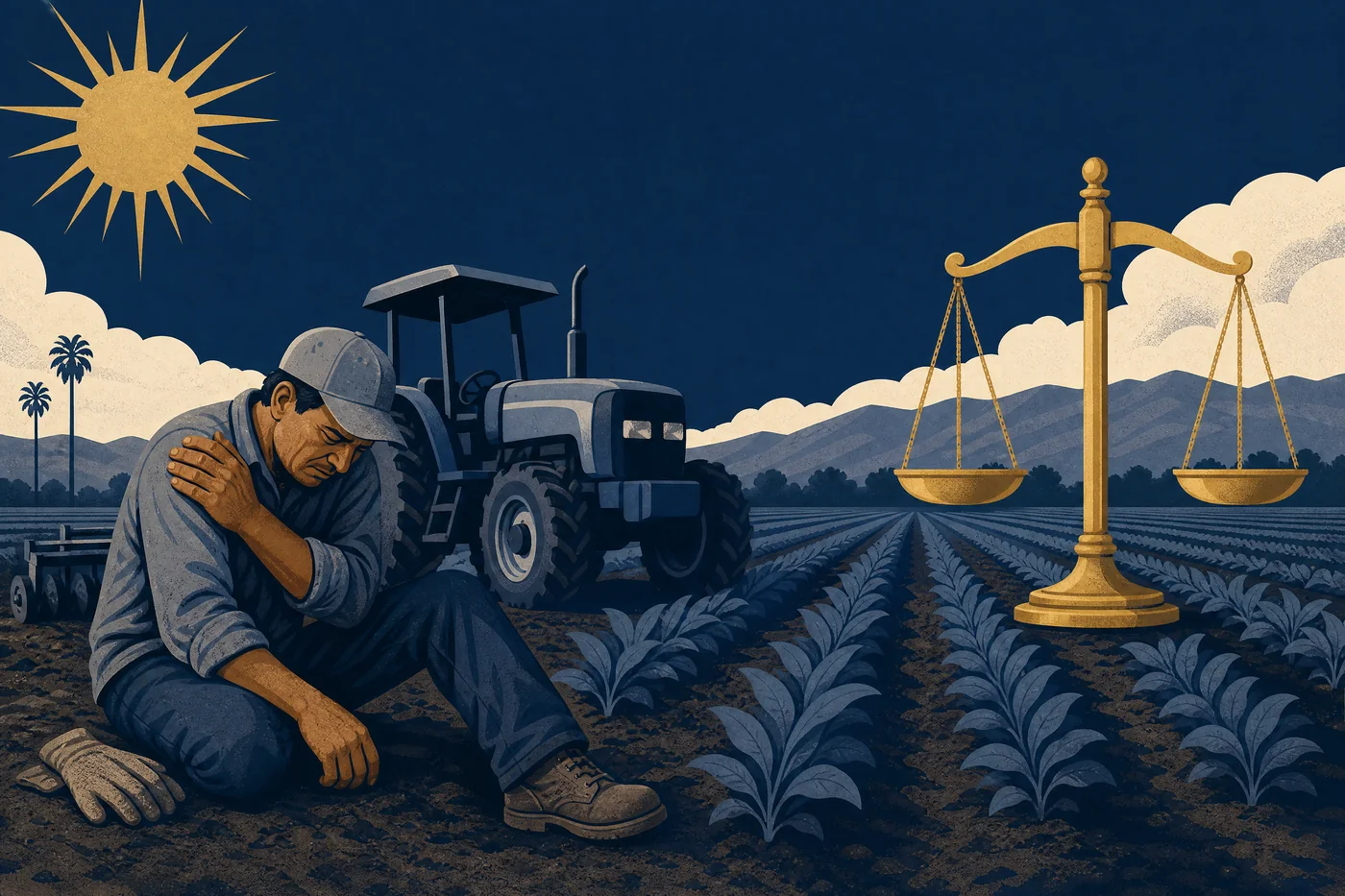
Hurt Doing Farm or Ag Work Near Fresno?
Fresno County is the most productive agricultural county in the United States, and the people who pick, pack, and process that food do some of the most dangerous work in California. When you are injured on the job, you have the right to medical care and wage benefits – regardless of your immigration status or whether you are a seasonal or year-round worker. Our Fresno workers’ compensation lawyers help farm and ag workers across the Central Valley, and we work with Spanish-speaking clients every day.
Common Central Valley Farm & Ag Injuries
- Heat illness – heat exhaustion and heat stroke from long hours in the sun. California’s Cal/OSHA heat-illness prevention standard requires employers to provide shade, cool water, and rest breaks; when they do not, injuries are compensable.
- Machinery and equipment injuries – tractors, balers, augers, forklifts, and processing equipment cause amputations, crush injuries, and catastrophic harm.
- Pesticide and chemical exposure – respiratory illness, chemical burns, and long-term occupational disease from spraying, mixing, and re-entry.
- Repetitive strain and packing-house injuries – sorting, cutting, and line work cause carpal tunnel and hand injuries, tendinitis, and back strain (see our repetitive stress injury guide).
- Falls and vehicle incidents – falls from ladders and trailers, and being struck by farm vehicles.
Undocumented and Seasonal Workers Are Covered
California law defines “employee” broadly and covers employees regardless of immigration status (Labor Code § 3351; Senate Bill 1818, 2002). You have the same right to medical treatment and wage-replacement benefits as any other worker. Fear about status keeps many farm workers from filing – but your employer cannot lawfully retaliate against you for pursuing a legitimate work-injury claim.
You May Have More Than a Work-Comp Claim
Workers’ compensation is usually your only claim against your employer. But when a third party caused your injury – a defective machine, a chemical manufacturer, a negligent driver, or another contractor on the property – you may also bring a separate injury lawsuit for full damages, including pain and suffering, that work-comp does not pay (Labor Code § 3852). Farm labor is often arranged through labor contractors and equipment suppliers, so more than one company may be responsible. See our third-party work injury guide.
What to Do After a Farm or Ag Injury
Report the injury to your employer or foreman as soon as possible (within 30 days), get medical care, and write down what happened, who saw it, and what equipment was involved. Keep copies of everything. Then talk to a lawyer – the consultation is free, and we handle these cases on contingency, so there is no cost unless we win.
Frequently Asked Questions
Yes. Agricultural and farm workers are employees under California law and are entitled to workers’ compensation for job injuries and illnesses, including heat illness, machinery injuries, and pesticide exposure.
Yes. California workers’ compensation covers employees regardless of immigration status (Labor Code § 3351). Your status does not affect your right to benefits, and retaliation for filing is illegal.
Heat exhaustion and heat stroke are compensable work injuries. Cal/OSHA requires employers to provide shade, water, and rest breaks; when heat illness results, you can seek medical care and wage benefits through workers’ comp.
Misclassification is common in agriculture and does not automatically defeat your claim. Whether you are truly an employee depends on the facts of the work, and a workers’ comp judge – not your employer – decides the dispute.
No. Our team works with Spanish-speaking clients throughout the Central Valley, and interpreters are available in the workers’ compensation system.
Contact Goldberg & Loren for a free, confidential consultation. Call (559) 629-8844 or request a consultation online. No fee unless we win.
Sources
California Division of Workers’ Compensation and Cal/OSHA (heat-illness prevention); California Labor Code §§ 3351, 5400, 5405, 3852 (leginfo.legislature.ca.gov). This article is general information, not legal advice; the application of these laws depends on the facts of your case. Last updated September 2026.