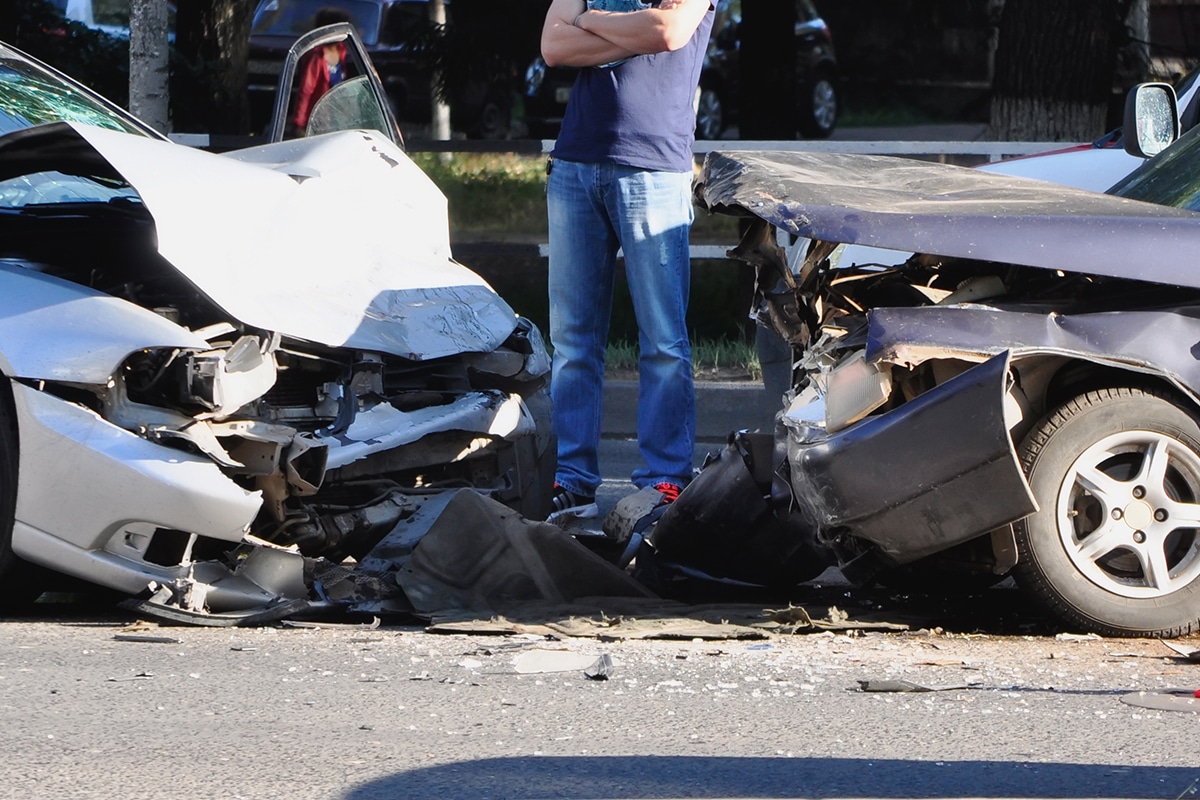
Injured in an Auto Accident in Lakeway, Texas?
A Lakeway car accident lawyer at Goldberg & Loren helps drivers hurt on RR 620, Highway 71, and the Hill Country roads around Lake Travis recover what a crash actually cost them. We handle the insurance company so you can focus on healing, and you pay nothing unless we win. In Texas you have two years to file (Tex. Civ. Prac. & Rem. Code § 16.003), and your recovery is reduced by your share of fault, so the first fight is almost always over who caused the wreck.
Lakeway is a small city where a single crash can upend your life for months, and the driver who hit you is usually backed by an insurer whose job is to pay as little as possible.
Our role is to level that fight: we gather the proof, put a fair value on what the crash cost you, and deal with the adjusters directly so you are not negotiating your own claim from a hospital bed or a body shop waiting room.
Everything below explains how Texas law shapes a Lake Travis car-accident claim and what we do to protect it.
Our Lakeway Car Accident Lawyer

Goldberg & Loren Fights for Maximum Compensation


Pay Nothing, Unless We Win
Texas Injury Law at a Glance
| Deadline to file a lawsuit | Two years from the date of the injury (wrongful death: two years from the date of death). Tex. Civ. Prac. & Rem. Code § 16.003 |
| Fault Rule | Modified comparative responsibility ("51% bar"): you recover only if you are 50% or less at fault, and your award drops by your share. §§ 33.001, 33.012 |
| Reporting the crash | Notify police immediately when there is injury, death, or a vehicle that cannot be driven away safely. Tex. Transp. Code § 550.026 |
How RR 620 and Highway 71 Crashes Happen
The RR 620 corridor stacks rear-end and left-turn crashes at its choke points, while Highway 71 through Bee Cave and Spicewood produces high-speed collisions where survival is not guaranteed. Rush-hour backups, drivers unfamiliar with the winding Loop 360 grade, and summer boat-and-tourist traffic all raise the odds. We pull the police crash report, nearby business camera footage, and vehicle data to show what really happened before an adjuster locks in a theory of fault.
Around Lake Travis the wrecks we see cluster in a few predictable places:
- RR 620, stop-and-go backups from Lakeway Boulevard past Lohmans Crossing toward Mansfield Dam produce chain rear-enders and left-turn collisions.
- The RR 620 & Highway 71 junction near Bee Cave, where turning traffic meets higher speeds.
- Highway 71 through Bee Cave and Spicewood, higher-speed, head-on, and lane-change wrecks on a road that turns rural fast.
- Loop 360 (Capital of Texas Highway), blind curves, steep grades, and low-water crossings that flood in Hill Country storms.
- The “Y” at Oak Hill, where US 290 and Highway 71 merge into one of the area’s most congested interchanges.
The 51% Rule and Your Money
Texas uses modified comparative responsibility: you can recover as long as you are 50% or less at fault, but your award drops by your percentage, and at 51% you recover nothing (§§ 33.001, 33.012). Adjusters know this, so they push fault onto you to shrink the payout. We push back with evidence, not their narrative.
The difference is real money. On a claim worth $100,000, being assigned 20% of the blame instead of zero costs you $20,000, and one percentage point past the halfway mark costs you everything. That is why an adjuster will comb the crash report for any hint that you were speeding, distracted, or slow to brake. We answer that pressure with the police report, scene photos, witness accounts, and vehicle data, so the fault question is decided by what actually happened rather than by whoever tells the story first.
Distraction is one of the first things we check on both sides. Texas bans reading, writing, or sending an electronic message while driving (Tex. Transp. Code § 545.4251), and a driver who was texting when the RR 620 traffic stopped is often the one who caused the wreck. Phone records and the timing in the crash report can move that percentage in your favor.
Insurance Coverage After a Lake Travis Crash
Most Lake Travis claims are paid by the at-fault driver’s auto insurer, so the coverage available often decides what you can actually collect. Texas requires drivers to carry minimum liability limits of $30,000 per injured person, $60,000 per crash, and $25,000 for property damage (Tex. Transp. Code § 601.072). Serious injuries on Highway 71 or Loop 360 routinely cost more than a minimum policy covers, which is why we look for every layer of coverage before anyone tells you the money has run out.
One of the most overlooked layers is your own policy. Insurers must offer uninsured and underinsured motorist (UM/UIM) coverage in Texas, and you carry it unless you rejected it in writing (Tex. Ins. Code § 1952.101). It pays when the driver who hit you had no insurance or not enough, which is common around Lake Travis. We request your declarations page early so this coverage is on the table from the start.
When a badly hurt client’s damages clearly exceed the at-fault driver’s policy, we use the leverage Texas law gives us. Under the Stowers doctrine, an insurer that refuses a reasonable settlement offer within its policy limits can be held responsible for the full judgment, even one larger than the policy. A properly framed demand puts the carrier’s own money at risk if it lowballs a clear case, which is often what finally moves a fair offer.
If a government vehicle was involved, such as a city, county, or state truck, the rules tighten. Claims against a Texas governmental unit fall under the Tort Claims Act, which requires formal written notice of the claim within six months of the crash (Tex. Civ. Prac. & Rem. Code § 101.101), and it caps what a governmental unit must pay. Miss that short window and an otherwise strong claim can be lost, so tell us right away if a public vehicle was part of your wreck.
Reporting a Lakeway Crash and Why It Matters
Texas law tells drivers what to do at the scene, and following those rules protects your claim as much as your safety. You must stop and notify police immediately when a crash causes injury, death, or a vehicle that cannot be driven away safely (Tex. Transp. Code § 550.026). The officer who responds, whether Lakeway Police, the Travis County Sheriff, or DPS on the state highways, prepares the CR-3 crash report that becomes the first official record of who did what.
Drivers also have a duty to stop and exchange information and to render aid to anyone who is hurt (Tex. Transp. Code §§ 550.023, 550.062). Leaving the scene of an injury crash is a serious offense, and when the other driver takes off, that fact often supports your case and points you toward your own uninsured-motorist coverage. We treat a hit-and-run as a coverage question, not a dead end.
Where Lake Travis Crash Victims Get Treated
Getting examined quickly protects both your health and your claim, adrenaline hides injuries, and a gap in treatment is the first thing an adjuster uses against you. Lake Travis crash victims are usually treated at:
- Baylor Scott & White Medical Center – Lakeway (100 Medical Pkwy, Lakeway), a 24/7 emergency room right in Lakeway.
- Dell Seton Medical Center at UT (1500 Red River St, Austin), the only Level I Trauma Center in Central Texas, where the most serious Lake Travis and Hill Country crashes are transported.
- Across the metro, St. David’s and Ascension Seton emergency departments also treat Austin-area injury patients.
Keep every discharge summary, imaging disc, and bill, those records are the backbone of what your claim is worth.
Follow the treatment plan your doctors give you, too.
When a patient skips appointments or stops care early, the insurer argues the injury must not have been serious, and that argument gets harder to make when the medical record is consistent from the day of the crash forward.
Evidence Fades Fast Around Lake Travis
The proof that wins a car-accident claim starts disappearing almost immediately. Skid marks wash away in the next Hill Country storm, the private cameras at the shopping centers along RR 620 overwrite their footage in days, and witnesses who saw the whole thing forget details or become impossible to reach.
The event-data recorder in a modern vehicle can capture speed and braking in the seconds before impact, but that data can be lost once the car is repaired or scrapped.
Because of that, we move quickly to lock down what happened: we pull the CR-3 crash report, send preservation letters for nearby video before it is erased, photograph the vehicles and the scene, and, in a serious wreck, bring in a reconstruction expert while the evidence is still fresh.
Getting a lawyer involved early is not about rushing to court; it is about making sure the facts that prove your case still exist when the insurer starts asking questions.
What a Lakeway Car Accident Claim Can Cover
| Economic damages | Medical bills, future care, lost wages, and reduced earning capacity, the costs with a receipt. |
| Non-economic damages | Pain, mental anguish, disfigurement, and loss of enjoyment of life. Texas puts no general cap on these in an ordinary car-crash case. |
| Property | Repair or replacement of your vehicle, towing, and a rental while yours is in the shop. |
Economic damages are the costs you can prove with a receipt, and they include the care you still need. A serious neck or back injury from a Highway 71 collision can mean months of physical therapy, injections, or surgery, and Texas law lets you recover the reasonable cost of that future treatment, not just the bills you have already paid. Lost income works the same way, covering both the paychecks you missed and any lasting drop in what you can earn if the injury keeps you from your old job.
Non-economic damages cover the harm that has no invoice, the pain, the sleepless nights, the disfigurement, and the things you can no longer do. Texas puts no general cap on these damages in an ordinary car-crash case; the only statutory caps are the separate ones in medical-malpractice cases (Chapter 74) and claims against governmental units (Chapter 101), neither of which applies to a routine collision between two drivers. That matters, because in a severe-injury case the human losses often dwarf the medical bills.
Most Lake Travis crashes settle with the at-fault driver’s insurer. If the carrier will not pay fairly, a Lakeway injury lawsuit is filed with the Travis County district courts at 1700 Guadalupe Street in Austin, and it must be filed before the two-year deadline (§ 16.003). Filing does not mean a trial is certain; most cases still resolve afterward, but a filed lawsuit and a firm that is ready to try the case tell the carrier the deadline pressure now runs against them.
What to Do After a Car Accident Near Lake Travis
What you do in the first hours protects both your health and your claim:
- 1
Get checked out. Call 911 if anyone is hurt, and get evaluated even if you feel fine, Baylor Scott & White’s 24/7 ER on Medical Parkway is minutes from most of Lakeway, and the most serious crashes are transported to Dell Seton, the region’s Level I trauma center.
- 2
Report it to police. Texas law requires it for any injury crash or one that leaves a car undriveable. Whoever works the scene, Lakeway Police, the Travis County Sheriff, or DPS, files the CR-3 crash report.
- 3
Document everything, photos of both vehicles, their positions, the road, and any injuries, plus the names and numbers of every witness before they leave.
- 4
Exchange insurance and give only your basic information. Do not argue or admit fault at the scene.
- 5
Get your crash report. Once it is filed, usually within a few business days, request it from the agency that worked the scene or order it online through the Texas Department of Transportation.
- 6
Call us before you give a recorded statement to the other driver’s insurer. That one call is where a lot of claims are quietly shrunk.
Frequently Asked Questions
Two years from the crash date for most claims, under Tex. Civ. Prac. & Rem. Code § 16.003. Waiting risks losing the evidence that proves your case even before the deadline.
Almost never, and not before you know the full extent of your injuries. First offers arrive fast because the carrier is betting you will settle for less than the claim is worth.
Yes. Texas law requires drivers to notify police immediately when a crash causes injury, death, or a vehicle that cannot be driven away safely (Tex. Transp. Code § 550.026). The officer's crash report is one of the first things we pull.
Yes. Texas law requires drivers to notify police immediately when a crash causes injury, death, or a vehicle that cannot be driven away safely (Tex. Transp. Code § 550.026). The officer's crash report is one of the first things we pull.
You may still recover through your own uninsured/underinsured motorist (UM/UIM) coverage, which is built for exactly this situation. Texas drivers are offered UM/UIM coverage and carry it unless they turned it down in writing, so check your own policy before assuming there is nothing to collect.
From the agency that worked your crash, the Lakeway Police Department, the Travis County Sheriff's Office, or the Texas Department of Public Safety, or you can order the CR-3 report online through the Texas Department of Transportation once it is filed, usually within a few business days. We pull it for you as soon as it is available.
RR 620, Highway 71 through Bee Cave and Spicewood, Loop 360, and the Oak Hill "Y" where US 290 meets Highway 71 carry the heaviest crash volume, driven by congestion, blind Hill Country curves, and seasonal lake traffic.
It depends on the severity of your injuries, your medical costs and lost income, and how clearly the evidence shows the other driver was at fault. Texas puts no general cap on pain-and-suffering in an ordinary car crash, so a serious injury can support a substantial claim. A free consultation gives you an honest range.
Areas We Also Serve
Our Lakeway office anchors a Texas-wide personal injury practice. If your crash happened outside the Lake Travis area, our team also helps injured people in:
Legal Sources & References
Texas law on this page is cited to the official statutes published by the Texas Legislature and was last reviewed on August 3, 2026.
- Statute of limitations, Tex. Civ. Prac. & Rem. Code § 16.003
- Comparative responsibility, §§ 33.001, 33.012
- Duty to report a crash, Tex. Transp. Code §§ 550.021–550.026
- Texas crash data, TxDOT
- Lake Travis emergency care, Baylor Scott & White – Lakeway, Dell Seton (Level I Trauma)
- Where Lakeway suits are filed, Travis County District Courts