Oregon Tenant Rights 2026: Complete Guide to Renter Protections
Facing a dispute with your landlord in Oregon can quickly become stressful when misinformation clouds your understanding of your rights.
Misconceptions about lease agreements and state tenant protections often lead to unnecessary conflict and lost opportunities for fair treatment.
This guide clarifies Oregon’s well-defined renter rights, such as eviction protections, habitability requirements, and restrictions on landlord entry, so you can confidently address legal challenges and safeguard your living situation.
Oregon Tenant Rights Defined and Misconceptions
Navigating the complex landscape of tenant rights in Oregon requires understanding the nuanced protections and legal frameworks that safeguard renters.
The Oregon Residential Landlord-Tenant Act establishes clear guidelines designed to protect both landlords and tenants, dispelling common misconceptions about rental agreements and legal responsibilities.
Misconceptions about tenant rights often create unnecessary conflicts between renters and property owners. Many tenants mistakenly believe that lease agreements can override state protections, but in reality, Oregon law provides fundamental rights that cannot be waived through contract language. Key tenant rights include:
- Protection from arbitrary evictions
- Guaranteed right to habitable living conditions
- Limitations on landlord property entry
- Fair security deposit handling
- Timely maintenance and repair obligations
Landlords must adhere to strict legal standards when managing rental properties. For instance, they cannot enter a tenant’s unit without providing proper notice, typically 24 hours in advance for non-emergency situations. Similarly, security deposits must be returned within 31 days of moving out, with an itemized list of any deductions.
Habitability standards are particularly critical in Oregon tenant protection laws. A rental unit must meet basic livability requirements, including:
- functioning plumbing,
- electrical systems,
- heating,
- and structural integrity.
Tenants have the right to request repairs for issues that compromise living conditions, and persistent failures by landlords can lead to legal remedies.
Pro tip: Document all communication with your landlord in writing and keep detailed records of maintenance requests, repairs, and any potential lease violations to protect your legal interests.
Types of Rental Agreements and Lease Features
Oregon’s rental landscape encompasses diverse agreement types that provide flexibility and protection for both tenants and landlords. Rental agreements in Oregon range from informal oral contracts to comprehensive written leases, each with unique characteristics and legal implications.
The primary types of rental agreements in Oregon include:
- Month-to-Month Leases: Offer maximum flexibility for both parties
- Fixed-Term Leases: Provide stability with predetermined end dates
- Oral Agreements: Legally recognized but less recommended
- Written Contracts: Most comprehensive and protective option
Each lease type carries specific legal responsibilities and protections. Month-to-month agreements allow tenants and landlords greater mobility, requiring only 30 days’ notice for termination. In contrast, fixed-term leases lock in rental terms for a specified period, typically 6-12 months, offering more predictability for both parties.
Lease features are critical in defining tenant and landlord expectations. Key components typically include:
- Rent amount and due date
- Security deposit terms
- Utility responsibility
- Maintenance obligations
- Renewal and termination conditions
Here’s a comparison of Oregon’s main rental agreement types highlighting flexibility, legal risks, and recommended tenant actions:
| Agreement Type | Flexibility for Tenants | Legal Risk Level | Recommended Tenant Approach |
|---|---|---|---|
| Month-to-Month | High | Moderate | Review notice terms monthly |
| Fixed-Term Lease | Low | Low | Inspect all lease conditions upfront |
| Oral Agreement | Very High | High | Document details in writing afterward |
| Written Contract | Moderate | Very Low | Keep signed copies and all amendments |
Oregon law mandates that lease agreements cannot supersede state-provided tenant protections, ensuring fundamental renter rights are always maintained.
Pro tip: Always request a written lease and carefully review all terms before signing, paying special attention to renewal conditions and maintenance responsibilities.
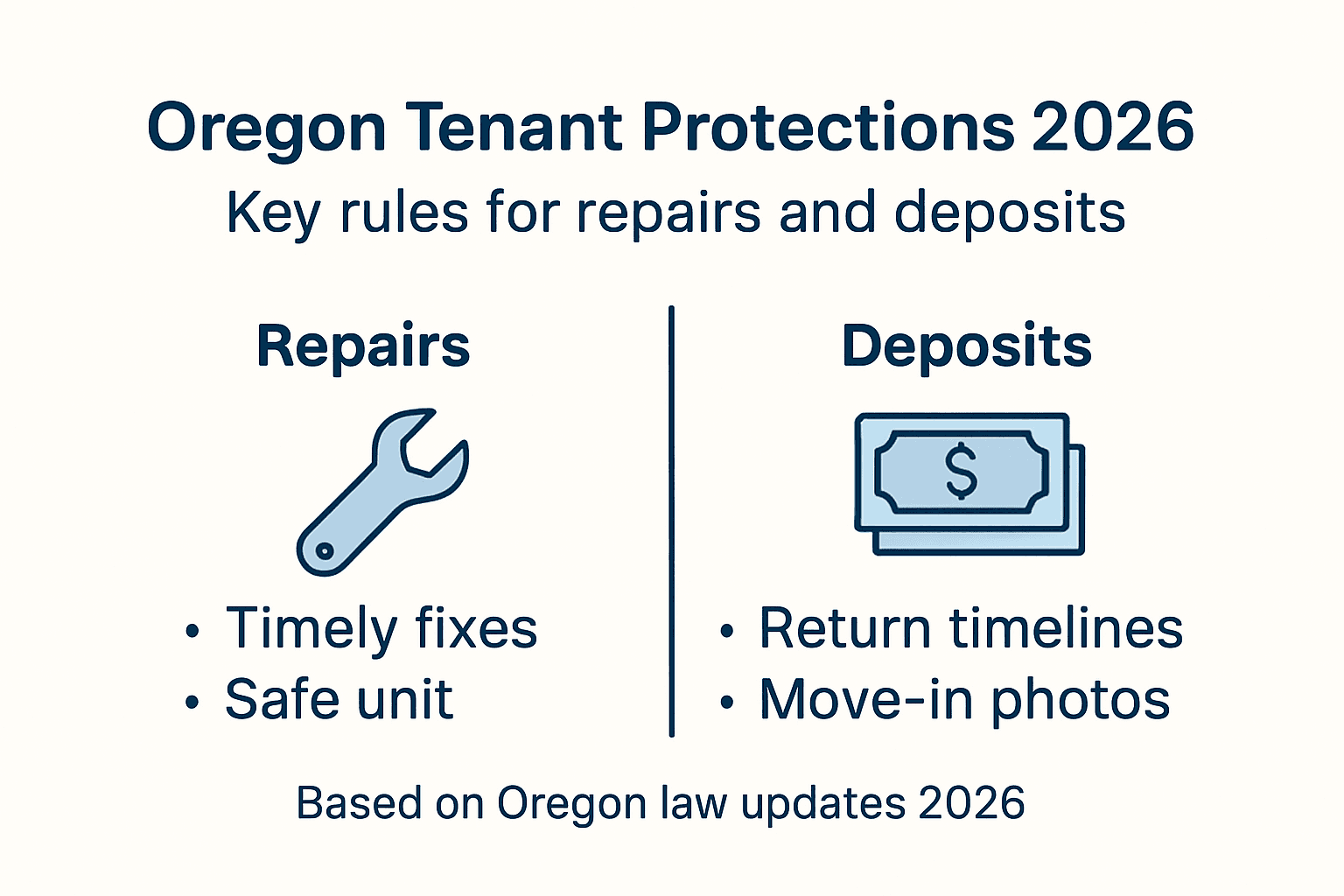
Legal Protections: Repairs, Entry, Security Deposits
Oregon law provides comprehensive legal protections for tenants, ensuring safe and fair housing conditions. Tenant rights in Oregon establish clear guidelines for repairs, property entry, and security deposit management that protect renters from potential landlord misconduct.
Repair responsibilities are a critical aspect of tenant protections. Landlords must maintain habitable living conditions, addressing significant issues within specific timeframes:
- Structural integrity issues: Immediate attention required
- Heating and plumbing problems: Repair within 30 days
- Electrical system malfunctions: Prompt resolution mandatory
- Pest infestations: Immediate mitigation expected
- Water and sanitation concerns: Urgent addressing required
Property entry restrictions are another key protection for tenants. Landlords must provide reasonable notice before entering a rental unit, typically 24 hours in advance for non-emergency situations. Exceptions exist only for genuine emergencies that could cause immediate property damage or tenant safety risks.
Security deposit regulations offer crucial financial protections. Landlords are subject to strict rules governing deposit handling:
- Maximum deposit limited to one month’s rent
- Must provide itemized statement of deductions
- Refund required within 31 days of lease termination
- Interest must be paid on deposits held over one year
- Illegal deductions can result in penalty payments
Tenants have the right to challenge improper security deposit withholdings through legal channels, ensuring fair treatment and financial accountability.
Pro tip: Always document the condition of your rental unit with dated photographs and a detailed move-in checklist to protect yourself during security deposit return proceedings.
Eviction Rules, Notice Periods, and Rent Caps
Oregon continues to evolve its tenant protection laws, providing critical safeguards for renters in 2026. 2026 landlord-tenant regulations introduce nuanced rules governing eviction processes, notice periods, and rent increase limitations that significantly impact both tenants and property owners.
Eviction procedures in Oregon are structured to protect tenants while maintaining reasonable property owner rights. Different eviction scenarios require specific notice periods:
- Nonpayment of Rent: 72-hour notice to pay or vacate
- Lease Violations: 30-day notice with opportunity to correct
- No-Cause Evictions: 90-day notice for long-term tenants
- Month-to-Month Tenancies: 30-day written notice
- Fixed-Term Lease Violations: Immediate potential termination
Rent increase regulations provide critical financial protections for Oregon renters. In 2026, key rent control measures include:
- Maximum annual increase of 9.5% for most residential units
- Additional restrictions in metropolitan areas
- Required written notice at least 45 days before increase
- Limitations on frequency of rent adjustments
- Exceptions for newer construction and specific property types
Tenants have the right to challenge unlawful evictions and excessive rent increases through local housing authorities and legal channels.
Pro tip: Maintain detailed documentation of all rental communications and immediately request written confirmation of any proposed eviction or rent increase to protect your legal rights.
Obligations of Tenants and Landlords Explained
The Oregon rental landscape is governed by a complex set of mutual responsibilities that define the relationship between tenants and property owners. Landlord-tenant legal framework establishes clear expectations for both parties to ensure fair and respectful housing interactions.
Tenant Obligations are fundamental to maintaining a positive rental relationship. Renters are responsible for:
- Paying rent in full and on time
- Maintaining the rental unit in a clean and safe condition
- Preventing property damage beyond normal wear and tear
- Properly disposing of garbage and waste
- Complying with lease agreement terms
- Allowing reasonable access for necessary repairs
- Reporting maintenance issues promptly
Landlord Responsibilities are equally critical in ensuring tenant well-being and legal compliance. Property owners must:
- Provide a habitable and safe living environment
- Make timely repairs to maintain property standards
- Respect tenant privacy rights
- Follow legal procedures for entry and inspections
- Comply with security deposit regulations
- Maintain essential utilities and building systems
- Provide proper notice for any significant changes
Pro tip: Document all interactions, maintenance requests, and communication in writing to protect both tenant and landlord interests in case of future disputes.
New Technology Rules and 2026 Law Changes
Oregon’s legislative landscape continues to evolve, introducing significant technological protections for renters in 2026. New tenant technology regulations reflect a progressive approach to balancing digital innovation with tenant rights and privacy concerns.
Electronic Payment and Portal Regulations represent a critical shift in rental management practices. Key technological provisions include:
- Right to opt out of mandatory digital payment systems
- Alternative payment method requirements
- Consent-based electronic communication
- Data privacy protections for tenant information
- Limitations on mandatory tenant management portals
Technological Tenant Rights now encompass several groundbreaking protections:
The following table summarizes new Oregon technology rules affecting rental management as of 2026:
| Tech Rule | Purpose | Tenant Benefit |
|---|---|---|
| Opt-Out Payments | Non-digital method required | Equal access to payment options |
| Portal Alternatives | Paper documentation allowed | Protection against technology gaps |
| Data Privacy | Strict security requirements | Reduced risk of data exposure |
| Consent for E-Communication | Written approval required | Control over communication type |
| Physical Statements | Paper records available | Easier dispute documentation |
- Landlords must provide non-digital payment alternatives
- Electronic portals cannot be the sole communication method
- Tenants can request paper statements and physical documentation
- Digital platforms must meet strict data security standards
- Explicit consent required for electronic communication
Digital transformation in rental management must prioritize tenant choice and privacy protection.
Pro tip: Always maintain both digital and physical copies of rental agreements and communications to ensure you have comprehensive documentation.
Protect Your Rights as an Oregon Tenant with Experienced Legal Support
Understanding Oregon tenant rights in 2026 can feel overwhelming when facing repair issues, eviction risks, or rent increases. The challenges of securing habitability, defending against wrongful eviction, and navigating new technology laws call for reliable guidance.
Many tenants experience stress over security deposit disputes or unclear lease agreements. If you want to protect your legal interests and ensure your landlord meets their obligations, it is critical to have trusted expertise on your side.
At Goldberg & Loren our skilled legal team understands the intricacies of tenant protections and knows how to fight for your fair treatment. Whether you face eviction challenges or need support asserting your rights under Oregon’s evolving rental laws, our dedicated attorneys provide strong advocacy.
Call (971) 339-8080 to schedule a free tenant rights consultation and see how we leverage over 120 years of experience for clients needing help navigating complex housing disputes. Don’t wait for your situation to worsen. Reach out now to protect your home and your future.
Frequently Asked Questions
What are the key tenant rights in Oregon?
Tenants in Oregon have the right to protection from arbitrary evictions, guaranteed habitable living conditions, limitations on landlord entry, fair handling of security deposits, and timely maintenance and repairs.
What are the responsibilities of landlords regarding repairs and maintenance?
Landlords are required to provide a habitable living environment, make timely repairs, respect tenant privacy, comply with security deposit regulations, and provide proper notice for entry and inspections.
How much notice must a landlord give before entering a rental unit?
In non-emergency situations, landlords must provide at least 24 hours’ notice before entering a rental unit.
What are the rules surrounding security deposits in Oregon?
Landlords in Oregon can charge a security deposit up to one month’s rent and must return it within 31 days of lease termination, along with an itemized statement of any deductions. They must also pay interest on deposits held for more than one year.
Recommended
- Can You Be Fired for Medical Marijuana in Oregon?
- Tips for Driving Safe in Oregon
- 10 Odd Oregon Laws