California FMLA/CFRA Leave Violations: Protecting Your Job and Rights from Employer Retaliation
More than one in four employees say they fear losing their jobs if they take medical leave. For employees in California, understanding your rights under the Family and Medical Leave Act matters when your job or health is at stake. If you suspect your employer in Bakersfield has ignored the law, valuable information and trusted legal guidance can help you protect your future and restore peace of mind.
Defining FMLA Violations in California
The Family and Medical Leave Act (FMLA) provides critical workplace protections for California employees, ensuring job security during significant personal and family medical situations. At its core, an FMLA violation occurs when an employer illegally interferes with an employee’s legally guaranteed leave rights or retaliates against an employee for exercising those rights. California labor regulations specifically outline the complex legal standards that protect workers from discriminatory practices related to medical and family leave.
Under California law, FMLA violations can manifest in several distinct ways. These include outright denial of legitimate leave requests, imposing punitive actions against employees who request protected leave, failing to maintain an employee’s health insurance during leave periods, or refusing to reinstate an employee to their original or equivalent position upon returning from approved medical or family leave.
Employers who engage in these practices can face significant legal consequences, including potential monetary damages and penalties for noncompliance.

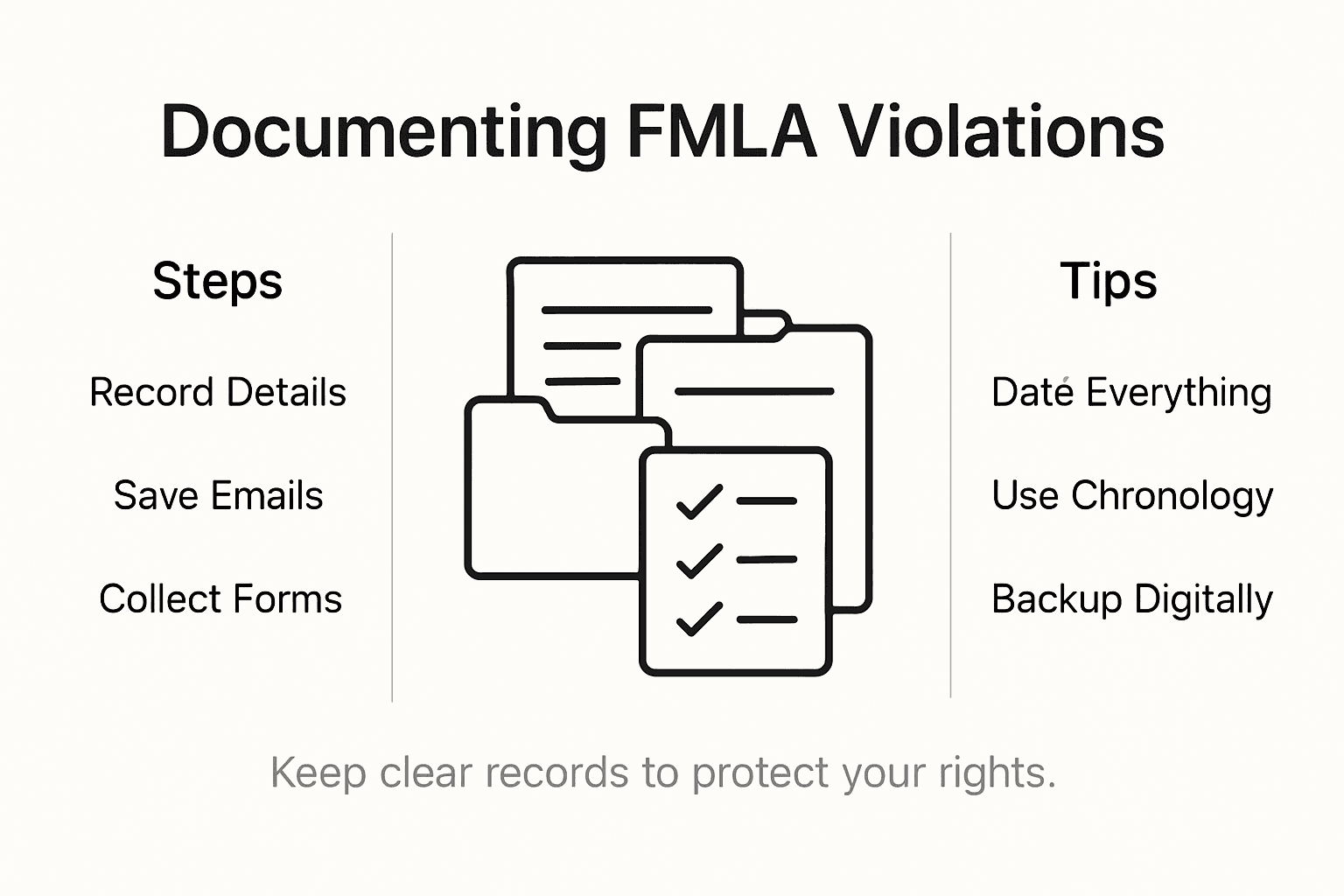
Employees experiencing potential FMLA violations should document every interaction, communication, and decision related to their leave request. Critical evidence includes written correspondence, medical certification documents, performance reviews preceding the leave request, and any communications suggesting discriminatory intent. Proving an FMLA violation requires demonstrating that the employer’s actions directly impacted the employee’s job status or constituted intentional interference with legally protected leave rights.
Pro tip: Consult an employment attorney immediately if you suspect an FMLA violation, as strict timelines exist for filing claims and preserving your legal rights.
Types of Employer FMLA Violations
Employers in California can commit numerous serious FMLA violations that directly harm employee rights and job security. Typical FMLA violation patterns demonstrate systematic ways employers inappropriately interfere with workers’ legally protected leave entitlements. These violations range from subtle discriminatory practices to overt acts of workplace retaliation, each undermining the fundamental protections designed to support employees during critical personal and medical circumstances.
The most common FMLA violations include outright leave denial, where employers refuse to grant legitimate medical or family leave requests. Another significant violation involves retaliation, where employers punish employees for exercising their FMLA rights through actions like demotions, reduced hours, unfair performance evaluations, or creating hostile work environments.
Employers also frequently violate FMLA regulations by failing to maintain health insurance coverage during an employee’s approved leave period or refusing to reinstate employees to their original or equivalent positions upon return.
Additionally, employers can commit FMLA violations through improper documentation and tracking practices. This includes incorrectly calculating leave eligibility, failing to provide required notices about FMLA rights, interfering with an employee’s ability to take protected leave, or deliberately misinterpreting medical certification documents. Such actions can create significant barriers for employees needing legitimate medical or family care, potentially exposing vulnerable workers to unnecessary professional and financial risks.
Pro tip: Maintain detailed written records of all FMLA-related communications and interactions with your employer to strengthen your potential legal claim.
Key Legal Protections and Requirements
FMLA legal protections establish comprehensive safeguards for employees seeking medical or family-related leave in California. These protections ensure that eligible workers can take up to 12 weeks of unpaid, job-protected leave within a 12-month period without risking their employment status. The law covers critical life circumstances, including personal medical conditions, caring for seriously ill family members, and bonding with a new child through birth, adoption, or foster care placement.
Under California Family Rights Act (CFRA) regulations, employers with five or more employees must provide specific legal protections. These requirements include maintaining an employee’s health insurance during their leave, guaranteeing job restoration to the same or an equivalent position upon return, and protecting workers from any retaliatory actions. Eligibility criteria are stringent, typically requiring employees to have worked for the employer for at least 12 months and completed a minimum of 1,250 hours of service in the previous year.
The legal framework provides robust protections against discrimination and retaliation. Employers are strictly prohibited from interfering with an employee’s FMLA rights, denying legitimate leave requests, or taking adverse actions such as termination, demotion, or reduced hours in response to an employee exercising their leave entitlements. These protections extend to various scenarios, including serious health conditions, military family leave, and pregnancy-related medical needs, ensuring comprehensive support for workers during challenging personal circumstances.
Pro tip: Request and retain copies of all FMLA-related documentation, including medical certifications and communication with your employer, to protect your legal rights.
Here’s a quick reference comparing FMLA legal protections and potential employer violations in California:
| Area of Protection | FMLA Guarantee | Common Violation | Legal Consequence |
|---|---|---|---|
| Job Security | Right to reinstatement after leave | Refusal to reinstate | Possible reinstatement, back pay |
| Health Insurance | Coverage maintained during leave | Discontinuation of benefits | Payment for lost benefits, penalties |
| Anti-Retaliation | No punishment for using leave | Demotion or termination | Damages, possible civil lawsuit |
| Notice Requirements | Clear explanation of employee rights | Failure to inform employees | Regulatory fines, legal scrutiny |
Employee Rights and Common Employer Risks
Employees under FMLA have comprehensive rights designed to protect them from potential workplace discrimination and unfair treatment. Employer responsibilities create a critical framework that mandates fair treatment during medical and family leave situations. These rights encompass protection against retaliatory actions, job security, and maintenance of health benefits during approved leave periods.
Common employer risks include significant legal and financial consequences for violating FMLA regulations. Potential risks range from monetary penalties and legal settlements to potential civil lawsuits and damage to the company’s professional reputation. Employers who fail to comply with FMLA guidelines may face substantial financial penalties, including back wages, reinstatement costs, and compensatory damages for employees who have experienced discriminatory treatment.
The most frequent employer violations involve improper documentation, inconsistent leave tracking, and unauthorized employment actions against employees exercising their FMLA rights.
These risks extend beyond immediate financial penalties and can include long-term consequences such as increased regulatory scrutiny, potential federal investigations, and permanent damage to the organization’s employment practices and corporate reputation. Employers must implement robust compliance systems, train management personnel, and develop clear, consistent policies to mitigate these substantial legal and financial risks.
Pro tip: Document every interaction related to your FMLA leave request, including dates, conversations, and any written communications, to protect yourself against potential employer misconduct.
How to Respond to Suspected FMLA Violations
When facing potential FMLA violations, employees must take strategic and deliberate actions to protect their legal rights. HR compliance guidelines emphasize the importance of documenting every interaction and gathering comprehensive evidence of potential workplace misconduct. This systematic approach involves collecting written communications, performance records, leave request documentation, and any correspondence that demonstrates potential discriminatory treatment.
The initial response to suspected FMLA violations should include several critical steps. Formal documentation is paramount, requiring employees to submit a written complaint to their human resources department detailing the specific violations.
This communication should be clear, factual, and include dates, specific incidents, and any supporting evidence. Employees must also preserve copies of all relevant communications, medical certifications, and employment records that could substantiate their claim of FMLA interference or retaliation.
Legal recourse represents the most significant mechanism for addressing FMLA violations in California. Employees have multiple options, including filing administrative complaints with the Department of Labor, pursuing internal grievance procedures, or initiating civil lawsuits seeking damages. These legal pathways can provide remedies such as reinstatement, back wages, compensation for lost benefits, and potential punitive damages in cases of willful misconduct. Consulting with an employment law attorney who addresses FMLA and workers’ rights can provide critical guidance in navigating these complex legal processes.
Here’s a summary table outlining effective steps employees should take if they suspect an FMLA violation:
| Step | Action Description | Impact on Legal Case |
|---|---|---|
| Document Everything | Save all emails, letters, certifications | Strengthens evidence of employer actions |
| Submit Written Complaints | Notify HR with specific details | Establishes official complaint trail |
| Consult an Attorney | Seek expert legal analysis | Helps determine best legal recourse |
| Pursue Legal Channels | File with Dept. of Labor or court claims | Opens access to damages, remedies |
Pro tip: Create a comprehensive digital and physical file containing all FMLA-related documents, organizing them chronologically to support potential future legal actions.
Protect Your Rights Against FMLA Violations in California
Dealing with FMLA violations can be overwhelming and emotionally draining. If your employer has denied your rightful leave, retaliated against you, or refused to reinstate your position after your leave, you need trusted legal support. Understanding the complexities of FMLA and California’s protections is critical to defending your job security and health benefits.
At Goldberg & Loren, our experienced California employment law attorneys fight for employees who face illegal interference with their Family and Medical Leave Act rights. We have over 120 years of combined legal expertise in protecting workers from retaliation and ensuring you receive the compensation and respect you deserve. Don’t wait until it is too late.
Get a free FMLA violation consultation today by calling Goldberg & Loren at (661) 669-8224. With our no-win, no-fee policy, you can trust us to fight aggressively on your behalf. Learn more about how we can assist with FMLA violations by exploring our legal services and start protecting your future now.
Frequently Asked Questions
What constitutes an FMLA violation in California?
An FMLA violation occurs when an employer illegally interferes with an employee’s rights to take medical or family leave. This includes denying legitimate leave requests, retaliating against employees for taking leave, or failing to reinstate them upon return.
What should I do if I suspect an FMLA violation?
If you suspect an FMLA violation, document every interaction related to your leave request, submit a formal complaint to your HR department, and consult an employment attorney for guidance on potential legal actions.
How long can an eligible employee take FMLA leave?
Eligible employees can take up to 12 weeks of unpaid job-protected leave within a 12-month period for qualifying medical and family reasons without risking their job status.
What protections does FMLA provide to employees?
FMLA provides several protections, including the right to job reinstatement after leave, maintenance of health insurance benefits during leave, and protection against retaliatory actions for taking leave.
Recommended
- California Labor Law 2025 Updates
- California Omitted Rest Break Lawyer
- Age Discrimination Protection in the California Workplace
- Workers’ Compensation in California: Complete Guide