In This Article
California Employment Law: Discriminatory Termination – Complete Overview
Most workers believe they can be fired at any time, but they might not realize the law offers powerful protections. Understanding the balance between at-will employment and anti-discrimination laws is crucial for anyone navigating the modern workplace. This guide helps make sense of your rights and outlines strategies for dealing with unfair treatment on the job.
California At-Will Employment and Discrimination Laws
California operates under a complex at-will employment doctrine that allows employers significant latitude in terminating workers, but simultaneously provides robust legal protections against discriminatory practices. While employers can technically dismiss employees without specific cause, numerous legal exceptions prevent arbitrary or prejudicial terminations.
Under California law, the at-will employment principle means that an employer can terminate an employee for any reason— or no reason at all— with some critical limitations. Workplace discrimination laws create essential safeguards that prohibit terminations based on protected characteristics such as race, gender, age, disability, religion, or sexual orientation. The California Employment and Housing Act (FEHA) specifically establishes comprehensive protections that expand beyond federal civil rights regulations.
Recent legislative developments, such as Senate Bill 497, have further strengthened employee protections by creating a rebuttable presumption of retaliation if adverse employment actions occur within 90 days of an employee engaging in protected activities. This means that if an employee reports workplace discrimination or harassment and is subsequently terminated, the employer bears the burden of proving the termination was not retaliatory.
Key exceptions to at-will employment in California include situations where termination would violate public policy, breach an employment contract, or constitute illegal discrimination. Employees who believe they have been wrongfully terminated can challenge their dismissal by demonstrating that the termination was motivated by discriminatory intent or violated established legal protections. This requires documenting potential evidence such as inappropriate workplace comments, inconsistent performance evaluations, or patterns of disparate treatment compared to other employees.
Recognizing Signs of Discriminatory Termination
Discriminatory termination can be subtle and challenging to identify, but several key indicators can help employees recognize potential workplace violations. Workplace discrimination manifests through various patterns of behavior that suggest an employer’s actions are motivated by prejudice rather than legitimate business reasons.
One critical sign of potential discriminatory termination is the timing of adverse employment actions. Research indicates that employment actions taken shortly after an employee engages in protected activities— such as filing a complaint, requesting workplace accommodations, or reporting harassment— may suggest retaliatory intent.
These sudden changes in treatment can include unexpected performance reviews, reduced hours, exclusion from meetings, or abrupt termination.
Employees should be particularly alert to patterns of differential treatment based on protected characteristics. This might involve noticing that colleagues from different racial, gender, age, or religious backgrounds receive markedly different professional opportunities or disciplinary responses.
Wrongful termination patterns often reveal themselves through inconsistent application of workplace policies, where an employee from a protected class is held to stricter standards or punished more severely for similar infractions compared to other workers.
Documenting potential discriminatory behavior is crucial for building a legal case. Employees should maintain detailed records of interactions, performance evaluations, communication patterns, and any inappropriate comments or actions that suggest bias.
Key red flags include:
- derogatory remarks about protected characteristics,
- unexplained shifts in job responsibilities,
- systematic exclusion from professional development opportunities,
- or a sudden change in treatment after disclosing a personal characteristic or challenging workplace practices.
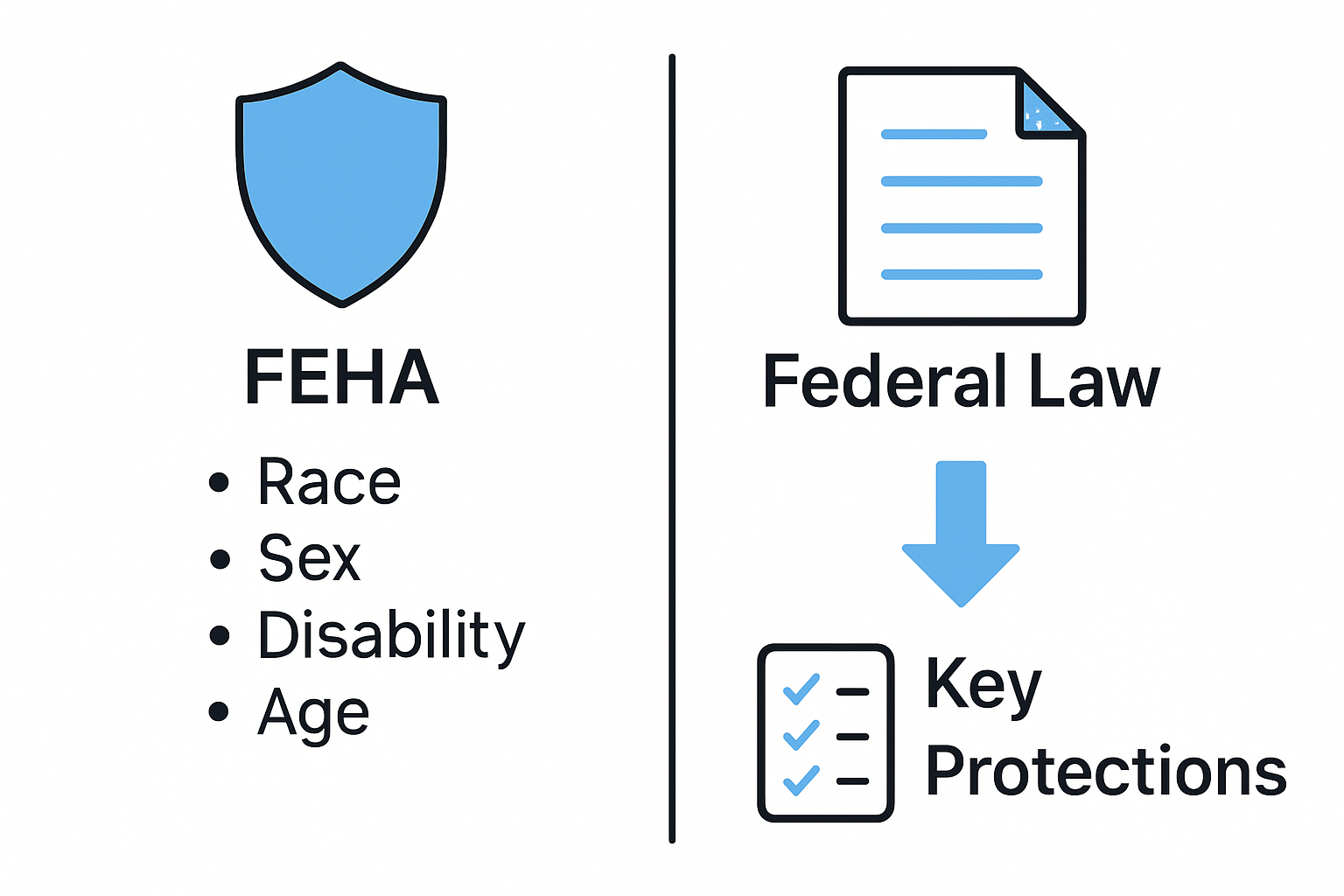
Key Protections Under FEHA and Federal Law
Employees in California benefit from comprehensive legal protections against workplace discrimination through two primary frameworks: the California Fair Employment and Housing Act (FEHA) and federal anti-discrimination statutes.
FEHA provides robust safeguards that prohibit employment discrimination based on numerous protected characteristics, including:
- race,
- gender,
- age,
- disability,
- religion,
- sexual orientation,
- and national origin.
The state’s legal protections extend beyond federal standards, offering broader coverage and more stringent remedies. The Unruh Civil Rights Act complements FEHA by ensuring equal treatment not just in employment, but across all business establishments in California.
This means discrimination protections apply comprehensively, covering situations ranging from workplace interactions to public accommodations, creating a more inclusive legal environment for employees and consumers alike.
Federal laws like Title VII of the Civil Rights Act and the Americans with Disabilities Act provide additional layers of protection, working in conjunction with California’s state-level regulations. These laws collectively prohibit discriminatory practices in hiring, promotion, compensation, training, and termination.
Employees who experience workplace discrimination can pursue legal remedies through multiple channels, including filing complaints with the California Department of Fair Employment and Housing (DFEH), the federal Equal Employment Opportunity Commission (EEOC), or initiating private legal actions.
Key protections under these frameworks include:
- preventing adverse employment actions based on protected characteristics,
- requiring reasonable workplace accommodations for disabilities,
- protecting employees who report discriminatory practices,
- and providing mechanisms for seeking compensation and reinstatement.
California labor law updates continue to evolve, expanding and reinforcing these critical employee rights, ensuring workers have robust legal recourse against discriminatory employment practices.
How to Document and Build Your Case
Building a successful case against discriminatory termination requires meticulous documentation and a strategic approach to gathering evidence. Workplace documentation serves as the critical foundation for proving that an employer’s actions were motivated by illegal discriminatory practices rather than legitimate business reasons.
Research indicates that employees should carefully document instances of adverse actions following protected activities, as such records can substantiate claims of retaliation or discrimination.
This documentation should include:
- detailed timelines,
- specific dates of incidents,
- verbatim quotes of discriminatory statements,
- copies of performance reviews,
- email communications,
- and any other relevant workplace interactions that demonstrate a pattern of unfair treatment.
Employees should create a comprehensive evidence portfolio that includes multiple types of documentation. This might involve recording damage and evidence through written logs, preserving electronic communications, collecting witness statements, and maintaining a chronological record of all significant workplace interactions.
Key elements to document include:
- sudden changes in job responsibilities,
- unexplained negative performance evaluations,
- exclusion from meetings or professional opportunities,
- and any comments that suggest bias based on protected characteristics.
Preparing for potential legal action requires organization and strategic thinking. Employees should gather and securely store all relevant documents, including:
- employment contracts,
- employee handbooks,
- performance records,
- and correspondence with supervisors or human resources.
It is crucial to maintain the confidentiality and integrity of these documents, creating backup copies and avoiding any actions that might compromise their authenticity.
Protect Your Rights Against Discriminatory Termination in California
Facing wrongful termination based on discrimination or retaliation can feel overwhelming and unfair. The challenges highlighted in the article, such as understanding the at-will employment doctrine, recognizing signs of discrimination, and gathering evidence, are critical hurdles to overcome.
If you have experienced sudden job loss or unfair treatment tied to protected characteristics like age, race, or disability, you need expert legal support to navigate California’s complex employment laws and fight for your rights.
At Goldberg & Loren, our experienced employment lawyers specialize in cases like yours. We understand the emotional and financial toll discriminatory terminations create. With over 175 years of combined legal experience, we are committed to securing the maximum compensation you deserve while offering a no-win, no-fee policy to minimize your risk.
Don’t wait to act because time-sensitive steps must be taken to preserve your claim. Call (661) 669-8224 today and take the first step toward justice by contacting our team for a free discriminatory termination consultation.
Frequently Asked Questions
Discriminatory termination refers to an employer dismissing an employee based on protected characteristics such as race, gender, age, disability, religion, or sexual orientation. California law provides robust protections against such practices.
Signs may include adverse employment actions shortly after engaging in protected activities, inconsistent treatment compared to colleagues, derogatory comments related to protected characteristics, and sudden changes in job responsibilities or evaluation patterns.
Start by documenting all relevant events and communications related to your termination. You should then file a complaint with the appropriate agencies, such as the California Department of Fair Employment and Housing (DFEH), and consider seeking legal advice from an employment attorney.
Key evidence includes documented instances of adverse actions, performance evaluations, witness statements, and any communications reflecting inappropriate behavior or comments. Consistent documentation over time can strengthen your case significantly.
Recommended