2026 California Employment Law Updates: What’s Changing for Employees & Employers
Many California workers are facing new questions about workplace rights and protections as 2026 brings sweeping updates to state employment laws.
With regulations focused on pay transparency, fair compensation, and expanded protections against discrimination, these changes aim to build a more equitable environment for every employee.
Understanding how these core principles affect wages, workplace notices, and your ability to negotiate is key to protecting your professional interests and staying compliant in a rapidly changing legal landscape.
Core Principles of 2026 California Employment Laws
California’s 2026 employment laws represent a significant leap forward in worker protections, focusing on creating a more equitable and transparent workplace environment. Labor standards are being comprehensively modernized to address systemic workplace challenges and support employee rights.
The core principles of these new employment regulations center on several key areas of workplace improvement:
- Fair Compensation: Ensuring wages reflect current living costs
- Pay Transparency: Mandating clear salary information across job categories
- Worker Protection: Strengthening mechanisms against workplace discrimination
- Economic Resilience: Supporting sustainable workforce development
Pay equity emerges as a critical focus in the 2026 legislative framework. Pay transparency laws are expanding to ensure that compensation practices eliminate historical gender and identity-based disparities. Employers will now be required to provide more comprehensive salary range information during recruitment and maintain more transparent compensation structures.
The laws also introduce enhanced accountability measures for businesses. Companies must now demonstrate proactive efforts to create inclusive workplaces, with potential financial penalties for non-compliance. This approach moves beyond traditional enforcement, creating systemic incentives for meaningful workplace transformation.
Pro tip: Employees should carefully review job postings and negotiate compensation using the new transparency requirements as leverage for fair treatment.
Major Changes Impacting Workers and Employers
The 2026 California employment landscape is undergoing significant transformations that will fundamentally reshape workplace dynamics for both employees and employers. Workplace notice requirements are expanding dramatically, introducing new layers of transparency and worker protection across multiple sectors.
Key changes impacting workers and employers include:
- Annual Compliance Requirements: Mandatory “Know Your Rights” workplace notices
- Workforce Protections: Enhanced rehire and recall obligations
- Layoff Regulations: Stricter notification protocols under updated California WARN Act
- Compensation Restrictions: Limitations on stay-or-pay employment agreements
The legislative updates introduce substantial reforms in several critical areas. Labor law updates will significantly impact workforce regulations, with new provisions targeting wage theft, employment termination practices, and worker rights.
Notably, these changes extend special protections to previously marginalized worker categories, including expanded unionization rights for rideshare drivers.
Employers will face increased compliance responsibilities, including more comprehensive pay data reporting and heightened penalties for labor law violations. These regulations aim to create more transparent, equitable workplace environments by mandating detailed disclosure of compensation structures and implementing stronger accountability mechanisms.
Pro tip: Workers should carefully document all employment interactions and familiarize themselves with the new “Know Your Rights” notices to protect their professional interests.
Updated Wage, Overtime, and Leave Policies
California’s 2026 employment landscape introduces comprehensive changes to wage, overtime, and leave policies that significantly impact workers across the state. Wage policies are undergoing critical transformations, with a statewide minimum wage increase and expanded worker protections.
Key updates to wage and compensation policies include:
- Minimum Wage Increase: Statewide rate rising to $16.90 per hour
- Exempt Salary Thresholds: Corresponding adjustments to classification standards
- Overtime Calculations: Continued emphasis on stringent fair calculation methods
- Compensation Definitions: Broader statutory interpretations of wage components
The legislative updates introduce more robust protections for workers’ leave rights. Employment law updates expand worker protections, with enhanced documentation requirements and stronger safeguards against employer retaliation. These changes extend statutes of limitations for wage claims and provide more comprehensive definitions of compensable time and leave entitlements.

Employers must now navigate more complex compliance requirements, including more detailed reporting of compensation structures and expanded documentation of leave policies. The new regulations aim to create greater transparency and fairness in workplace compensation, ensuring workers receive full protection under California’s evolving labor laws.
Here is a summary of how the 2026 California employment laws impact both employees and employers:
| Area of Change | Impact on Employees | Impact on Employers |
|---|---|---|
| Pay Transparency | Greater access to salary information | Must provide detailed pay disclosures |
| Workplace Notices | Improved awareness of legal rights | Required to distribute annual notices |
| Overtime Calculations | Stronger protections for compensable hours | Stricter calculation compliance |
| Leave Policies | More comprehensive leave coverage | Detailed record-keeping needed |
| Worker Protections | Enhanced rights against discrimination | Increased compliance obligations |
| Compliance Penalties | Better enforcement of rights | Higher risk of financial penalties |
Pro tip: Workers should carefully track all hours worked and maintain detailed records of compensation to protect their rights under the new wage and leave policy regulations.
Expanded Worker Protections and Rights
California continues to lead the nation in worker protection legislation, introducing groundbreaking reforms that significantly enhance employee rights and workplace safeguards. Worker protections are expanding dramatically, with comprehensive new laws designed to create more equitable and transparent work environments.
Key expansions of worker rights include:
- Collective Bargaining: Enhanced rights for rideshare drivers
- Anti-Retaliation: Stronger protections against workplace discrimination
- Wage Theft Prevention: Increased penalties and enforcement mechanisms
- Contract Protections: Restrictions on employment contract repayment obligations
The 2026 legislative updates introduce unprecedented levels of worker support and accountability. New worker rights mandate comprehensive workplace notices, requiring employers to provide annual ‘Know Your Rights’ documentation that covers critical areas including workers’ compensation, immigration inspection rights, and union organizing protections.
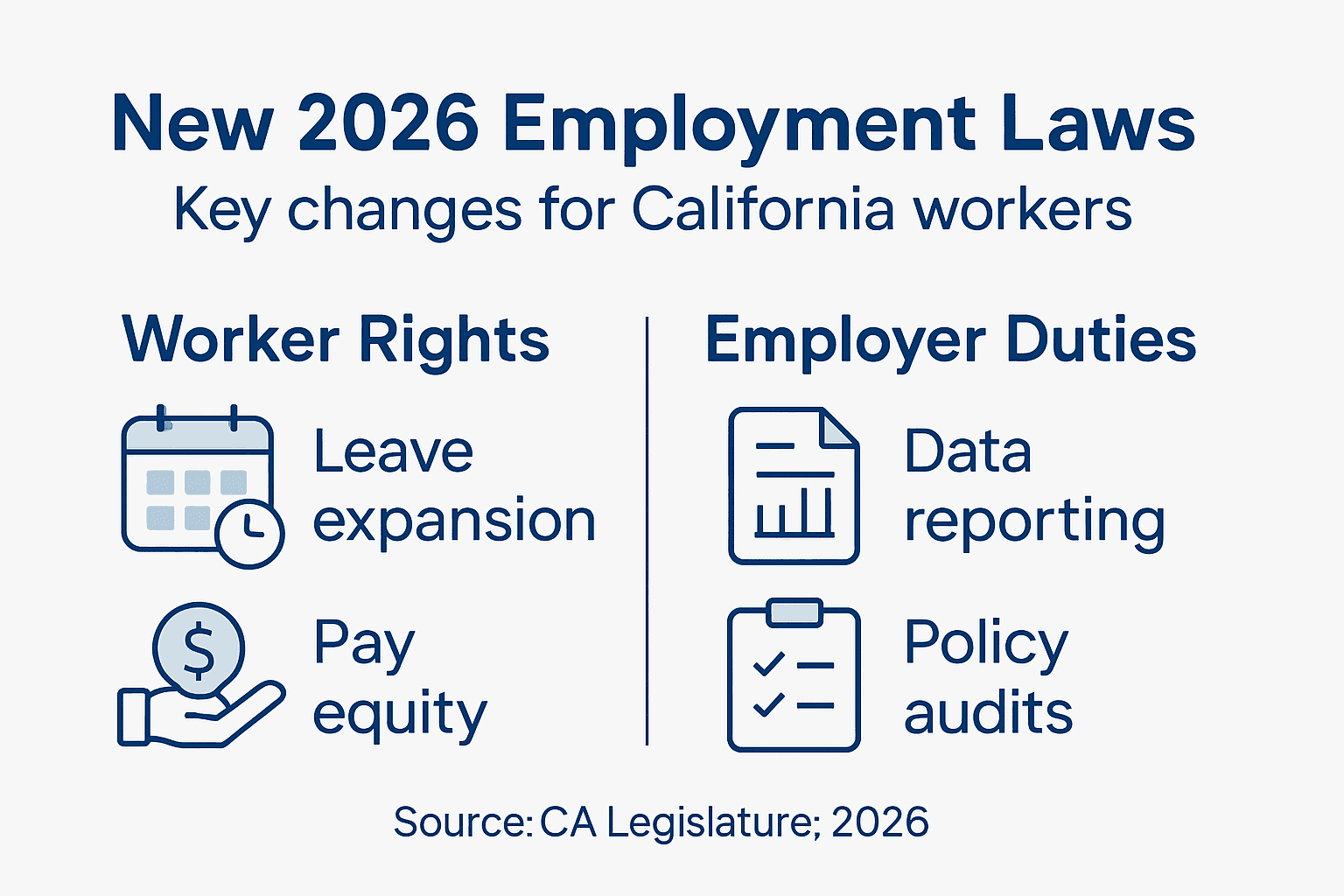
Employers now face more stringent requirements for employee treatment, including mandated emergency contact designations and notification protocols. These regulations represent a significant shift towards creating more transparent, supportive, and legally protected work environments that prioritize employee well-being and fundamental rights.
Compliance Responsibilities for California Employers
The 2026 California employment landscape introduces unprecedented compliance challenges for employers, requiring a comprehensive and proactive approach to workplace regulations. Employers face complex compliance requirements, demanding meticulous attention to policy updates and documentation standards.
Key compliance responsibilities include:
- Policy Updates: Revising employment contracts and agreements
- Notice Distribution: Providing annual employee rights documentation
- Pay Transparency: Updating wage disclosure practices
- Reporting Requirements: Expanding pay data and workforce documentation
- Training Protocols: Implementing comprehensive HR staff education
Employers must now navigate increasingly stringent regulatory frameworks that demand more detailed reporting and proactive workplace management. Enforcement provisions are becoming more rigorous, with mandatory penalties for noncompliance creating significant financial and legal risks for businesses that fail to adapt.
The new regulations require employers to implement systematic approaches to policy management, including regular audits of pay equity, comprehensive record-keeping, and ongoing staff training. These requirements aim to create more transparent and equitable workplace environments by holding employers accountable for fair and consistent employment practices.
The following table highlights key compliance steps for California employers in 2026:
| Compliance Requirement | What It Involves | Business Benefit |
|---|---|---|
| Annual Policy Updates | Revise contracts and agreements | Reduced legal risk |
| Pay Data Reporting | Submit detailed compensation data | Promotes pay equity |
| Employee Training | Educate HR and staff on new laws | Ensures consistent practices |
| Internal Audits | Regularly review policies and records | Early detection of issues |
| Notice Distribution | Provide updated rights documentation | Improves workforce trust |
Pro tip: Employers should develop a comprehensive compliance checklist and schedule regular internal audits to ensure ongoing adherence to the new California employment regulations.
Protect Your Rights Under the New California Employment Laws 2026
Navigating the complex changes in California’s 2026 employment laws can be overwhelming. With increased pay transparency, enhanced worker protections, and stricter employer compliance requirements, many workers face uncertainty about how these updates affect their rights and workplace treatment.
If you have experienced wage disputes, discrimination, or unfair treatment under these new regulations, it is critical to have experienced legal guidance on your side.
At Goldberg & Loren, we specialize in employment law cases and are dedicated to fighting for the compensation and protections you deserve. Whether you are dealing with pay equity issues, wrongful termination, or violations of your newly expanded rights, our team with over 120 years of combined legal experience understands how to hold employers accountable.
Don’t wait until your rights are compromised. Learn more about how we can support you by calling (661) 669-8224 for a free employment laws consultation and take the first step toward securing your workplace justice today.
Frequently Asked Questions
What are the main changes in California’s employment laws for 2026?
The 2026 employment laws in California focus on fair compensation, pay transparency, worker protection, and economic resilience, introducing laws that improve wage practices and strengthen accountability measures for employers.
How will pay transparency affect workers in California?
Pay transparency laws will require employers to disclose clear salary information during recruitment, helping to eliminate gender and identity-based pay disparities, and allowing workers to negotiate better compensation based on their knowledge of wage ranges.
What new protections are afforded to workers under the 2026 laws?
Workers will benefit from enhanced rights against workplace discrimination, stronger protections against wage theft, and comprehensive leave policies, including clearer rules for overtime calculations and employer documentation requirements.
What are employers required to do to comply with the new employment laws in California?
Employers must update employment contracts, distribute annual rights notices to employees, report pay data accurately, and implement training protocols to educate staff about the new regulations, ensuring proactive compliance to avoid penalties.
Recommended
- Workers’ Compensation in California: Complete Guide
- California Employer Responsibilities & Workers’ Comp
- California Workers’ Compensation Benefits: Citizenship Rules