The driver who pulled out in front of you is already telling a different story. You came out of nowhere. You were flying. You must have been splitting lanes. None of it has to be true to cost you money, because the rider is presumed reckless before anyone reads the police report. That presumption is worth tens of thousands of dollars to the insurance company, and they know it.
Motorcycle crashes on I-5, SR-167, Kent-Des Moines Road, and the surface streets of south King County rarely end in minor injury. Riders carry the entire physical cost of someone else’s mistake, then get treated like the problem. By the time you reach a hospital bed, the insurance system is already building its case against you.
Here is what the adjuster will not tell you. Washington law gives you the same legal standing as any other injured person, governed by the same statute of limitations and comparative fault rules. The challenge was never the law. It is the bias that follows riders into every settlement conversation, and the quiet way that bias drains a fair recovery.
The Kent motorcycle accident lawyers at Goldberg & Loren represent motorcycle crash victims across King County and the State of Washington on a pure contingency basis. The first call is free, no obligation, and we will tell you exactly what we can do for your case before you decide.
Kent Office: 21620 84th Ave S, STE 201 D, Kent, WA 98032 · Open 24/7 by phone · (253) 336-5664
Reviewed by James Loren, attorney at Goldberg & Loren, Washington State Bar Association #54390 (active) · Serving Kent, King County, and the Puget Sound region
Washington Motorcycle Law at a Glance
The rules that decide your case
Washington applies pure comparative fault under RCW 4.22.005. Even if you are found partly at fault, you still recover. Your award is reduced by your percentage of responsibility, not erased.
The state requires helmets for all riders and passengers under RCW 46.37.530, prohibits lane splitting under RCW 46.61.608 (which bars operating a motorcycle between lanes of traffic and entitles riders to full use of a lane), and requires a motorcycle endorsement under RCW 46.20.500. Each of these statutes can be weaponized by insurance adjusters, and each has an answer.
Universal helmet law
All Washington motorcycle riders and passengers must wear a DOT-compliant helmet under RCW 46.37.530. Failure to wear one does not bar recovery, but it may be raised as evidence of comparative fault if your head or neck injuries are at issue.
Three-year statute of limitations
You generally have three years from the date of the motorcycle crash to file a civil suit in Washington under RCW 4.16.080(2). For minor passengers, the clock is tolled until age 18 under RCW 4.16.190. Claims against government entities add procedural steps: a formal tort claim form must be filed and a 60-day waiting period must pass before suit under RCW 4.96.020, though the three-year deadline still applies.
Pure comparative fault
Washington uses pure comparative fault under RCW 4.22.005, with fault allocated among parties under RCW 4.22.070. A finding that you were 30 percent responsible reduces your award by 30 percent. It does not bar recovery, unlike modified-fault states next door.
Lane use (lane splitting)
RCW 46.61.608 expressly prohibits lane splitting: no motorcycle may be operated between lanes of traffic. The same statute entitles riders to the full use of a lane. Adjusters frequently misapply this rule to legitimate lane changes and pre-stop positioning.
Motorcycle endorsement
Operators must hold a valid Washington motorcycle endorsement under RCW 46.20.500. Lack of an endorsement does not by itself defeat your claim, but it changes the conversation with the at-fault driver’s insurer.
Why Motorcycle Cases Are Harder Than Car Cases
Insurance adjusters treat motorcycle crashes differently than other auto cases. The reason is not legal. It is a bias rooted in the assumption that the rider was speeding, weaving, or otherwise reckless, even when the crash report says the opposite.
This shows up in three ways. Adjusters open with a lower initial settlement offer. They invoke RCW 46.61.608 or the helmet statute to allege comparative fault that does not exist. They push for a recorded statement before the injured rider has medical clarity on what happened.
Goldberg & Loren’s job in a motorcycle case is to neutralize that bias with the documentary record. Crash report, scene reconstruction, witness statements, vehicle damage angles, and the at-fault driver’s history typically tell a very different story than the adjuster’s opening pitch.
Most Common Crash Types We See in Kent
Left-turn collisions
A driver in oncoming traffic turns left across the rider’s path. This is the single most common motorcycle crash pattern nationwide and produces clear right-of-way liability under RCW 46.61.185.
Unsafe lane changes
Drivers fail to check blind spots before merging into a rider’s lane on I-5, SR-167, or the Kent-Des Moines Road corridor. RCW 46.61.140 governs lane discipline.
Rear-end at stops
Distracted drivers crash into stopped riders at signals on Central Avenue, Pacific Highway South, and Meeker Street. Liability is typically straightforward.
Dooring
A parked driver opens a door into a rider’s path of travel without checking. Common on Kent’s downtown core and mixed-use corridors.
Single-vehicle road defects
Potholes, gravel, uneven repaving seams, and improperly marked construction zones cause crashes that are often the responsibility of a government entity, contractor, or both.
Hit-and-run and uninsured drivers
The at-fault driver flees or has no insurance. This is where your own UM/UIM (uninsured/underinsured motorist) coverage becomes the case. See the UM/UIM section below.
What to Do After a Motorcycle Crash in Kent
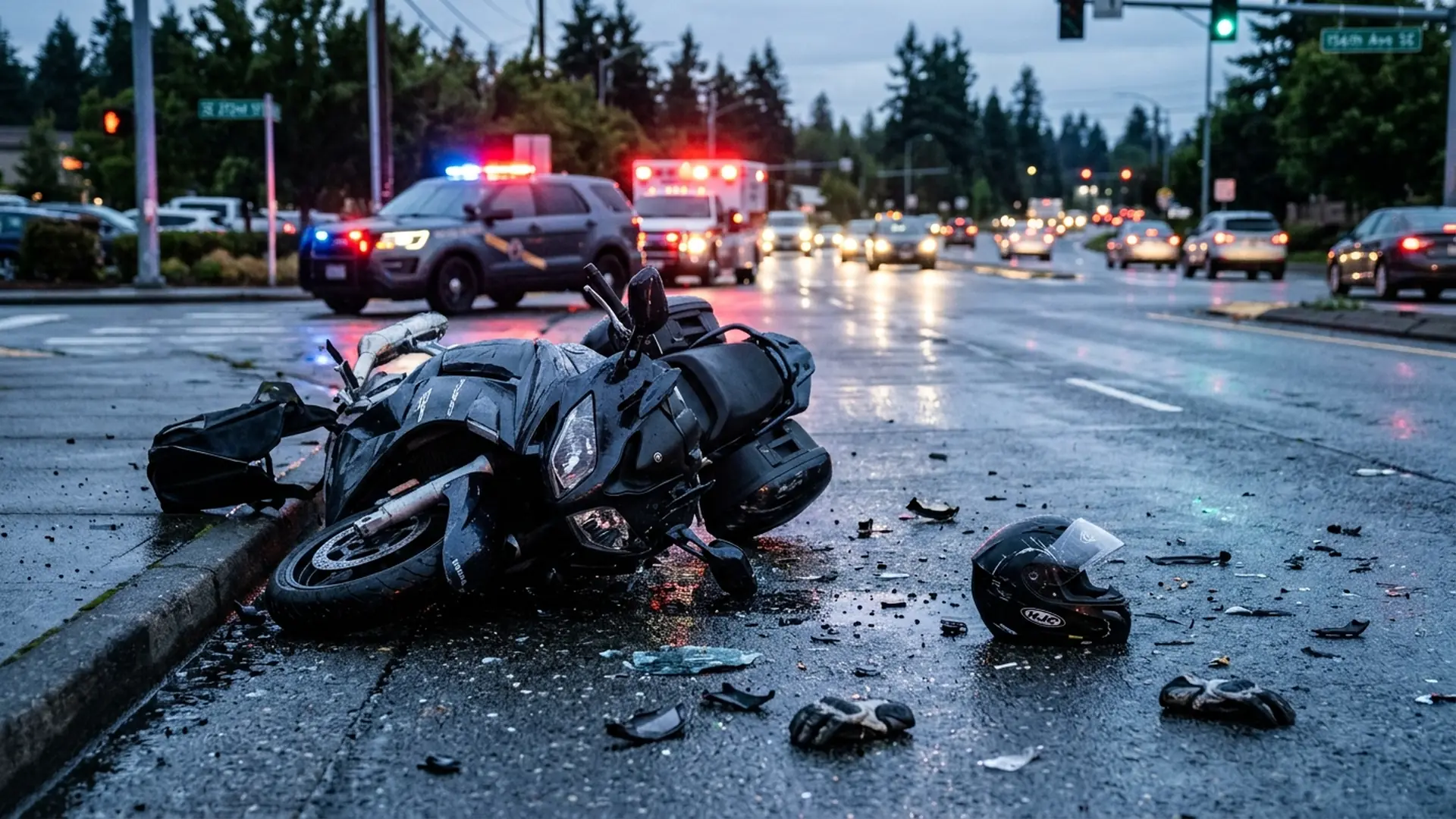
The first 72 hours after a crash determine medical outcomes and case strength in roughly equal measure. The sequence below is what we walk Kent callers through every week.
Get medical attention even if you feel fine
Adrenaline masks soft-tissue injury and head trauma. Visit Harborview Medical Center (Level I trauma, Seattle), Valley Medical Center (Renton), MultiCare Auburn Medical Center, or a Kent urgent care. A gap in treatment is the single biggest tool insurance adjusters use to reduce settlements.
Make sure the police report happens
If officers were not on scene, file a report with Kent Police or the Washington State Patrol within four days. The crash report is the foundation of the liability case, and an after-the-fact filing is harder to use.
Photograph everything, before anything moves
The bike, the car, the road, debris, skid marks, traffic controls, sight lines, and your gear. If you cannot, ask someone on scene to do it. These photos become exhibits months later.
Get witness names and numbers
Independent witnesses overcome adjuster bias more efficiently than any other evidence. A bystander who saw the left-turning driver carries more weight than the rider’s account.
Preserve your gear and your bike
Do not let the insurance company total or scrap the bike until your attorney has documented the damage pattern. Helmet, jacket, gloves, and boots are part of the proof of injury and impact mechanics.
Do not give a recorded statement
The at-fault driver’s carrier will call within days of the crash and ask for a recorded statement. Politely decline until you have spoken with a lawyer. Anything you say will be used to argue you contributed to the crash.
Call your own insurance about UM/UIM
Notify your own carrier of the crash and ask whether your UM/UIM coverage applies. This is critical when the at-fault driver is uninsured, underinsured, or fled the scene. Do this without committing to a statement.
Call a Washington motorcycle accident attorney
An early consultation lets us preserve scene evidence, send insurance preservation letters, and stop the carriers from contacting you directly. There is no charge for this call.
UM/UIM Coverage Is Often the Case
A meaningful share of Washington drivers carry only the state minimum liability ($25,000 per person under RCW 46.29.090) or no insurance at all. A motorcycle crash often produces six-figure medical bills in a single ambulance ride to Harborview. The math does not work without your own coverage.
Washington law (RCW 48.22.030) requires every auto insurer to offer UM/UIM coverage at the same limits as your liability coverage. You can decline it in writing, but most riders should not. If you carry UM/UIM, your own carrier steps into the shoes of the at-fault driver up to your policy limits.
Washington also permits UM/UIM stacking across multiple policies on your household vehicles, which can significantly raise the total coverage available after a serious motorcycle injury. We routinely identify stackable coverage that the carrier never volunteers.
The catch is that UM/UIM is technically a claim against your own insurance company. The carrier will fight it the same way the at-fault driver’s carrier would. This is why a motorcycle attorney with UM/UIM litigation experience matters.
What Your Kent Motorcycle Case May Be Worth
Compensation in a Washington motorcycle case typically falls into two categories. Economic damages cover the costs that can be receipted. Non-economic damages cover the human cost of the injury and the long road back.
Economic damages
| Category | What it covers |
|---|---|
| Emergency and trauma care | Emergency room, ambulance, and trauma care, often starting with Harborview or Valley Medical Center. |
| Surgery and hardware | Surgery, orthopedic hardware, and revision surgeries for long-bone fractures, road rash debridement, and joint reconstruction. |
| Rehabilitation | Inpatient and outpatient rehabilitation, physical therapy, and occupational therapy. |
| Traumatic brain injury | Diagnosis, neuropsychological testing, and long-term care. |
| Lost income | Lost wages and lost earning capacity, including for self-employed riders. |
| Property | Motorcycle, helmet, and gear replacement at fair market value. |
| Future care | Future medical care proven through expert testimony. |
Non-economic damages
| Category | What it covers |
|---|---|
| Pain and suffering | The physical toll of the crash and the long recovery. |
| Disfigurement | Permanent scarring from road rash, burns, or surgical sites. |
| Emotional distress | Anxiety, post-traumatic stress, and loss of trust in riding. |
| Loss of enjoyment of life | The inability to ride or to participate in activities you love. |
| Loss of consortium | The loss suffered by the spouse or family of a seriously injured rider. |
Common Insurance Defenses — and Why They Usually Fail in Washington
“The rider was speeding”
Adjusters allege this even when the crash report does not. Scene reconstruction, skid analysis, and the at-fault driver’s own account often refute the claim. Pure comparative fault means even a partial speeding finding does not bar recovery.
“The rider was lane splitting”
RCW 46.61.608 does prohibit lane splitting, but adjusters misapply it to ordinary lane changes and pre-stop filtering. Scene photographs and vehicle damage angles usually clarify the actual maneuver.
“No helmet means no claim”
Failure to wear a helmet under RCW 46.37.530 is not a complete defense. It may support a comparative-fault argument on head or neck injuries, but it does not affect liability for broken bones, road rash, internal injuries, or other harms.
“No motorcycle endorsement”
An unendorsed operator can still recover under Washington civil law. Lack of endorsement may support a comparative-fault argument, but it does not strip the at-fault driver of responsibility for the collision they caused.
Kent and King County Local Context
Kent sits between I-5, SR-167, and the Green River Valley industrial corridor. Riders share these roads with heavy commuter traffic, freight, and a high volume of vehicles turning across motorcycle paths.

Cases tied to crashes in south King County are typically filed at the Maleng Regional Justice Center at 401 Fourth Avenue North in Kent. Cases with venue in north King County may be filed at the King County Courthouse in downtown Seattle.
As Washington motorcycle accident lawyers, we also serve surrounding communities including Auburn, Renton, Federal Way, Tukwila, Des Moines, Burien, SeaTac, and Maple Valley, along with Tacoma-area motorcycle cases and other Pierce County matters.
Why Kent Riders Choose Goldberg & Loren
The first call is about listening. We learn what happened, what you are facing, and what you need before we ever talk strategy or paperwork. Active members of the Washington State Bar handle your case, and each bar number links to the official state directory so you can check for yourself.
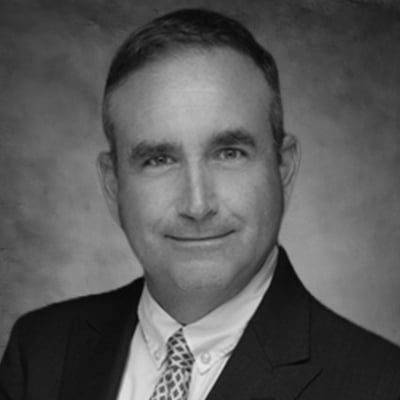
George Goldberg
Senior Partner, Founder · WSBA #54363 · Active
George opened the firm in 1994 and has practiced personal injury law for over three decades. He leads complex multi-defendant cases involving commercial vehicles, road-defect government claims, and insurance bad faith.
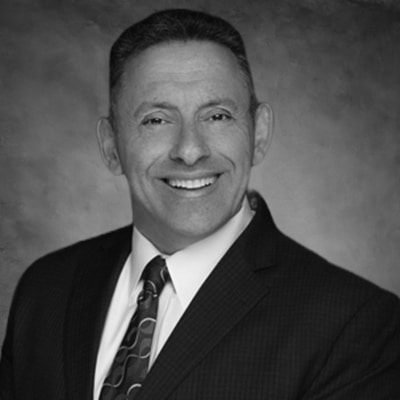
James Loren
Senior Partner, Trial Attorney · WSBA #54390 · Active
James is an aggressive trial attorney with over 20 years of practice. He represents motorcycle crash victims throughout Washington and the Pacific Northwest, with a focus on traumatic brain injury, orthopedic trauma, and contested UM/UIM cases.
What sets our motorcycle work apart
| Strength | What it means for your case |
|---|---|
| Rider bias defused | We anticipate the adjuster’s opening argument and meet it with the documentary record before it takes hold. |
| UM/UIM expertise | Many Kent cases turn on your own coverage. We treat first-party claims with the same intensity as the third-party case. |
| Medical and reconstruction network | Connections to Puget Sound area orthopedic surgeons, neuro specialists, scene reconstructionists, and biomechanics experts. |
| Pure contingency | No retainer, no investigation cost, no fee unless we recover for you. |
Frequently Asked Questions
Generally three years from the date of the crash under RCW 4.16.080(2), and tolled until age 18 for minor passengers. Suing a city, county, or the state adds a step: Washington requires a formal tort claim form and a 60-day waiting period before suit under RCW 4.96.020, though the same three-year deadline applies.
No. Washington requires helmets under RCW 46.37.530, but failure to wear one does not bar recovery. It may support a comparative-fault argument on head or neck injuries, but it does not affect liability for fractures, road rash, internal injuries, or other harms.
Washington uses pure comparative fault under RCW 4.22.005. A finding that you were 25 or 40 percent responsible reduces your recovery by that percentage but does not bar the claim entirely. Even riders found mostly at fault may still recover meaningful compensation.
Yes, if you carry uninsured motorist (UM) coverage on your own policy. UM coverage steps into the shoes of the unknown or uninsured driver up to your policy limits. This is one of the most important reasons not to decline UM/UIM coverage in Washington.
This is exactly what underinsured motorist (UIM) coverage is for. If your damages exceed the at-fault driver’s policy limits, your own UIM coverage pays the difference up to your UIM limits. A serious motorcycle injury frequently exceeds the Washington minimum policy.
It depends on the severity of injuries, the available insurance limits, the strength of liability, and the impact on your earning capacity and life. Cases range from low five figures for minor injuries to multi-million-dollar recoveries for traumatic brain injury, paraplegia, or wrongful death.
Yes, in limited circumstances. Before suing a city, county, or the state, Washington requires a formal tort claim form and a 60-day waiting period under RCW 4.96.020. The standard three-year statute of limitations still applies and is tolled during that wait, so these cases remain time-sensitive.
No. Politely decline until you have spoken with a lawyer. Recorded statements are used to lock you into a version of events before you have medical clarity on injuries and before you understand how Washington law applies to your facts.
Nothing up front. We work entirely on contingency, meaning we are paid only if we obtain a settlement or verdict for you. Initial consultations are free and fully confidential.
Many cases settle within 6 to 18 months once medical treatment stabilizes. Cases involving traumatic brain injury, government defendants, or contested UM/UIM disputes typically run 12 to 30 months. Cases that go to trial take longer.
For any serious injury, yes. Insurance carriers routinely pay more on represented claims, and motorcycle cases carry a rider bias a lawyer is built to counter. Because we work on contingency, hiring a Kent motorcycle accident attorney costs nothing up front and nothing unless we recover.
Kent Motorcycle Accident Lawyers
Looking for a motorcycle accident attorney near you in Kent? The first call is free, confidential, and there is no fee unless we recover. Tell us what happened, and we will tell you where you stand.
Goldberg & Loren · 21620 84th Ave S, Ste 201 D, Kent, WA 98032
Sources:
[1] Insurance Institute for Highway Safety, Motorcycles (fatality rate per mile traveled). iihs.org
[2] National Highway Traffic Safety Administration, Motorcycle Safety (helmet effectiveness). nhtsa.gov
[3] RCW 46.37.530, motorcycle helmet requirement. app.leg.wa.gov
[4] RCW 4.16.080, three-year personal injury statute of limitations. app.leg.wa.gov
[5] RCW 4.22.005 and 4.22.070, pure comparative fault and allocation. app.leg.wa.gov
[6] RCW 46.61.608, lane use and lane-splitting prohibition. app.leg.wa.gov
[7] RCW 4.96.020, tort claims against local governments. app.leg.wa.gov
[8] RCW 48.22.030, uninsured and underinsured motorist coverage. app.leg.wa.gov
[9] Washington State Bar Association legal directory, attorney status verification. mywsba.org