In This Article
- California Pro Worker State Explained
- Types of Worker Protections in California
- Legal Requirements and Employer Obligations
- Workers’ Rights and Available Remedies
- Risks and Mistakes Employers Should Avoid
- Protect Your California Employment Rights with Expert Legal Support
- Frequently Asked Questions
- Recommended
Is California Really a Pro-Worker State? 2026 Employment Rights Explained
Facing an unexpected injury at work can leave any California worker with questions about their rights and what protections exist for them. California is known for its strong commitment to employee well-being, offering some of the most comprehensive worker protections in the nation.
By understanding the laws and support available, workers can better protect their health, financial stability, and workplace rights when they need it most.
California Pro Worker State Explained
California stands out as a national leader in worker protections, establishing robust legal frameworks that prioritize employee rights and workplace safety. The state has consistently demonstrated a commitment to creating an environment where workers’ interests are paramount, through comprehensive legislation and proactive policy development.
The state’s pro-worker stance is evident through multiple legislative mechanisms that distinguish it from other regions:
- Strong collective bargaining rights
- Comprehensive minimum wage protections
- Extensive workplace safety regulations
- Robust anti-discrimination employment laws
- Generous worker compensation policies
The California Labor Federation of Labor Unions actively advocates for worker rights, pushing legislative measures that strengthen employees’ abilities to organize and negotiate fair workplace conditions. These efforts have resulted in groundbreaking protections that go beyond federal standards, creating a legal environment uniquely supportive of workers.
California’s progressive approach is particularly notable in areas like wage standards, workplace safety, and employee benefits. The state government has consistently implemented policies that provide additional layers of protection beyond federal requirements, ensuring workers receive comprehensive support across multiple dimensions of employment.
Pro tip: Familiarize yourself with California’s specific worker protection laws to understand your full range of employment rights and potential legal recourse.
Types of Worker Protections in California
California provides an extensive array of worker protections that set a national standard for employee rights and workplace safety. These comprehensive protections cover multiple dimensions of employment, ensuring workers receive robust legal safeguards across various professional environments.
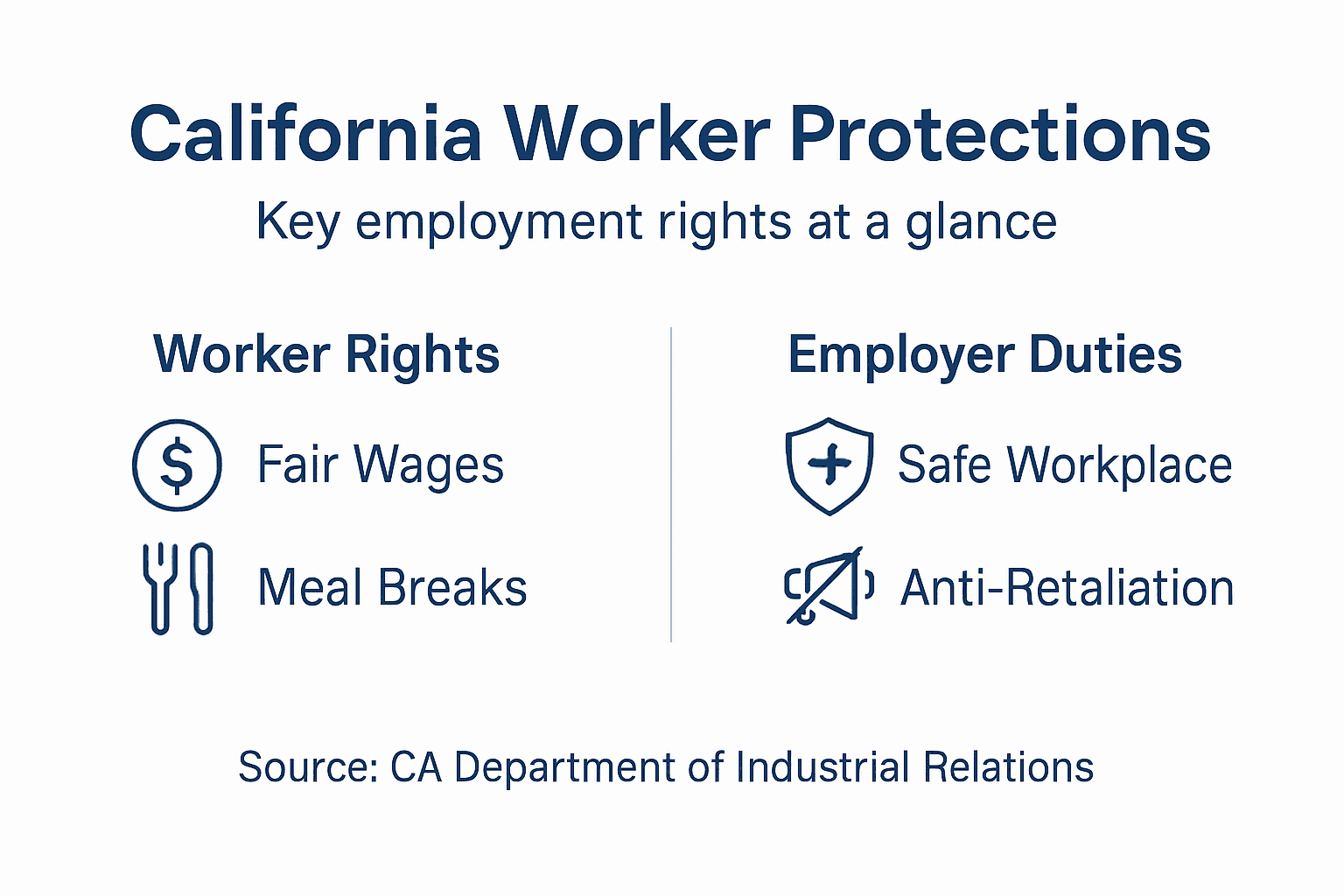
The California Department of Industrial Relations enforces critical worker protections through several key mechanisms:
- Wage and Hour Laws
- Occupational Safety Standards
- Anti-Retaliation Protections
- Workers’ Compensation Benefits
- Comprehensive Overtime Regulations
Employment protections in California are notably more progressive compared to federal standards. The state has implemented stringent regulations that go beyond minimum federal requirements, creating a comprehensive legal framework that prioritizes employee well-being and fair treatment.

Key Features of California Employment Laws
California employment laws represent a gold standard in worker protection, offering some of the most comprehensive and employee-friendly regulations in the United States. These laws go far beyond federal minimums, creating a robust legal framework designed to safeguard worker rights and ensure fair treatment across various industries.
Specific key features of California employment laws provide workers with significant advantages:
- Higher Minimum Wage Rates
- More Generous Overtime Compensation
- Stronger Workplace Discrimination Protections
- Comprehensive Family and Medical Leave Rights
- Rigorous Workplace Safety Standards
Employers in California must navigate a complex web of state regulations that prioritize employee welfare. Multiple state agencies actively enforce these laws, ensuring that businesses maintain high standards of worker treatment and compensation.
Legal Requirements and Employer Obligations
California imposes comprehensive legal requirements on employers that far exceed standard federal regulations, creating a robust framework designed to protect workers and ensure fair workplace practices. These obligations demand meticulous compliance across multiple dimensions of employment relationships.
The California Department of Industrial Relations mandates strict employer responsibilities including:
- Adherence to wage and hour laws
- Maintaining workplace safety standards
- Providing mandatory employee notices
- Implementing anti-discrimination policies
- Preventing workplace harassment
- Ensuring timely wage payments
Employers must navigate a complex legal landscape that includes multiple layers of regulatory requirements:
- State-level wage regulations
- Local city ordinance compliance
- Detailed workplace safety protocols
- Comprehensive employee notification requirements
- Strict anti-discrimination enforcement
The consequences of non-compliance can be severe, with potential penalties including substantial financial fines, legal actions, and potential business license restrictions. Employers must remain vigilant and proactive in understanding and implementing these comprehensive worker protection standards.
Pro tip: Regularly consult with an employment law specialist to ensure complete compliance with California’s evolving workplace regulations.
Workers’ Rights and Available Remedies
California provides workers with an extensive array of rights and legal remedies that stand among the most comprehensive in the United States. These protections ensure employees have multiple avenues to address workplace violations and seek justice when their employment rights are compromised.
The California Labor Commissioner’s office offers workers several critical remedies for workplace violations:
- Filing wage theft claims
- Seeking restitution for unpaid wages
- Requesting workplace safety investigations
- Pursuing discrimination complaints
- Challenging wrongful termination
Workers have multiple mechanisms to protect their rights and seek resolution:
- Administrative complaint filing
- Legal civil action
- State agency intervention
- Mediation and settlement processes
- Potential monetary compensation
The state’s robust legal framework provides comprehensive protection across various employment scenarios, from wage disputes to workplace safety concerns. Workers can access multiple resources to defend their rights and seek appropriate remedies for potential violations.
Pro tip: Document all workplace interactions and potential violations meticulously to strengthen your potential legal claim.
Risks and Mistakes Employers Should Avoid
Navigating California’s complex employment landscape requires meticulous attention to legal requirements, as the state’s pro-worker framework imposes significant penalties for non-compliance. Employers must be proactive in understanding and implementing comprehensive workplace regulations to avoid costly legal challenges.
The California employers’ compliance guide highlights critical risks employers must carefully manage:
- Misclassifying employees
- Failing to pay timely wages
- Neglecting mandatory meal and rest breaks
- Inadequate record-keeping
- Ignoring local labor ordinances
- Non-compliance with workplace posting requirements
Key mistakes that can expose employers to legal vulnerabilities include:
- Improper employee termination procedures
- Inadequate harassment prevention
- Disregarding family and medical leave laws
- Inconsistent wage and overtime practices
- Failing to maintain workplace safety standards
The potential consequences of these mistakes extend beyond financial penalties, potentially damaging an organization’s reputation and creating significant legal exposure. Employers must remain vigilant and proactively update their practices to align with California’s stringent employment regulations.
Common mistakes in California employment law compliance and their consequences:
| Mistake | Possible Legal Consequence | Recommended Prevention |
|---|---|---|
| Misclassifying workers | Fines, back pay liability | Conduct regular job audits |
| Late wage payments | Penalties and interest charges | Track and automate payroll |
| Incomplete workplace postings | Regulatory fines | Use compliance posting checklists |
| Neglecting safety standards | Safety violations, shutdowns | Schedule routine safety inspections |
| Ignoring city wage ordinances | Local lawsuits, fines | Review city-specific labor updates |
Pro tip: Conduct regular compliance audits and consult with employment law specialists to stay ahead of potential legal risks.
Protect Your California Employment Rights with Expert Legal Support
California’s pro-worker environment offers strong protections but navigating complex wage laws, safety standards, and anti-discrimination policies can be overwhelming. If you face challenges like unpaid wages, workplace injuries, or wrongful termination, you need an advocate who understands the nuances of California employment law and can help you secure the compensation you deserve.
At Goldberg & Loren, our experienced attorneys specialize in employment law and workers’ compensation cases across California and beyond. We fight tirelessly for injured workers and employees facing workplace injustice. Don’t let legal complexities delay your claim or risk your rights. Explore how our employment law expertise can protect your interests today.
Call (661) 669-8224 now for a free employment rights consultation to get the personalized legal help you need to move forward with confidence.
Frequently Asked Questions
Yes, California is recognized as a pro worker state due to its strong worker protections, including:
- robust minimum wage laws,
- extensive anti-discrimination regulations,
- and comprehensive workplace safety standards.
California offers several key worker protections such as high state minimum wage, mandatory meal and rest breaks, robust anti-discrimination policies, and strict workplace safety regulations.
California’s worker protections are generally more progressive than federal standards, with higher minimum wages, more comprehensive overtime regulations, and broader anti-discrimination laws.
If you believe your employment rights have been violated, you can file a complaint with the California Labor Commissioner’s office, seek legal assistance, or pursue mediation and settlement processes.
Recommended
- California Labor Law 2025 Updates
- Workers’ Compensation in California: Complete Guide
- California Employer Responsibilities & Workers’ Comp
- California Workers’ Compensation Benefits: Citizenship Rules