What to Look for When Hiring a Lawyer in 2026 (Complete Guide)
Every year, thousands of American accident victims and injured workers search for reliable legal support after life-altering events. Choosing a lawyer can mean the difference between getting fair compensation and walking away empty-handed.
This guide offers clear, practical steps to help you define your legal needs and find the right expert to handle your case with confidence.
Step 1: Define Your Legal Needs Clearly
Defining your legal needs is the critical first step in securing effective legal representation for your injury case. Understanding the specific type and circumstances of your injury will help you find the right lawyer who can navigate your unique situation.
Personal injuries encompass a wide range of incidents where you may have sustained harm through someone else’s actions. These can include automobile accidents, workplace incidents, medical malpractice, or product defect cases.
Understanding the grounds of your injury claim helps determine the type of legal representation you require. A thorough assessment involves examining key factors such as whether negligence, strict liability, or intentional harm caused your injury.
To clarify your legal needs, ask yourself specific questions about your case. Did another party owe you a duty of care? Was that duty breached? How directly did their actions cause your injury?
Distinguishing between accidents and legal tort cases requires careful analysis. Document every detail about the incident including medical records, witness statements, and any evidence of damages or ongoing medical treatment.
Here is a summary of common types of personal injury cases and relevant legal considerations:
| Injury Type | Key Legal Issue | Typical Evidence |
|---|---|---|
| Automobile Accident | Negligence | Police report, photos |
| Medical Malpractice | Duty of care breach | Medical records, expert opinion |
| Workplace Incident | Liability | Witness statements, safety logs |
| Product Defect | Strict liability | Product recall, defect proof |
This overview helps clarify which case features influence lawyer selection.
Pro tip: Keep a comprehensive file with all documentation related to your injury, as organized records can significantly strengthen your legal claim and help potential lawyers understand your case more effectively.
Step 2: Research Qualified Lawyers in Your Area
Researching qualified lawyers is a crucial step in finding the right legal representation for your injury case. You want an attorney with specific expertise in handling cases similar to yours and a proven track record of success.
Start your research by leveraging professional resources like legal referral networks that specialize in personal injury cases. These platforms can connect you with attorneys who have demonstrated experience in your specific type of injury claim.
Additionally, the Public Access to Court Electronic Records system allows you to review an attorney’s litigation history, providing insights into their courtroom performance and case outcomes.
When researching potential lawyers, examine their professional credentials, years of experience, case success rates, and client testimonials. Look for attorneys who have handled cases similar to yours and have a strong track record of securing fair compensation.
Consider scheduling initial consultations with several lawyers to discuss your case, assess their communication style, and determine who best understands the nuanced details of your specific injury claim.
Pro tip: Create a spreadsheet to track potential lawyers, including their contact information, specialization, years of experience, and initial consultation notes to help you make a systematic and informed decision.
Step 3: Evaluate Attorney Experience and Track Record
Evaluating an attorney’s experience and track record is crucial in determining whether they can effectively handle your personal injury case. You want a lawyer with proven expertise specific to your type of injury claim and a history of successful outcomes.
Verifying an attorney’s professional specialization requires thorough research into their past case performance. Look for lawyers who have demonstrated success in handling injury cases similar to yours such as automobile accidents, medical malpractice, or workplace incidents.
Examine their professional background by reviewing state bar profiles, online reviews, case results, and legal directory information. Pay close attention to their success rates, the types of damages they have recovered for clients, and their specific experience with cases matching your particular injury scenario.
During initial consultations, ask direct questions about their litigation history and request specific examples of past case outcomes. Request information about settlements and trial verdicts in cases comparable to yours.
Online research can provide additional insights, but speaking directly with the attorney will give you the most accurate understanding of their capabilities and approach to personal injury claims.
Pro tip: Request detailed case studies or references from previous clients to gain deeper insights into the attorney’s actual performance and client satisfaction levels.
Step 4: Interview Prospective Lawyers Thoroughly
Interviewing potential lawyers is your opportunity to assess their capability to handle your personal injury case effectively. This critical step helps you determine whether a lawyer has the right expertise, communication style, and commitment to represent your interests successfully.
Preparing strategic questions for attorney consultations is essential to understanding their professional approach. Focus on specific areas such as their experience with similar cases, litigation strategy, expected case timeline, potential compensation, and fee structure.
Ask about their track record of settlements and trial verdicts, their approach to negotiating with insurance companies, and how they plan to build and present your specific case. Inquire about their office support team, communication protocols, and how they will keep you informed throughout the legal process.
During the interview, pay attention to more than just their answers. Observe the attorney’s communication skills, their ability to explain complex legal concepts clearly, and their genuine interest in understanding the nuances of your injury claim.
A good lawyer will not only have the technical expertise but also demonstrate empathy and a personal commitment to achieving the best possible outcome for your case.
Pro tip: Bring a written list of questions and take notes during the consultation to help you objectively compare different attorneys and make an informed decision.
Step 5: Verify Fees and No-Win, No-Fee Policies
Understanding the financial structure of your legal representation is crucial when hiring a personal injury attorney. The right fee arrangement can provide peace of mind and ensure your legal interests are aligned with your lawyer’s commitment to your case.
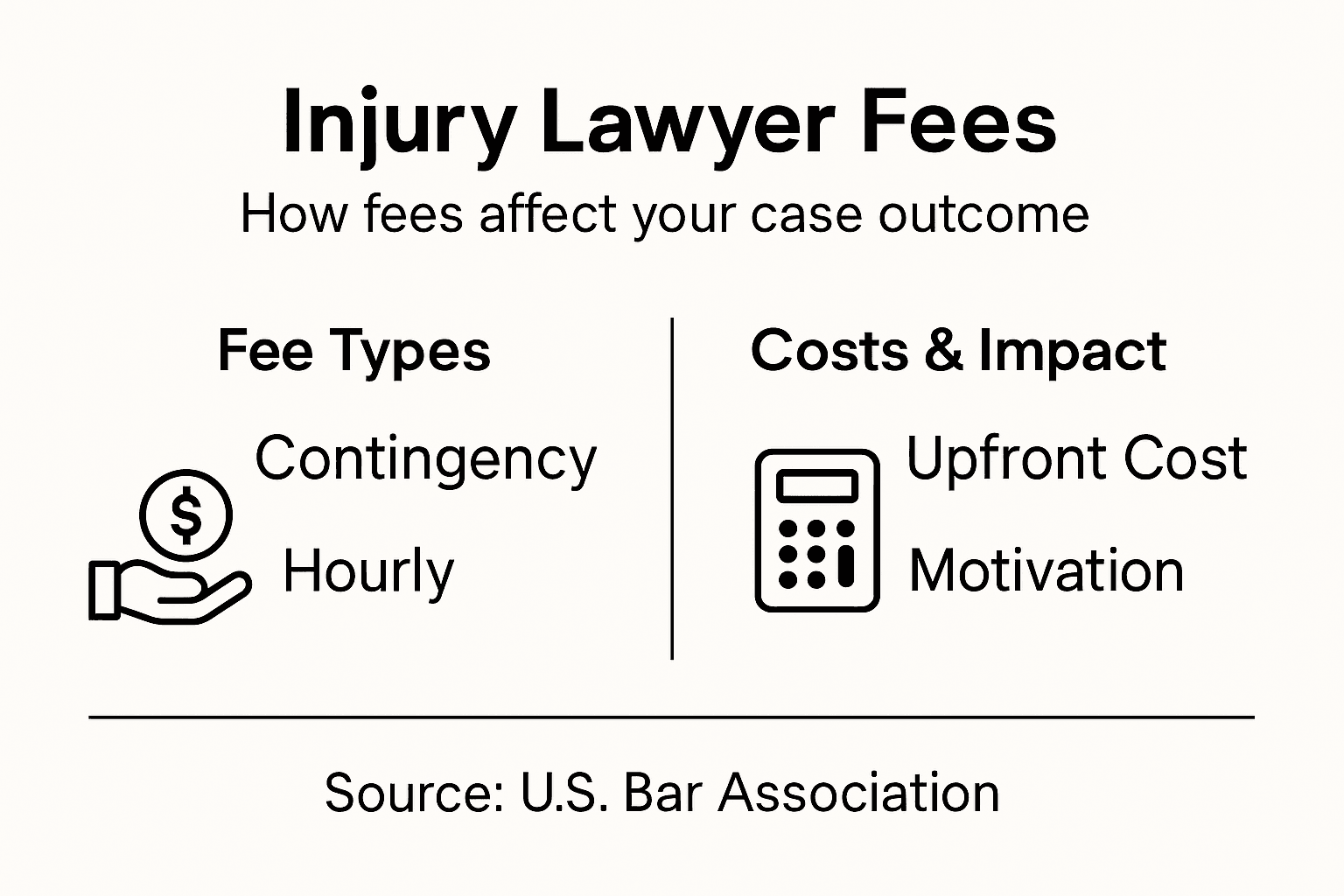
Contingency fee agreements are standard in personal injury cases, meaning your attorney only gets paid if they win your case. Typically, lawyers receive between 20% and 50% of the total recovery amount. These agreements are designed to motivate attorneys to secure the maximum possible compensation while reducing your upfront financial risk.
Request a detailed written agreement that clearly outlines the fee percentage, potential additional expenses, and any circumstances that might impact the final payment structure.
Carefully review the entire fee agreement, paying attention to subtle details. Ask about potential costs beyond the contingency percentage such as court filing fees, expert witness expenses, medical record retrieval charges, and other administrative costs. Some law firms might deduct these expenses before calculating their contingency fee, while others may add them separately.
Understanding these nuances will help you avoid unexpected financial obligations and choose a transparent legal representation that matches your financial expectations.
Compare potential fee structures and how each impacts your compensation:
| Fee Arrangement | Attorney’s Motivation | Client Upfront Cost | Potential Impact on Settlement |
|---|---|---|---|
| Contingency Fee | Maximizes recovery | No payment unless you win | May result in higher payouts |
| Hourly Billable | Focus on billable hours | Payment required regardless | Lower incentive for quick win |
| Flat Rate | Predictable cost | Fixed total cost upfront | Only suited to simple cases |
Understanding fee types helps you choose the legal arrangement that best fits your needs.
Pro tip: Request a sample fee agreement before signing and consider having an independent legal professional review the document to ensure you fully understand all financial terms.
Step 6: Confirm Your Choice Before Signing
Before committing to a legal representation, you must carefully evaluate every aspect of your potential attorney partnership. This final step ensures you are making an informed decision that aligns with your legal and personal needs.
Reviewing your potential lawyer’s fit requires a comprehensive assessment beyond initial impressions. Look critically at their communication style, responsiveness, understanding of your case, and overall professional demeanor.
Trust your instincts about whether this lawyer truly understands the nuanced details of your injury claim and seems genuinely committed to achieving the best possible outcome.
Pay special attention to potential red flags during your final consultation. Be wary of attorneys who make unrealistic promises, pressure you to sign quickly, or seem evasive about discussing case specifics.
A reputable lawyer will be transparent about potential challenges, provide realistic expectations, and give you space to make a comfortable decision. Request references, review past case outcomes, and ensure you feel completely confident in their ability to represent your interests effectively.
Pro tip: Trust your gut feeling and do not rush the final decision even if you feel pressured to sign immediately.
Find Experienced Legal Support for Your Injury Case Today
Navigating the complexities of hiring the right attorney for your personal injury claim can feel overwhelming.
If you want a trusted law firm with over 120 years of combined experience, committed to fighting for maximum compensation through a no-win, no-fee policy, Goldberg & Loren offers expert help tailored to your specific injury type.
Take control of your case with a team who understands the emotional and financial challenges you face. From auto accidents to workplace injuries, we prioritize clear communication and honest guidance just like the article recommends in the lawyer interview and selection process.
Learn more about our personal injury services by calling us at 1-888-352-9243 to schedule your free confidential personal injury consultation today.
Frequently Asked Questions
How can I clearly define my legal needs before hiring a lawyer for my injury case?
To define your legal needs, assess the specifics of your injury and the circumstances that led to it. Ask yourself detailed questions about duty of care and negligence to clarify the basis of your claim.
What qualifications should I look for in a lawyer handling my injury case?
Look for a lawyer with experience in injury cases similar to yours, a strong track record of successful outcomes, and relevant professional certifications. Schedule initial consultations to discuss their credentials and approach to cases.
How can I evaluate an attorney’s experience and success rate in personal injury cases?
Research the attorney’s past case performance, focusing on similar types of injury claims. Directly ask about their case outcomes, settlements, and trial experience during your initial meetings to gauge their competence.
What questions should I ask during attorney interviews for my injury case?
During interviews, ask about their experience with similar cases, litigation strategies, expected timelines, and fee structures. Prepare strategic questions in advance to ensure you cover all important areas related to your case.
How do contingency fee agreements work in personal injury cases?
Contingency fee agreements mean your lawyer only gets paid if you win your case; typically, they take 20% to 50% of the recovery amount. Request a detailed breakdown of potential costs beyond the percentage to understand your financial obligations.
What should I do if I have reservations about the attorney I’m considering?
If you have reservations, trust your gut feeling and take your time to make a decision. Ask for references, review their past outcomes, and ensure you feel confident in their ability to represent your interests.